


Nigeria’s Dangote Refinery has at no point met 50% of the country’s petrol demand despite earlier projections of rising output, according to newly compiled supply records from the Nigerian Midstream and Downstream Petroleum Regulatory Authority (NMDPRA).
In a recent compilation released on Friday, the regulator published its latest reconciliation figures.
The data covers February to October 2025.
Together, the figures offer the clearest snapshot yet of how much of Nigeria’s 50-million-litre-a-day consumption is being met locally.
Breakdown of NMDPRA data
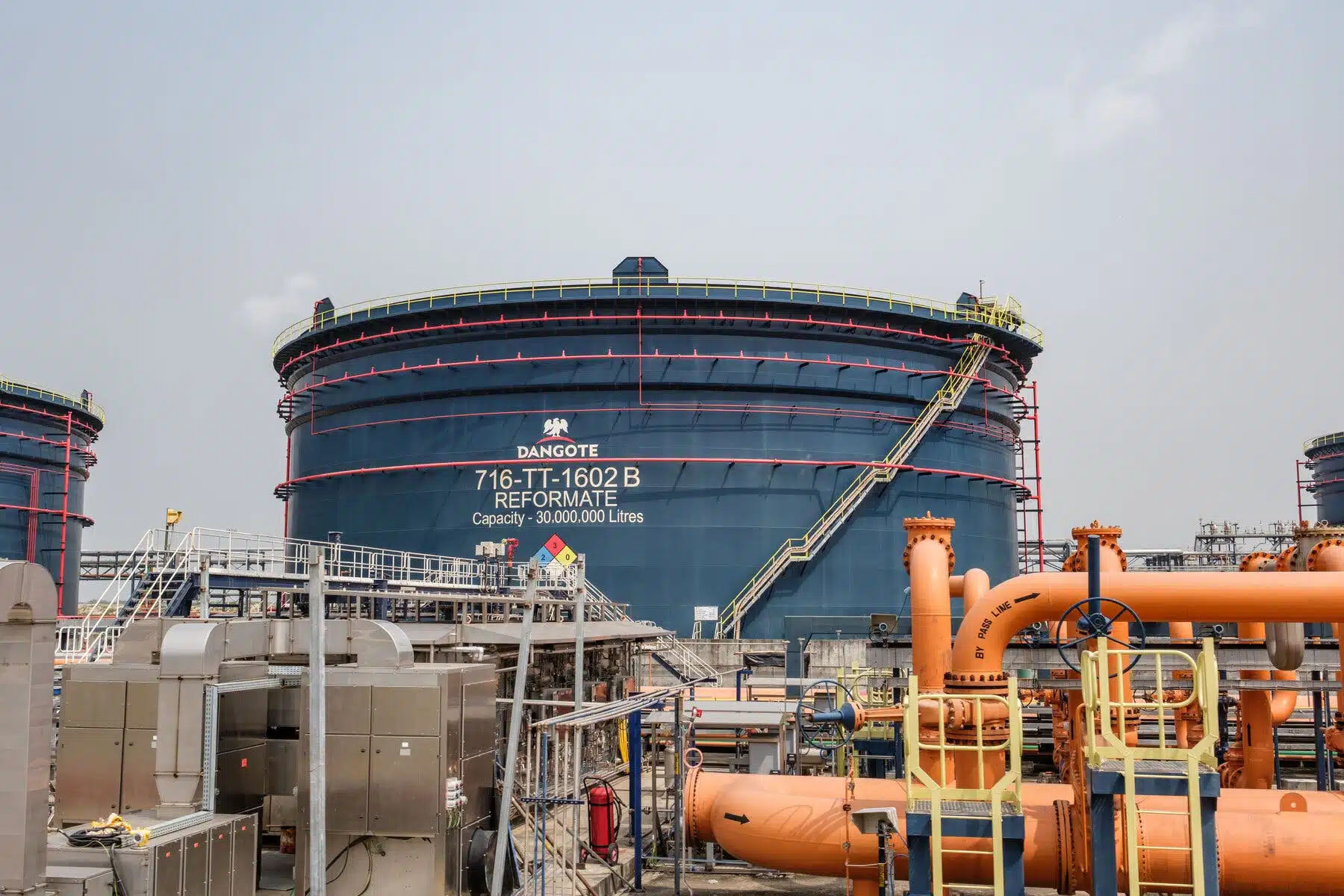
The data shows the refinery supplied an average of 18 million litres per day during the nine-month period, amounting to just about 36% of national demand.
At its highest point in February 2025, the refinery delivered roughly 24 million litres per day—still short of the 25 million litres required to meet even half of domestic consumption.
The regulator said it will continue to publish verified supply figures, noting that additional reconciliation is ongoing for the remaining months of the year.
The release of the data comes months after the federal government introduced a 15% import duty on petrol and diesel—a policy that marketers argued would distort pricing and worsen supply constraints.
The duty was later suspended after industry backlash, but the episode renewed questions about Nigeria’s dependence on refined product imports despite the commissioning of a major private refinery.
Dangote’s reaction to the report
In its response to the NMDPRA findings, the Dangote Refinery management said the facility had been supplying PMS in line with operational capacity while steadily scaling up output.
“We have consistently supplied PMS based on available capacity and continue to ramp up production,” the company said. “We expect higher daily volumes as operational stability improves. Our commitment to supporting Nigeria’s domestic fuel needs remains unwavering.”
The company also reiterated concerns it raised in November over vessel clearance delays, crude import approvals, and access to blending components, which it says continue to impact its operations.
“These delays create inefficiencies that affect both the refinery and our customers,” the management added.
Dangote’s feud with petrol importers
Meanwhile, the report drops amid an ongoing quiet tussle between Dangote and fuel importers.
Marketers argue that the refinery has struggled to provide consistent, competitively priced volumes, forcing them to continue importing to prevent nationwide shortages.
Dangote, on the other hand, has repeatedly accused importers of seeking to undermine local refining economics, especially during the brief period when the 15% import duty was in place.
Stakeholders say the temporary duty highlighted the underlying tensions in the market.
Dangote wants policy incentives that prioritise domestic refining, while importers want an open, flexible regime that allows them to bring in cheaper foreign products when necessary.
What we know so far
NMDPRA’s report provides the most comprehensive data yet on the refinery’s actual contribution to national supply.
Dangote, however, informed regulators that it planned to supply 1.5 billion litres per month (50 million litres/day) in December and January, and 1.7 billion litres per month (57 million litres/day) from February 2026.
If achieved, this would cover or exceed Nigeria’s daily PMS requirement, reducing the need for imports.
For now, however, the newly released figures show that domestic refining is still far from replacing imports.
With the regulator set to release updated numbers for November and December, the next data cycle will be closely watched.
Dangote is also projecting increased output next year. Together, the coming months will be crucial in determining how quickly Nigeria can close its supply gap and ease pressure on the downstream sector.