
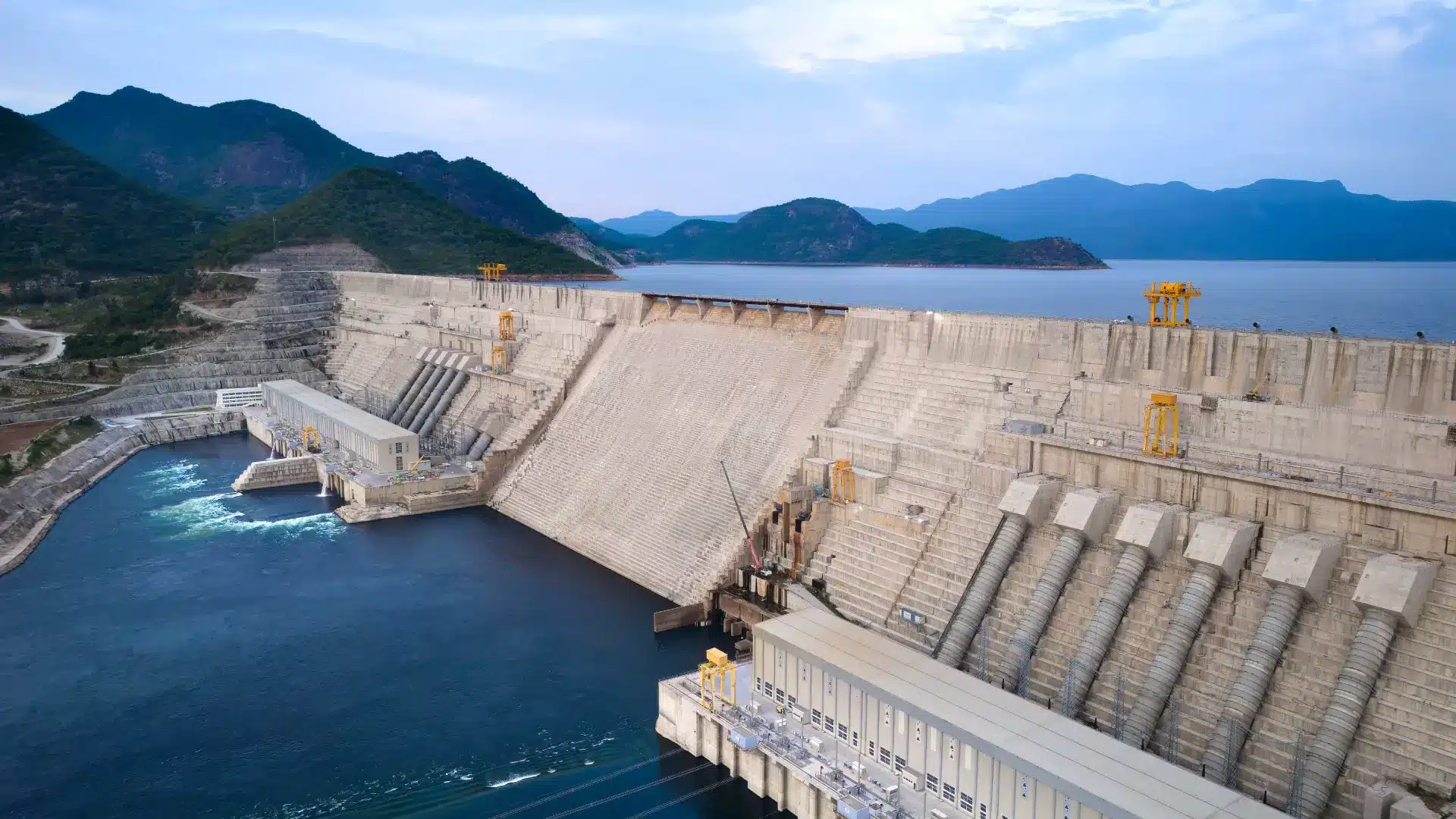


Egypt has renewed its criticism for the newly built $5 billion Grand Ethiopian Renaissance Dam (GERD), saying it could take all measures allowed under the United Nations Charter if its water security is threatened.
Its Foreign Minister, Badr Abdelatty, during an interview described the dam as an ‘illegal and illegitimate unilateral’ project that breaches rules governing shared rivers.
Abdelatty stated that water security remains an “existential issue” for Egypt, noting that Cairo reserves the right to legitimate self-defense if downstream water supplies are compromised.
The minister stated that more than 13 years of negotiations with the upstream country have failed and produced no outcome.
“What began as a diplomatic effort has turned into a process that they used to establish a ‘fait accompli.
“We talked for 13 years, and it reached nothing, zero, nothing. We will not continue in this endless track and give the other side the opportunity to create more facts on the ground,” the Minister said.
Potential threats to Egypt’s water supply and economy
Egypt has long opposed the dam, citing concerns over its water supply.
The Nile provides nearly 90% of the country’s freshwater, supporting more than 107 million people and irrigating water-intensive crops such as cotton.
Cairo also emphasized the absence of a binding agreement on how the reservoir should be filled and operated. Construction began in 2011, and filling started in 2020 despite objections from downstream nations.
“Undermining Egypt’s water interests and water security is an existential threat to the Egyptian people. We cannot risk the fate of the Egyptian people on unilateral claims, unilateral policies, or verbal promises,” Abdelatty said.
A data report by the government of Aswan High Dam warns that unilateral GERD operation could lead over 1.1 million people to lose their livelihoods” and said nearly “15% of agricultural land could be lost.
Sovereign rights and development goals
Meanwhile, Ethiopia maintains that GERD is part of its sovereign right to use Nile waters for development. The Ministry of Foreign Affairs described Egypt as rejecting dialogue and holding onto a “colonial era mentality.”
The project is seen as necessary for powering the economy and is essential for hydropower, electrification, industrial growth, and poverty reduction.
Officially inaugurated in September 2025, the dam is expected to generate 5,150 megawatts of electricity, expand power access for millions, and support industrial development.
“To our [Sudanese and Egyptian] brothers; the dam was built to prosper, to electrify the entire region, and to change the history of black people,” Prime Minister Abiy Ahmed said. “It is absolutely not to harm its brothers.”
For the country, GERD strengthens energy security and supports economic growth.
Regional and International response
The European Union recently issued a joint statement with Egypt, reaffirming support for Cairo’s water security.
The EU urged “transboundary cooperation among riparian states based on prior notification and the do-no-harm principle.”
Ethiopia described the statement as “biased and hostile” and inconsistent with its rights as an upstream nation. The Ethiopian Embassy in Brussels said it “echoes Egypt’s colonial and monopolistic claims” and undermines regional diplomacy.
“The joint statement echoes Egypt’s colonial and monopolistic claims over the Nile River. It shows a complete disregard for the views and interests of other riparian countries,”
“It is regrettable that the EU decided to undermine Ethiopia in a bilateral platform with Egypt.” the Ethiopian Embassy said.
Outlook for negotiations
Cairo has declared the negotiation track dead. Addis Ababa continues to assert its sovereign right to development.
The dispute points to a broader struggle over governance of shared water resources in Africa.
The Nile Basin remains at the center of competing claims between upstream development and downstream water security.