


Aliko Dangote, president of the Dangote Group, has declared that no serious investor would be willing to purchase Nigeria’s moribund state‑owned refineries, describing them as unprofitable assets trapped in a sector plagued by corruption and sabotage.
Speaking at a media briefing on Sunday at his Lagos mega refinery, Africa’s richest man criticized past regulatory missteps.
“During the last administration of President Buhari, there was a big mistake made by putting a trader as a regulator, which I think is a mismatch. That’s why we are facing all these issues and the crisis in the sector.”
Dangote lamented that Nigeria is paying a heavy price that discourages investment.
“Even if the NNPC today wants to sell their refineries, there can never be a buyer. The environment is not conducive for anyone to put money into building or reviving a refinery. Yet Nigeria is supposed to be the refining hub of not only West Africa but of sub‑Saharan Africa.”
He has repeatedly expressed doubt that the state‑owned refineries can ever function again, despite the government spending more than $18 billion on rehabilitation efforts.
Dangote contrasted this with his own privately built refinery, noting that it only became possible after the administration of President Umaru Musa Yar’Adua declined to sell him the refineries years ago.
Nigeria’s refining sector struggles under the weight of corruption
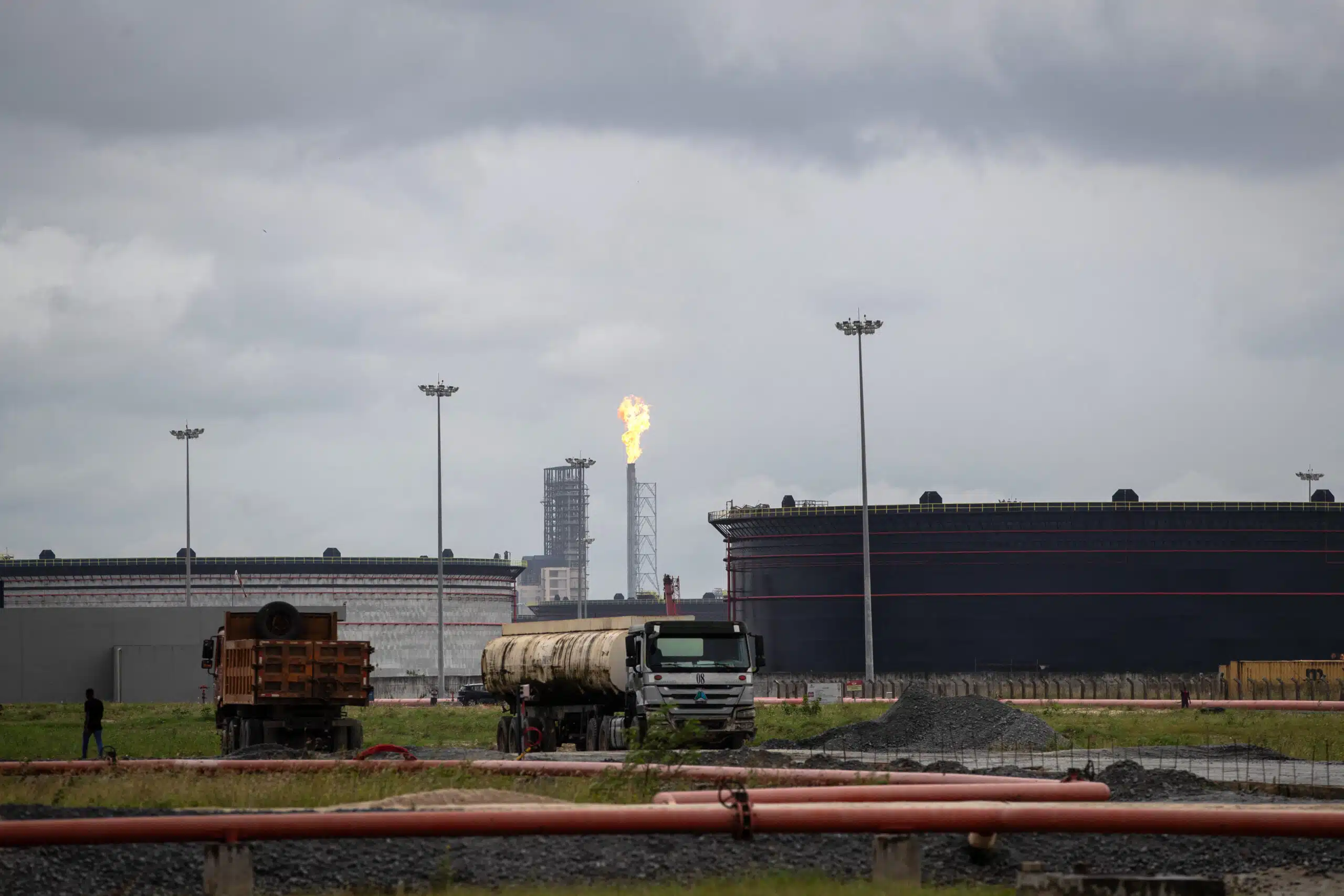
Nigeria’s four state‑owned refineries — Port Harcourt, Warri, and Kaduna — have remained largely idle for decades, forcing the country to import most of its refined petroleum products despite being Africa’s largest crude oil producer.
This dependence began to shift in 2024 with the commissioning of the Dangote Refinery, a mega facility designed to meet domestic fuel demand and export surplus.
Since coming onstream, the refinery has reduced Nigeria’s reliance on imports but has also faced regulatory scrutiny and resistance from traditional downstream operators, including the NNPC and private importers.
Yet, the latest figures from the downstream regulator NMDPRA reveal a sobering reality that up to 60% of Nigeria’s fuel needs are still met through imports, with Dangote and modular refiners supplying the rest.
“Those modular refineries, I can tell you for nothing that they are almost on the verge of collapse. None of them is making a dime,” Dangote said, voicing concern over the state of modular refineries.
He argued that Nigeria, as Africa’s top oil producer with vast but underutilized refining capacity, should already be a regional net exporter of refined products.
“We have the crude and we have the refineries. If our own continues to work, you have the NNPC’s refineries. Together, that’s over a million tons which can feed the entire West and Central Africa. And I don’t know why we should continue to allow corrupt government officials to destroy a whole sector of the economy.”
Dangote went further, alleging corruption by the head of the downstream regulator.
“I know of the [NMDPRA] Authority chief executive Mallam Farouk, who has four of his children educated in Switzerland at the cost of $5 million for their secondary school education alone. So I want to know what kind of system we are operating, where people are busy destroying a country and taking money from the government.”
Dangote Refinery announces major price cut to challenge importers
The Dangote Refinery has unveiled its biggest petrol price reduction yet, slashing the gantry price from N828 ($0.57) to N699 ($0.48) per litre ahead of the festive season.
This announcement follows the company’s October pledge to ensure a fuel‑scarcity‑free holiday period, with assurances of uninterrupted petrol and diesel supply nationwide.
At the time, company spokesperson Anthony Chiejina revealed that the refinery was producing and loading over 45 million litres of petrol and 25 million litres of diesel daily, surpassing Nigeria’s national demand.
The latest cut represents a 15.58% reduction and marks the refinery’s 20th price adjustment in 2025.
“Prices are going down. The reason is that we have to also compete with imports. I was told that marketers have met with the NMDPRA to make sure the price is maintained high,” Dangote explained, speaking on the move.
The new gantry price takes effect Tuesday and is expected to significantly lower pump prices across the country. Dangote confirmed that distribution would begin with MRS stations in Lagos.
“That N900‑plus price, you won’t see it again. We have asked IPMAN members and anyone who can buy ten trucks at N699. We will use every resource we have to crash the price down.”
A few months ago, the refinery introduced a $470 million fuel supply scheme, offering petrol and diesel to distributors on two‑week credit terms with zero logistics fees — a move designed to stabilize supply and ease market pressures.