


In the News:
- Benin is targeting first oil from the Seme Offshore Oil Field by end of January.
- Drilling delays pushed production beyond the original 2025 timeline.
- Output is expected to reach about 15,000 barrels per day.
West African nation Benin Republic is expected to produce its first commercial oil from the Seme offshore oilfield by the end of January 2026, after drilling challenges forced the country to miss its initial 2025 target.
In a statement on Monday, Rex International, the oil firm behind the operation, said its indirect subsidiary, Akrake Petroleum, plans to commence production once drilling at the AK-2H production well is completed.
The start of production remains dependent on finishing the well, with drilling expected to begin early in the week. The main offshore facilities required for operations are already in place.
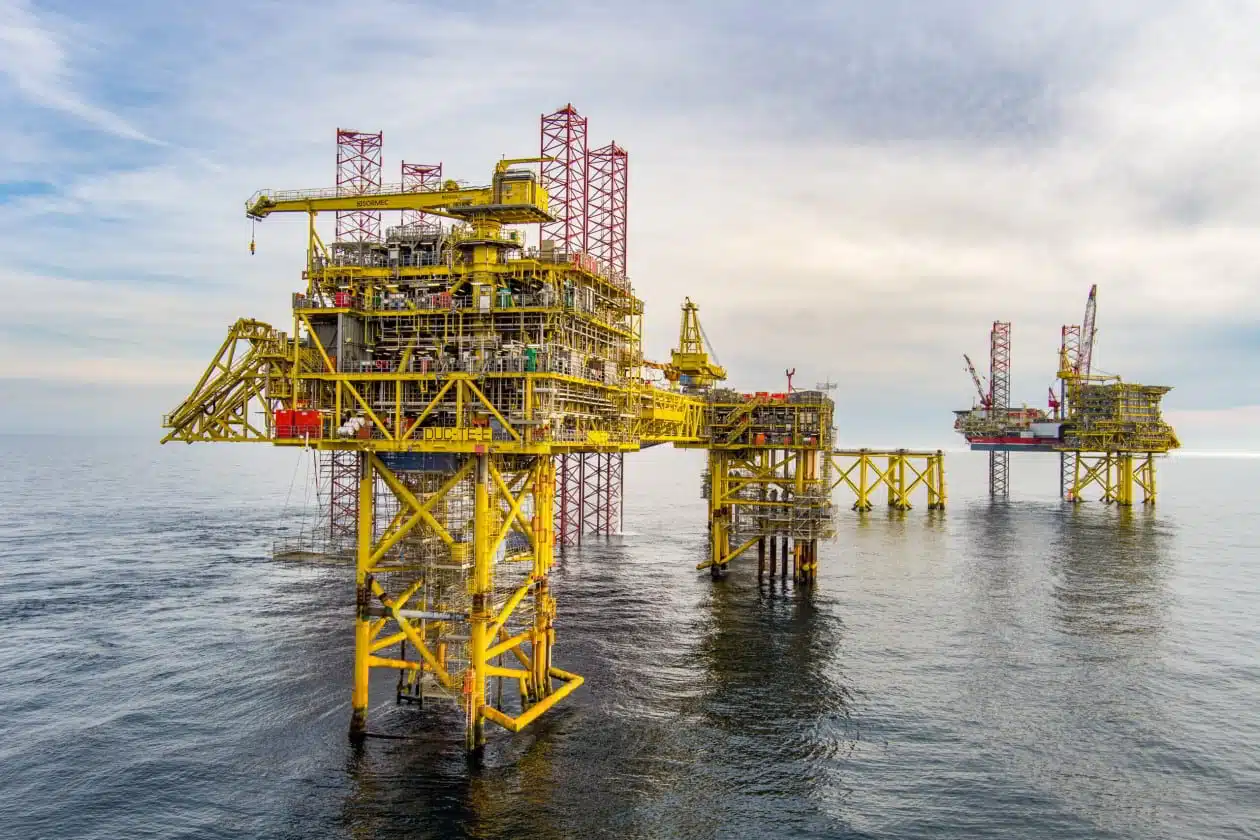
According to the statement, the Stella Energy 1 Mobile Offshore Production Unit and the Kristina Floating Storage And Offloading Unit have been deployed at the field ahead of first oil. These facilities are expected to support early production and crude evacuation once drilling is concluded.
The revised timeline follows delays that pushed the project beyond 2025, despite earlier plans to deliver first oil before the end of the year. Technical difficulties were disclosed in late December without a revised production date at the time.
Why first oil slipped past 2025
Akrake Petroleum explained that drilling operations at the Seme Field were slowed by geomechanical challenges in unstable shale layers above the main reservoir.
“Operations were slowed by geomechanical difficulties in unstable shale layers above the reservoir,” the company said.
It added that several technical incidents occurred, leading to repeated drilling restarts.
The new geomechanical data collected during the campaign enabled adjustments to drilling parameters. These changes allowed crews to cross the complex zones during drilling of the AK-2H well.
The drilling programme includes the AK-1P exploration well, which is intended to assess deeper reservoirs beneath the main producing horizon. In addition, two horizontal production wells, AK-1H and AK-2H, are targeting the H6 reservoir.
Earlier, Lime Petroleum, the Norwegian majority shareholder of Akrake Petroleum, confirmed that the drilling issues meant production would not take place in 2025.
“As such, production will not take place in 2025. Nonetheless, drilling operations are continuing at the moment to attempt to resolve these issues,” Lime Petroleum said in a statement.
Borr Drilling’s jack up rig Gerd has been at the Seme Field since July 2025. A drilling campaign initially planned to last 100 days was extended into December due to the operational setbacks.
What comes next for the Seme field
Once production begins, output from the Seme Offshore Oil Field is expected to reach a plateau of around 15,000 barrels per day.
The company stated that meeting the end-January timeline will depend on completing the AK-2H well without further major incidents. Data from the AK-1P exploration well is also expected to help determine whether deeper layers could extend the productive life of the field.
Seme remains Benin’s only offshore oil discovery to have reached commercial production.
The field was discovered in 1969 by Union Oil and later developed by Norway’s Saga Petroleum.
Between 1982 and 1998, the field produced about 22 million barrels of crude before being shut due to low oil prices.
The current redevelopment plan involves three production wells connected to a mobile offshore production unit and linked to a floating storage and offloading vessel. The approach allows production to restart using existing discoveries rather than funding new exploration.
Akrake Petroleum holds a 76% operating stake in the Seme Field. The Government of Benin owns 15%, while local Oil Company Octogone Trading holds the remaining 9%.