


South Africa has announced plans to establish a fully independent, state-owned transmission company that will operate separately from Eskom, as part of efforts to restructure the country’s power utility
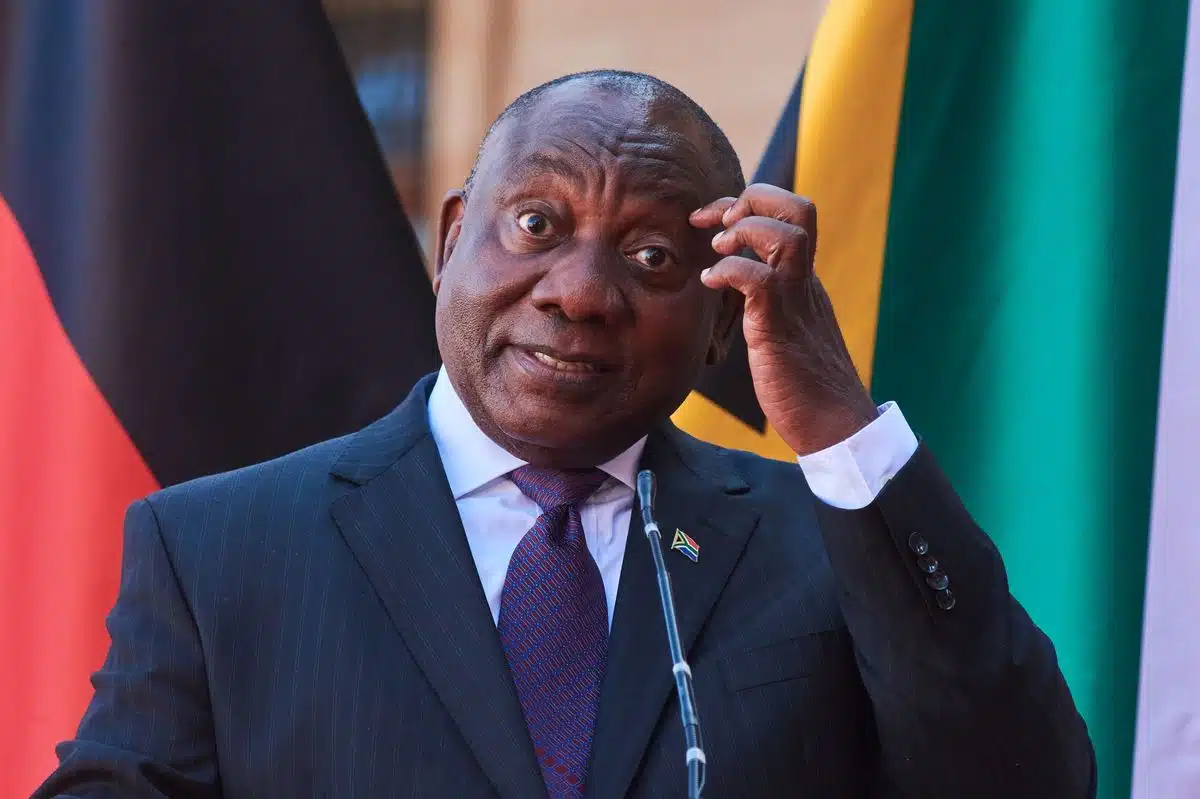
President Cyril Ramaphosa made this disclosure during a national address on Thursday, stating that the government would move ahead with creating “a fully independent state-owned transmission entity.”
He said, the new entity will own and operate grid assets and take on responsibility for overseeing the broader electricity market, representing a significant step in the country’s long-delayed power sector restructuring
Ramaphosa added that a task team under the National Energy Crisis Committee has been assigned to oversee the restructuring process and submit a report within three months with clear implementation timelines.
The president’s position comes weeks after Electricity Minister Kgosientsho Ramokgopa indicated in December that transmission assets could remain a subsidiary within Eskom.
That proposal drew concern from some business leaders and investors who have argued that full independence is central to reform credibility.
Currently, Eskom operates both the national transmission grid and electricity distribution value chain, making it Africa’s largest utility monopoly.
The plans to create a separate transmission entity have been underway for some time, with South Africa’s Minister of Electricity stating that the move could cost about $22 billion.
Busisiwe Mavuso, Chief Executive Officer of Business Leadership South Africa, said the structure of the transmission entity had become a focal point for investors.
“This issue has caused major concern, with international investors and local business leaders starting to question the government’s commitment to the reform programme,” Mavuso said.
Reform roots stretch back decades
Eskom’s unbundling was first proposed in the 1998 Energy White Paper, which recommended separating generation, transmission, and distribution to allow greater competition and private sector participation.
However, implementation stalled for years as Eskom retained its vertically integrated structure.
Eskom, established in 1923, operated as South Africa’s dominant electricity provider for decades.
The model began to strain in the mid-2000s as demand outpaced supply. Ageing coal plants, operational failures and financial constraints contributed to rolling blackouts, locally known as load shedding.
In 2019, Ramaphosa first announced plans to unbundle Eskom into three entities: generation, transmission and distribution. Since then, progress has been uneven.
The National Transmission Company of South Africa (NTCSA) was legally separated as part of the restructuring process, although it remained within the broader Eskom framework.
However, regulatory delays and licensing issues slowed full operational independence. In 2023, the energy regulator’s handling of transmission licensing underscored the complexity of translating policy into execution.
The announcement moves the process a step further by committing to a transmission entity that is independent of Eskom’s generation business.
Transmission constraints and funding gap
The Department of Electricity and Energy has stated that transmission capacity is a bottleneck in expanding electricity supply. Renewable energy projects have faced delays in connecting to the grid, particularly in regions with strong wind and solar resources.
A presentation from the Department recently indicated that South Africa will require about 390 billion rand ($24.41 billion) over the next decade to expand and modernise transmission infrastructure.
Eskom’s financial position limits its ability to fund that expansion alone. The utility carries substantial municipal debt and has relied on state support in recent years.
Olga Constantatos, credit head at Futuregrowth Asset Management, said the original objective of unbundling was to stimulate competition and private investment in generation after decades of monopoly control.
Private-sector investment in renewables has already mobilised more than 200 billion rand and added about 6,000 megawatts of capacity, without adding to Eskom’s balance sheet.
The International Monetary Fund, in its latest Article IV report on South Africa, recommended accelerating electricity reforms, including separating Eskom’s generation and transmission units and establishing a wholesale electricity market
What this means for the power sector
South Africa is Africa’s most industrialised economy. However, load shedding in recent years has affected its economic output, business operations, and investor sentiment.
The government has stated that the transmission grid will remain state-owned while enabling greater private participation in electricity generation and potentially in transmission-related projects.
President Ramaphosa stated that the goal is to establish a structure allowing the transmission entity to own and operate grid assets and the electricity market independently.