



Nigeria’s President Bola Tinubu has introduced another sweeping fiscal reform targeting the financial operations of NNPC Limited, as the state‑owned oil giant continues its transformation into a fully commercial entity.
On 13 February, the President signed Executive Order No. 9 of 2026—formally titled the Presidential Executive Order to Safeguard Federation Oil and Gas Revenues and Provide Regulatory Clarity. The directive places control of oil and gas revenues firmly in the hands of the federal government.
This intervention strips NNPC of its long‑standing authority to retain significant portions of oil proceeds, requiring that all revenues be paid directly into the Federation Account. Funds from this account are distributed monthly among the federal government, the 36 states, and 774 local government areas, according to a formula set by the Federation Account Allocation Committee.
The move marks a decisive fiscal reset for Nigeria’s largest revenue generator.
For years, NNPC’s inconsistent remittances have left the federal government short of funds, creating debts that limited the company’s ability to invest and meet financial obligations. The World Bank has repeatedly criticised NNPC for failing to make full statutory payments.
These arrears—many of them unexplained—have been the subject of heated debate between the National Assembly and NNPC’s leadership.
In December, however, President Tinubu cancelled more than $1.42 billion in legacy debt and a further N5.57 trillion, wiping out 96% of NNPC’s dollar‑denominated liabilities and 88% of its naira‑denominated debts.
This eased pressure on public finances and improved cash flows to the Federation Account.
At first glance, Order 9 appears to be a continuation of this clean‑up. But a closer look at its provisions reveals a new presidential directive that is already dividing opinion across Nigeria.
Key provisions of the Order
The gazetted order aims to eliminate “duplicative deductions” and “fragmented oversight” that the administration claims have historically diverted up to two-thirds of potential oil revenue away from the government. Aso Rock said the deductions far exceeded global norms.
These include:
- Direct remittance: All government entitlements—including Royalty Oil, Tax Oil, Profit Oil, and Profit Gas—must now be paid directly into the Federation Account, bypassing NUPRC and NNPC retention structures.
- Elimination of management fees: NNPC loses its right to a 30% management fee on profit oil and gas revenues, as well as the 30% Frontier Exploration Fund. The company will, however, retain 20% of its profits for working capital and future investment.
- Gas flare penalties: Revenues from gas flare penalties will now flow into the Federation Account, rather than the Midstream and Downstream Gas Infrastructure Fund (MDGIF). The Environmental Remediation Fund under the Petroleum Industry Act (PIA) remains intact.
- NUPRC oversight: The Nigerian Upstream Petroleum Regulatory Commission will serve as the primary interface for licensees, publishing annual cost benchmarks for different terrains to enforce fiscal discipline.
The public mood on order 9
As with President Tinubu’s previous bold reforms in the oil sector, the new executive order has provoked mixed reactions.
Critics, including labour unions such as the Petroleum and Natural Gas Senior Staff Association of Nigeria (PENGASSAN), warn that stripping NNPC of key funds could cripple its ability to cover operational costs and finance exploration, potentially putting around 4,000 jobs at risk.
PENGASSAN President Festus Osifo has condemned the order as “an aberration” of the Petroleum Industry Act (PIA), which was designed to reform and commercialise Nigeria’s oil sector. The union has called for the immediate withdrawal of the directive, arguing that it undermines NNPC’s role as a commercial entity envisioned under the PIA.
Other analysts caution that the order “chips away” at sections of the PIA legally established by the National Assembly, raising concerns about investor confidence and the risk of excessive government control.
SBM Intelligence, a Nigeria‑based geopolitical and market research consultancy, described the order as “political theatre dressed in legal clothing,” claiming it centralises oil revenue control under loyalists.
The firm noted that, when paired with the ongoing transfer of revenue‑generating functions to the newly created Nigeria Revenue Service (NRS) under Zacch Adedeji, the move signals the administration’s intent to tighten direct federal oversight of revenue collection and allocation.
The Presidency, however, insists the order is driven by a determination to end long‑standing structural leakages that have deprived Nigerians of their hydrocarbon wealth.
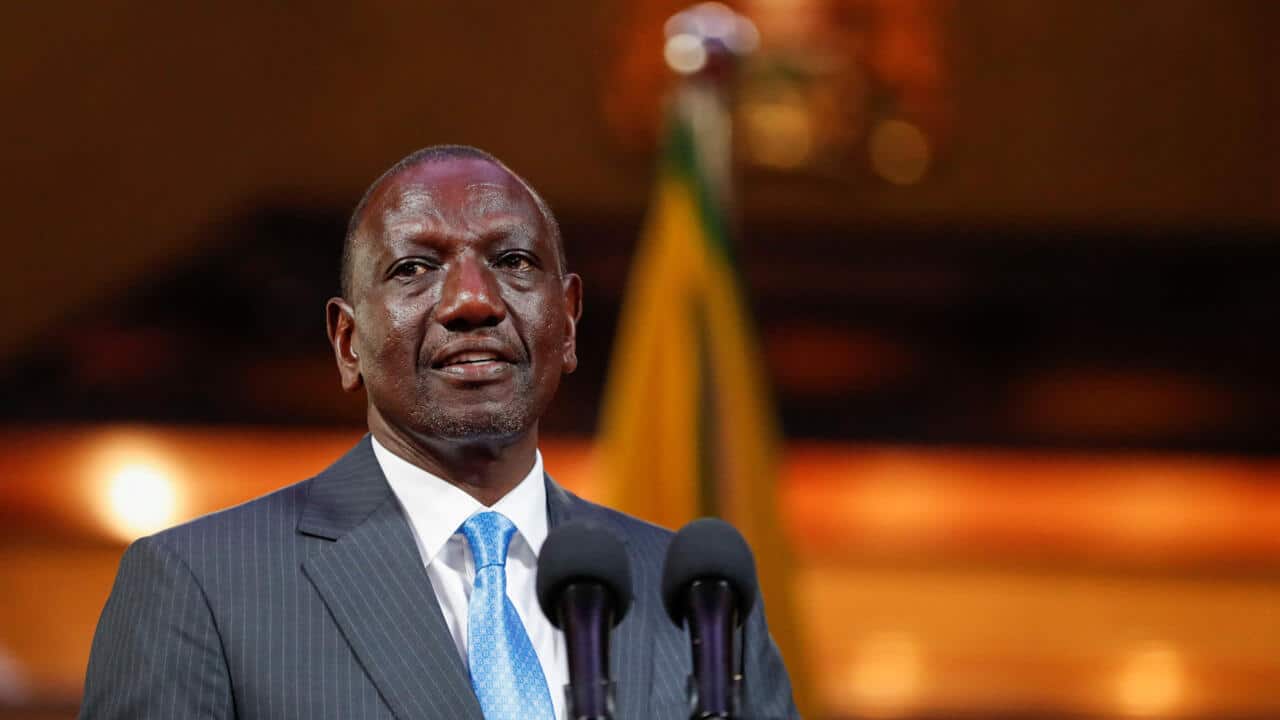
“For too long, revenues meant for federal, state, and local governments have been trapped in layers of charges and retention mechanisms. Development suffers. That must end,” President Tinubu declared in a personal address.
He stressed that the intervention is a constitutional duty, anchored on section 44(3), and vowed that “every legitimate naira due to the Federation must be protected.” Tinubu added that NNPC Limited must now “operate strictly as a commercial enterprise, as intended under law.”
The government’s stance has found support among industry stakeholders such as the Petroleum Products Retail Outlets Owners Association of Nigeria (PETROAN).
Its president, Billy Gillis‑Harry, hailed the order as “a bold step” to enhance accountability and restore public confidence in the management of Nigeria’s petroleum resources.
“It will reposition the NNPC as a truly commercial entity, focused on efficiency, profitability, and operational discipline,” he said.
Implications for Nigeria’s economy
President Tinubu’s Executive Order 9 is poised to reshape Nigeria’s economy in several significant ways.
First, the order eliminates long‑standing leakages and diversions in the 2021 oil law known as the PIA, aligning with constitutional provisions on resource ownership. By redirecting revenues, it increases funds available for national priorities such as infrastructure, security, education, and healthcare.
Some analysts estimate the reform could expand Nigeria’s total revenue pool by as much as N15 trillion, providing greater fiscal space to pursue these goals.
Secondly, the creation of a Joint Project Team between the two regulators—the NUPRC and NMDPRA—simplifies the current “split‑regulator” structure under the Petroleum Industry Act (PIA). This reduces overlapping approval processes and offers clearer regulatory guidance for investors.
Third, the President has signalled that Order 9 is a precursor to a broader legislative review of the 2021 PIA, aimed at addressing lingering “fiscal and structural anomalies” that continue to weaken national revenue.
Although the PIA was passed in August 2021 after more than two decades of political wrangling, several provisions have already been flagged for amendment.
Fourthly, the order tightens NNPC’s liquidity by mandating that revenues flow directly into the Federation Account. According to the Presidency, the existing framework—where NNPC influences operating costs while functioning as a commercial entity—creates competitive distortions.
While this reform strengthens government coffers and reduces leakages, it leaves NNPC, which is eyeing a 2029 initial public offering, with less operational cash.
The company may therefore need to rely more heavily on efficiency gains, external financing, or government budgetary support, potentially slowing investment in exploration and infrastructure.
NNPC has recently begun restructuring its hydrocarbon portfolio, with plans to divest non‑core assets to improve liquidity.
To oversee implementation, President Tinubu has appointed a special committee chaired by the Finance Minister and Coordinating Minister of the Economy.
Other members include the Attorney‑General of the Federation, the Minister of Budget and National Planning, the Minister of State for Petroleum Resources (Oil), the chairman of the Nigeria Revenue Service (NRS), and the Special Adviser to the President on Energy.
The Budget Office of the Federation will serve as secretariat.
What it all boils down to
Order 9 represents a bold yet controversial fiscal reform, designed to close systemic loopholes in Nigeria’s petroleum revenue agencies.
However, critics argue that while plugging leakages is commendable, the directive risks eroding the fiscal independence of NNPC—an entity meant to operate as a commercialised company—and could subject its statutory obligations to bureaucratic delays.
Redirecting funds to the Federation Account undoubtedly strengthens fiscal transparency, but it also underscores the government’s continued reliance on petroleum revenues, a dependence that poses risks to long‑term macroeconomic stability.
That said, the policy consolidates gains already recorded under Tinubu’s administration, beginning with the removal of petrol subsidies in mid‑2023.
Since the former Exxon alumni assumed office, oil production has improved markedly, and foreign investment has surged thanks to investor‑friendly reforms.
NNPC is now racing towards ambitious targets: 3 million barrels of oil per day and 12 billion cubic feet of gas per day by 2030.
Analysts caution, however, that these goals may remain elusive unless crude oil theft is fully tackled and billions of dollars are channelled into infrastructure.
Despite reported near‑total security of pipelines and a 16‑year low in oil theft in 2025, Nigeria has repeatedly missed its 1.5 million bpd OPEC quota.
Gas production also faces challenges: of the estimated 7.5 billion cubic feet produced daily, only about 60% is commercialised, with the remainder lost to flaring or reinjected into fields.
Still, NNPC’s financial performance has been impressive.
Stronger production and higher global oil prices pushed net profit to a record $350 million in November, up from $310 million in October. But there’s no guarantee that things will continue this way going forward because of this new fiscal reform.