

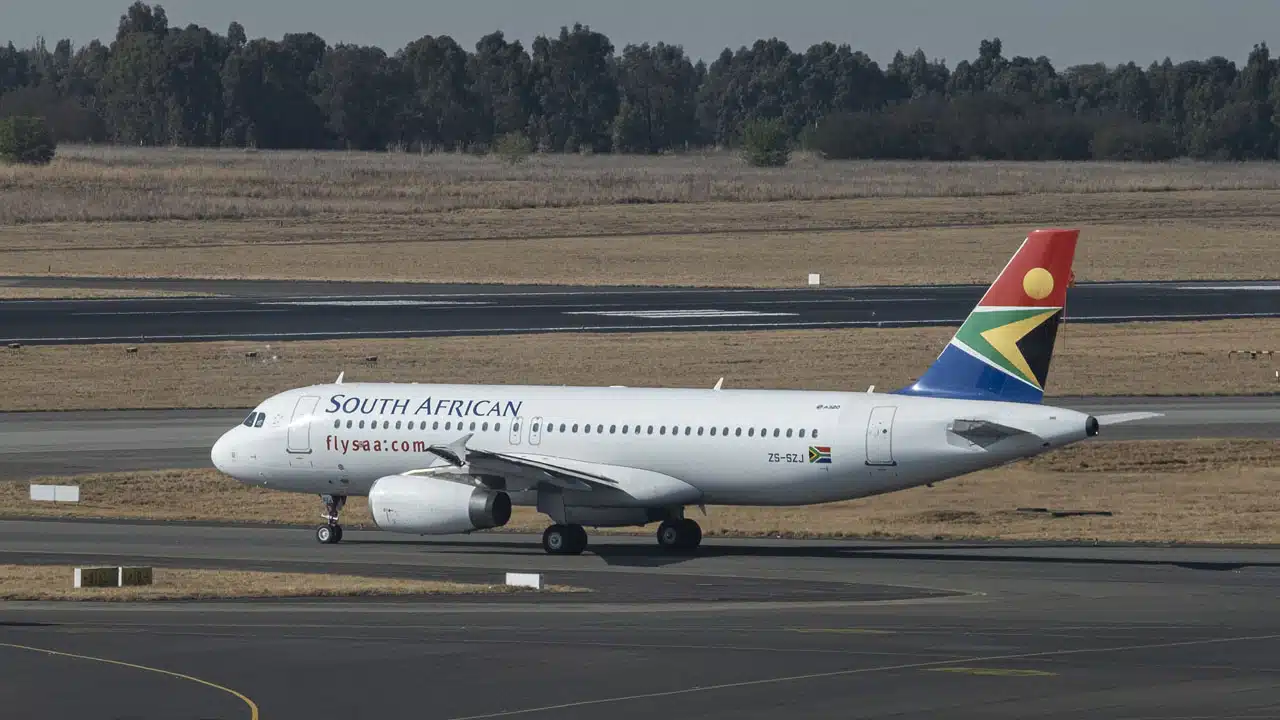


Jet fuel prices have increased in South Africa over the past weeks, putting pressure on the country’s airports and airline industry. The increased jet fuel prices have been attributed to the tensions in the Middle East that have tightened supply, making operational costs very hard for carriers to maintain.
One of the biggest costs for an airline is fuel.
The International Air Transport Association (IATA) states that fuel accounts for as much as 25-30% of an airline’s cost. In high-cost environments, this can rise even higher. Fuel price volatility is therefore one of the most important factors for airlines.
The impact is already visible in South Africa. Travelers are being charged more for their travel as the price of jet fuel has gone up by as much as 70%. Even domestic flights have started charging their passengers fuel surcharges.
Airports are also feeling the secondary effects of the crisis. As airports are mostly dependent on flights, any change in the flights is sure to affect the traffic.
South Africa’s position as a key aviation hub means the effects of this also extend beyond its borders. South Africa is an important gateway for passengers and cargo. It provides a link between southern Africa, Europe, the Middle East, and the rest of Africa.
What is going on in South Africa is not just a local issue. It is part of a larger phenomenon that may shape the future of traveling and the cost of doing business on the continent. The pressure is building and the impact is already being felt.
What’s driving jet fuel costs in South Africa?
There are various factors that have resulted in the increase of jet fuel prices. For instance, about 70% of the jet fuel and kerosene imported to Africa goes through the Strait of Hormuz, which makes the continent vulnerable to any problem that may occur in the area.
Since the conflict began in late February, fuel shipments from the Middle Eastern refineries through the Strait have nearly come to a halt. A fifth of the world’s oil and liquefied gas has been taken out of the market. This has pushed prices sharply higher across importing countries, including South Africa.
Africa’s limited refining capacity compounds the problem. Refineries on the continent are small compared with plants in Asia or Europe. They often struggle to meet domestic demand and cannot easily compensate for shortages caused by disrupted imports.
In South Africa, the options are particularly limited. Only two crude oil refineries are currently operating: Sasol’s Natref and Glencore’s Astron Energy. Two larger refineries were closed in 2020 and 2022, reducing the country’s ability to produce jet fuel locally.
Kabelo Xuba, a Gauteng based energy economist, explains the pressure this creates.
“South Africa is exposed on multiple fronts, as global oil price volatility, and reduced refining capacity are all converging at once. The country also relies heavily on imports for jet fuel. When shipments from the Middle East slow down, there is very little domestic capacity to fill the gap. This drives prices higher very quickly,” Xuba told Energy in Africa.
According to him, logistics further add to the problem. Imported fuel must be transported, stored, and distributed across the country. Bottlenecks at ports and storage facilities increase costs, which are often passed on to airlines.
The effects are already being felt by carriers. FlySafair, a South African airline, says that jet fuel makes up 50-55 percent of their direct operating costs.
According to the airline, it would cost an additional R35,000 ($2,070) per flight hour for each of its 37 Boeing 737-800s, which operate up to 165 flights per day. In order to combat these costs, FlySafair introduced a fuel surcharge.
The result is a structural challenge for both airlines and airports. Costs are rising not because of a single event, but due to a convergence of global supply disruptions, regional dependencies, and limited local refining.
South Africa’s role as Africa’s aviation gateway
South Africa is among the most significant aviation hubs in Africa. OR Tambo International Airport alone serves more than 21 million passengers annually. This makes it among the busiest airports in Africa.
Cape Town International Airport is a hub of excellence. It was named Africa’s Best Airport at the recent Skytrax World Airport Awards, which took place in London. This is the 11th consecutive year it won the award.
Other airports in South Africa also featured in the listing. OR Tambo International Airport came second, followed by King Shaka International Airport in Durban, which came fourth.
South Africa’s aviation network plays a critical role in connecting the African market with the rest of the world. International airlines make use of South Africa’s airports as a point of entry for international flights, particularly from Europe and Asia. Another critical role played by South Africa’s airports is that they handle cargo flights.
Experts agree that an increase in the cost of fuel here can have a significant impact on the continent as a whole, affecting connectivity, trade and economic activity.
What airports are likely to be affected the most?
OR Tambo International Airport is likely to be affected the most by the increase in the cost of jet fuel. This is because it is one of Africa’s busiest airports. It handles the highest number of long-haul flights and cargo traffic. Even a small rise in airline operating costs can have a significant effect on the overall operation of the airport.
The Cape Town International Airport, which serves more than 10 million passengers annually, is under another type of pressure. It is the third-largest airport in Africa, and the high reliance on international tourism means that an increase in ticket prices may influence passenger traffic.
King Shaka International Airport is a key player in trade movements between various businesses. Many businesses rely on the consistency of flight movements and stable cost. Rising fuel prices may affect this negatively, which may cause a delay in trade movements.
On the other side, Lanseria International Airport has emerged as an alternative airport, providing additional capacity within the system. However, it still faces the same cost pressures as the other airports.
According to Xuba, these pressures indicate how tightly airports are connected to airline operations. When airlines respond to increased fuel prices, the effects are felt immediately across passenger traffic, cargo logistics, and airports in general.
How could this affect trade and business in Africa?
Jet fuel prices are expected to rise, and this may cause an increase in the prices of air cargo. This may have an impact on businesses that require speed, such as pharmaceuticals and high-value manufacturing.
Jannie de Klerk, executive director of flight operations at South Africa’s National Airways Corporation, described a recent return flight from Lanseria to Cape Town, picking up a medical emergency patient from St Helena. The cost of jet fuel rose by 6 rand ($0.355) per litre, reaching 24 rand in just 10 hours, from the time of the outward and return journey.
The African Airlines Association (AFRAA) has previously indicated that air cargo is of critical importance for the growth of intra-African trade. The increase in transport costs may impede the momentum of these efforts.
Supply chains may also be affected. Businesses may be forced to experience delays, and in some cases, may have to use slower modes of transport, which may not be as efficient as the fast modes of transport. This could result in some businesses losing money.
Another area which could be affected includes tourism. The increase in the cost of air tickets could affect tourism. This could affect countries like South Africa which are highly dependent on international tourism.
According to Zakiyyah Bibi Azraa Mungroo, an urban sustainability expert, the economic impact of the increase in the cost of air tickets should not be underestimated.
“If fuel costs remain elevated, the likely outcome is route consolidation, reduced frequency, and higher base fares. South Africa’s tourism economy, which depends on accessible inbound and outbound connectivity, is directly exposed to this dynamic,” he told Energy in Africa.
Wider implications for Africa’s aviation sector
The increasing fuel prices may change the dynamics of the competition in the aviation sector in Africa. Airports and hubs in the Eastern part of Africa and the Middle East may prove to be a viable option if a competitive advantage can be achieved.
Airlines are struggling to survive. Most are still trying to recover from the losses incurred during the pandemic. However, the increasing fuel prices will make it difficult for the airlines to survive and stay profitable.
The position of South Africa as a key aviation hub may also face a challenge. The country has very strong infrastructures, but experts say it might lose its position due to its continuous cost disadvantage.
Structural issues are now more apparent. Inability to refine adequately, reliance on imports, and infrastructure constraints are not new issues, but they are now more directly affecting the sector than ever before.
According to Mungroo, the situation reveals deeper vulnerabilities.
“This exposes structural weaknesses in Africa’s aviation ecosystem. Fuel supply, infrastructure, and policy alignment all need to improve if the sector is to remain competitive,” he says.
What happens next?
The future trajectory of jet fuel prices will depend on the global market. Analysts predict that the prices of oil are expected to remain volatile. The prices will depend on geopolitical factors and the decisions of major oil-producing countries.
In the short term, airlines are expected to continue making adjustments, which could include changing their routes, managing capacity, or even hiking up airfares.
However, governments might also have a role to play in this situation. Investments in refining capacity, as well as improvements in logistics infrastructure, could help address the situation in the long term.
“The policy recommendation from all of this is clear. South Africa needs a coordinated national fuel security strategy for aviation, one that addresses refinery capacity, pipeline redundancy, strategic reserves and currency hedging frameworks, anchored in legislation rather than left to voluntary industry coordination,” Reeshabh Shayan Tupsee, a policy analyst, told Energy in Africa.
Airports will also need to adapt. A high-cost environment will require a robust level of efficiency and a strong relationship between the airports and the airlines to maintain traffic.
Ultimately, the situation points to a broader issue for Africa as a whole. The strength of the aviation sector will be determined by its capacity to respond to this kind of challenge and continue to connect the continent.
The challenge for South Africa now is how it is going to address the cost pressures while continuing to play a crucial role as an aviation hub for Africa.