


Solar power in Africa has been growing at a rate that would have been difficult to imagine a decade ago. Power shortages, rising fuel costs, and growing industrial demand have pushed governments and private investors towards renewable alternatives, with solar emerging as one of the most flexible options.
In 2025, Africa emerged as the world’s fastest growing market for solar power, with installed capacity expanding by 17% over the year. This not only indicates growing demand, but also a shift in how countries are approaching energy planning.
However, not every country develops at the same pace and in the same way. Different countries are building their solar markets in very different ways.
Each one is taking a different path based on its own economic and industrial situation.
Such distinctions are not only about policy choices. They are influenced by industrial capabilities, financial accessibility, and urgency for electricity. They also reflect how governments see solar energy in relations to broader economic goals, including jobs, manufacturing and energy security.
The significance of this shift is that solar energy is not simply just an energy source anymore. In some countries, it is becoming part of industrial strategy. In others, it is primarily a tool for rapid electrification and economic stability.
This gives rise to a continent whose solar industry is advancing along different directions at the same time. The manufacture, importation, assembling, and scaling of solar are all occurring on the African continent, but not in the same place and at the same pace.
Nigeria, South Africa, Egypt, and Kenya are great examples of this phenomenon. Each is building its solar market in a distinct way, and together they provide a clearer picture of how Africa’s solar transition is unfolding.
Nigeria bets on manufacturing to build a local solar industry
The Nigerian case stands out as one of the most obvious examples on the continent to move from being a consumer to becoming a producer.
Nigeria struggles with one of the world’s biggest challenges regarding electricity access. Millions of the populace are without access to grid-connected electricity. For this reason, solar energy is gaining importance as a viable source of power generation.
This rising demand is now shaping policy direction. Nigeria is no longer totally reliant on imported solar panel components; the country is starting to explore local solar manufacturing. It is still early days, but one can start to see signs of this in the policies and activities being pursued.
Local companies are starting to play a more active role in this transition. Firms such as Auxano Solar, and Arnergy are scaling up local manufacturing and expanding production capacity within the country.
At the same time, government-backed institutions are also supporting efforts to strengthen domestic renewable energy manufacturing. Policy discourse has now turned towards reducing import dependency and enhancing local value creation.
In September of last year, Nigeria revealed plans to develop a 1 GW solar panel factory. This project indicates an increased effort towards industrial-scale production and a bid to position the country as a regional manufacturing center for renewable energy products.
The logic behind this strategy is clear. Local production would help alleviate the burden on foreign exchange reserves, generate jobs, and contribute to the development of industrial capacity.
Seyi Adesola, an energy industry analyst, describes the shift as a long-term structural decision rather than a short-term fix.
“For a market as large and energy-hungry as Nigeria, local manufacturing is not just an industrial ambition. It is a strategic move that can strengthen energy security and build a more resilient solar ecosystem over time,” Adesola told Energy in Africa.
Still, the transition faces clear constraints. Production costs remain significantly higher than imported alternatives, while key parts of the solar value chain are still concentrated outside Africa. This limits competitiveness in the short term.
There are also demand-side challenges. Although Nigeria’s market is large, it remains fragmented, with limited long-term procurement structures that would allow manufacturers to achieve economies of scale.
This creates a policy tension. Manufacturing can aid industrial growth in the long run, but it may slow down solar adoption if it displaces cheaper imports too quickly.
Nigeria’s approach therefore reflects a deliberate trade-off. It prioritises building industrial capacity, even if that comes at the expense of short-term affordability and speed of deployment.
In the longer term, the strategy signals a broader ambition. Nigeria is not only trying to expand access to solar energy. It is also attempting to position itself as a producer within an increasingly competitive global clean energy supply chain.
Imports have powered South Africa’s solar market rise
In contrast, South Africa represents the best-case scenario of the import-based solar market in Africa.
The country’s national energy crisis, which has resulted in long years of load shedding, has made many people consider quicker solutions than using traditional electricity.
Among these, solar energy stands out as the most convenient and fast-to-install type. Rather than attempting to build manufacturing capacity at scale, South Africa has leaned heavily on imported solar panels to satisfy growing demand for solar modules.
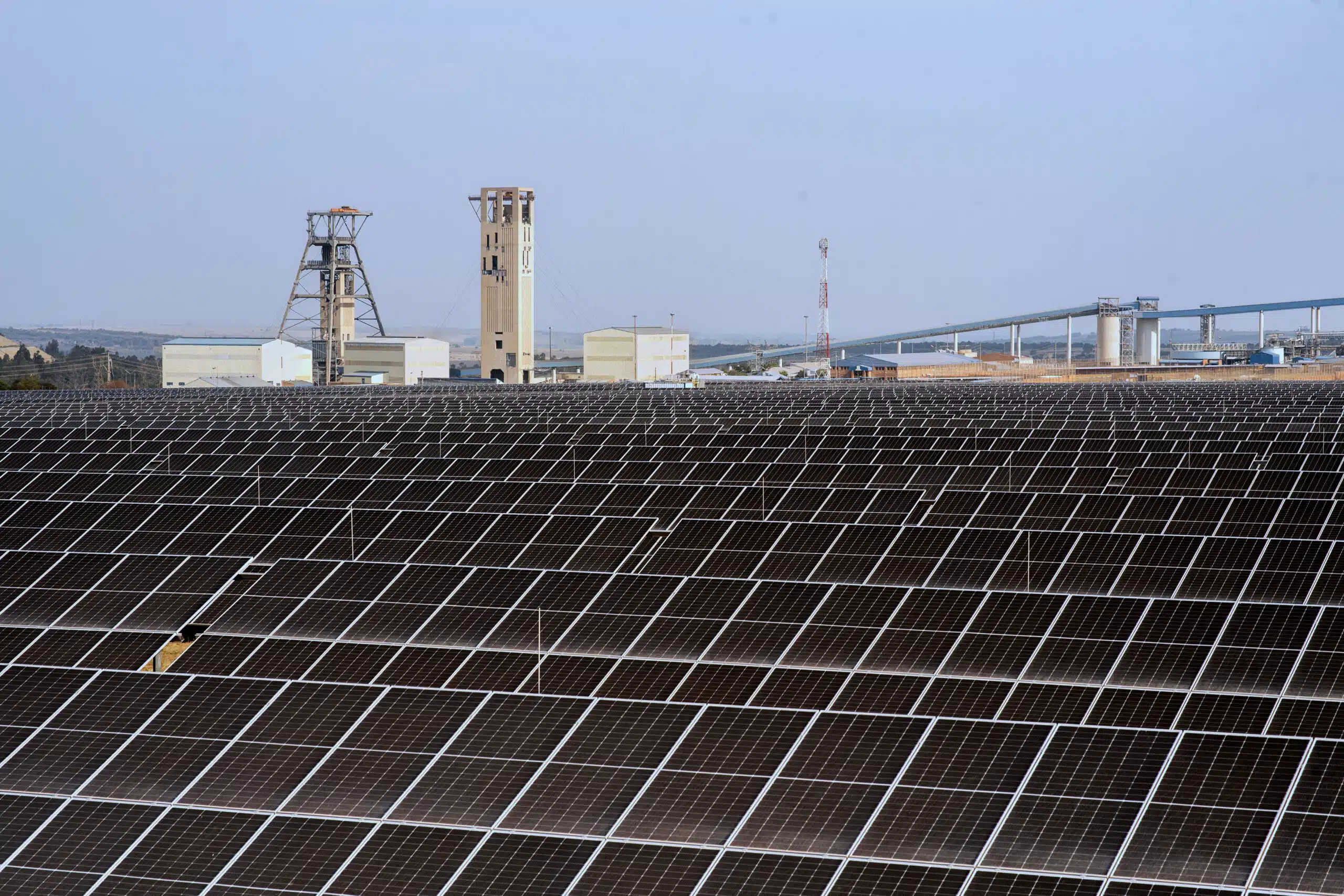
The scale of this growth is significant. South Africa continues to lead Africa in solar imports and remains the continent’s largest market. Capacity has already crossed 10 GW with an addition of 1.6 GW in recent times.
There are plans to expand by a further 10 GW of solar and 8.5 GW in storage until 2030.
This import-led structure is reflected in how the industry operates on the ground.
Distributors such as SegenSolar South Africa play a key role in supplying imported panels and components to installers and developers. Companies like ARTsolar also operate in a hybrid space, combining local assembly with imported inputs to meet rising demand.
The benefits of this approach are clear. The cost of imported solar products is relatively low due to global economies, and they are easily accessible through reliable channels of distribution. This explains why South Africa can boast of being one of the most technologically advanced solar energy markets in Africa.
On the downside, the reliance on imports entails certain economic trade-offs. It limits the development of local manufacturing capacity and leaves the market exposed to global supply chain fluctuations and price shifts.
In effect, South Africa has prioritised speed and scale over domestic industrial development. While this has made it the continent’s leading solar market, it also means much of the value creation remains outside the country.
Egypt is using assembly to secure a place in the solar value chain
The Egyptian approach lies between manufacturing ambition and import dependence. Instead of attempting to manufacture every component locally, Egypt has concentrated on assembly, bringing together imported parts to build finished solar systems.
The strategy is characterized by a combination of strategic advantage and necessity.
A key strength that Egypt enjoys is that of geography, as it sits at the intersection of Africa, Europe, and the Middle East. This has made it a natural hub for regional energy infrastructure and trade.
On the other hand, Egypt has been building up a strong portfolio of renewable energy initiatives where solar plays a critical part of its long-term energy strategy. This approach is visible in the market. Companies such as KarmSolar are developing and integrating solar systems for commercial and off-grid use.
Assembly enables Egypt to participate in the solar value chain without bearing the full cost of manufacturing. It creates jobs in integration, installation, and system design, while still relying on global suppliers for core components.
“Assembly is often underestimated, but it allows countries to insert themselves into global supply chains without needing full industrial maturity. Egypt is using that to its advantage,” Adesola said.
There are many benefits associated with this strategy. It reduces the threshold required to enter production. It also enables Egypt to develop their technical skills and create a stronger industrial infrastructure. Over time, this could position the country as a regional hub for solar system integration.
However, the limitations are equally clear. Assembly captures less economic value than manufacturing. It also maintains dependency on imported components, particularly from dominant global suppliers.
In effect, the country is building capability in the middle of the value chain, while remaining reliant on external suppliers at both ends.
Kenya’s focus on scaling solar is expanding access faster
In Kenya, the solar story is defined less by production and more by how quickly energy can reach people. The nation is one of the best illustrations of Africa’s clearest examples of how decentralised solar systems can be used to increase access to energy in areas where expansion of the grid is too difficult or costly.
Growth in the industry has been mainly driven by innovations such as mini grids and pay-as-you-go solar systems. This trend has facilitated an expansion rate for solar power that would not be matched using traditional methods.
Companies like M-KOPA Solar have scaled pay-as-you-go systems that bring electricity to low-income households, while Sun King has expanded access to solar lighting and home systems through wide distribution networks across rural and peri-urban areas.
Unlike countries focused on manufacturing or assembly, Kenya’s priority has been scale. The focus is on reaching households and small businesses quickly, rather than building upstream industrial capacity first. This approach has been supported by flexible regulation and strong demand in underserved regions.
Danie Mwangi, a solar energy expert and development researcher describes Kenya’s approach as demand-driven and highly effective for access expansion.
“Kenya’s solar market has been shaped by immediate energy needs at the household level. The country has prioritised deployment models that deliver electricity quickly, especially in off-grid areas. It is one of the strongest examples in Africa of how distributed solar can close access gaps at scale,” Mwangi told Energy in Africa.
The impact has been visible. Solar adoption has improved access to lighting, communication, and small business activity in rural communities. In many areas, it has also reduced dependence on kerosene and diesel, lowering household energy costs.
However, the model comes with structural limits. Kenya remains heavily dependent on imports for its solar technology. This implies that the majority of the cash flow from the value chain goes to companies outside the country.
Local manufacturing in Kenya is not very developed yet, which makes it difficult to establish a strong solar industry within the country. As a result, the country continues to depend on imported equipment and focuses more on expanding electricity access than developing deeper industrial or manufacturing capacity.
Manufacture, import, assemble and scale are starting to form one system
Viewed together, Nigeria’s manufacturing ambition, South Africa’s import-driven expansion, Egypt’s assembly strategy, and Kenya’s scaling model do not represent competition. Instead, they represent different points along a developing value chain.
Manufacturing requires demand. Imports fill immediate supply gaps. Assembly connects global production to local markets. Scaling drives consumption and investment.
In essence, every country occupies a different niche within the very same ecosystem.
However, this system remains fragmented. Africa is still largely importing most of its solar technology. Local manufacturing capacity remains limited and regional coordination is still in its early stages.
Even so, there are signs of gradual integration.
Increasing demand from scaling markets like Kenya creates long-term opportunities for manufacturing centers such as Nigeria. Import-dependent economies like South Africa sustain immediate demand that keeps global supply chains active. Assembly centres like Egypt provide a bridge between production and consumption.
In this sense, Africa’s solar market is not being built in isolation within national borders. It is being constructed across them.
Africa’s solar future will likely combine all models
Across Africa, the direction of solar development does not point to a single winning strategy. Instead, what is emerging is a layered system where different countries continue to play different roles based on their strengths and limitations.
The dominance of imports will certainly continue at least in the short run. It is the quickest way to expand capacity, particularly in markets facing electricity shortages. Countries like South Africa have already shown how quickly solar can scale when global supply chains are fully open.
Assembly will continue to grow as a practical middle ground. It allows countries to capture more value locally without the heavy cost of full manufacturing. Egypt’s approach reflects this balance, linking imported components to regional demand.
Manufacturing, however, will remain a longer-term ambition. The Nigerian experience indicates that local manufacturing is feasible, although it takes time and effort to become competitive.
At the same time, scaling efforts like those witnessed in Kenya will continue to drive demand. Without deployment at household and community level, the rest of the value chain has limited momentum.
These models taken together imply a future that is more interconnected than fragmented. The challenge ahead will not be choosing one path over another. It will be how effectively these different strategies are connected into a more coordinated continental energy system.