
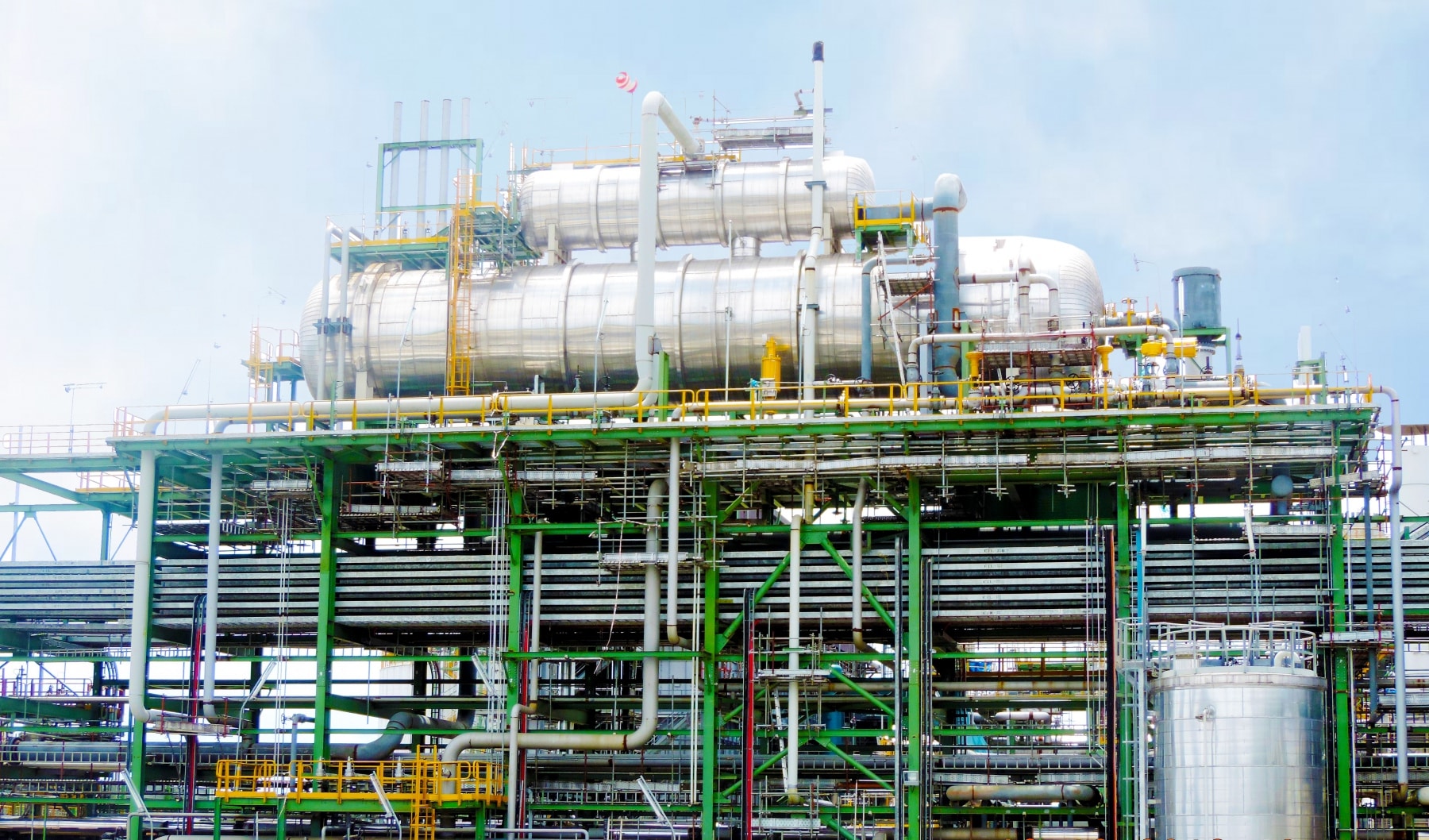


Weeks after announcing a major plan to more than double the capacity of its mega plant, an official of Nigeria’s Dangote refinery has confirmed that its main petrol unit has begun a planned turnaround that will briefly pause all crude processing activities until early 2026.
This was disclosed by the vice president of the company Devakumar Edwin in an interview with Platts reported on Friday.
Edwin said the residue fluid catalytic cracker (RFCC) was taken offline last week for maintenance and may not return until late January, adding that the plant’s crude distillation unit (CDU) will also be suspended for “a few days” that month.
The turnaround exercise, Platts confirmed, will boost the capacity of the CDU from 650,000 bpd—already the world’s largest—to 700,000 bpd.
Energy in Africa reported in July that the 7% upgrade was needed to remove constraints that have kept the plant operating below its full potential.
“In most of the departments, our production level has gone far beyond 100%,” Edwin said. “So, we need to just do a bit of de‑bottlenecking to increase the overall production.”
With this expansion, the Lagos plant could surpass South Korea’s Onsan refinery by capacity to become the eighth-largest refinery complex in the world.
Refinery still yet to run at 100%
Since coming online, the Dangote refinery has helped boost Nigeria’s refining capacity by over 400%, saving the country which previously spent billions of dollars on imports from Europe.
This led to a significant reduction in daily petrol imports, which the downstream regulator NMDPRA reported fell by 67% to 14.7 million litres in mid-April 2025 from 44.6 million litres in August 2024.
As of the end of Q1 2025, about 41% of Nigeria’s fuel demands were met by the refinery, even without operating at full bore yet.
Edwin said in July that the plant was running at about 85% capacity (550,000 bpd) of its original installed capacity, with ongoing efforts to raise production.
Intermittent disruption at Dangote’s RFCC has not only limited its output but also attracted growing international focus in the past year as it now has more markets looking to its products.
In the ending two months of Q3, the RFCC was mostly out of service because of “design issues” and other technical challenges.
NMDPRA, for instance, in its recent figures in late November, published that the Dangote refinery supplied the market with an average of 18 million liters of petrol per day (around 113,000 bpd) through the year 2025
That’s equivalent to roughly 36% of domestic demand and almost 100% below its planned 35 million litres per day (around 220,000 bpd).
As a result, the agency also applied that the 15% import tariff on petrol and diesel be suspended until Q1 of 2026 to allow fuel to meet the deficit and for the sake of energy security at a critical time of the year.
NMDPRA figures cause shake-up at home
Weeks after the supposedly independent regulator figures surfaced, Aliko Dangote has drawn the head of the agency into a nest of controversy that has brought some unexpected outcomes in Nigeria’s oil market.
Escalating what was a somewhat cold war into a standoff, Dangote has accused the chief executive of NMDPRA Farouk Ahmed of sabotaging the effort of his refinery by permitting excessive fuel imports and releasing misleading figures.
He accused Ahmed of leveraging taxpayers’ money to fund the education of children in top schools in Europe to the tune of over $5 million.
“I know of the [NMDPRA] Authority chief executive Mallam Farouk, who has four of his children educated in Switzerland at the cost of $5 million for their secondary school education alone. So I want to know what kind of system we are operating, where people are busy destroying a country and taking money from the government.”
The billionaire businessman made specific details regarding the alleged foreign education expenses public, which Ahmed said he must be given a fair hearing to clear his name.
Just before that could happen, President Bola Tinubu announced two replacements to take over from Ahmed and his upstream counterpart Gbenga Komolafe, in a major shake-up that mirrors a similar event in NNPC in April.
Potential impact of Dangote’s downtime
While Dangote’s refinery can still make petrol from its reformer in lower volumes without the RFCC, the question is: who feeds the market during this period?
Given the importance of the RFCC as its primary means of producing petrol and serving Nigeria’s large fuel demands, Dangote have to stabilise the unit soon enough.
Meanwhile, the plant in late October said it had ample volume of products to supply to the Nigerian masses throughout the 2025 holiday season.
“Our refinery is producing and loading over 45 million litres of petrol and 25 million litres of diesel each day, which surpass national demand,” Dangote refinery said.
“We are working closely with regulatory agencies and distribution partners to guarantee efficient nationwide delivery.”
However, one thing that can not be ruled out of the picture is that during this period of maintenance, the mega refiner is likely to lose a big chunk of the West African market to the European market.
Already, clean tanker rates are soaring.
Assessment by Platts reveals a 20-month high in Clean UKC-West Africa 37kt freight to $45.36/mt as of November 24, as traders aim to preempt both a supply dip from Dangote and a 15% import tariff on fuel in Nigeria in the opening weeks of 2026.
During the period of downtime, it is noteworthy that other secondary units of Dangote’s refinery like the hydrocracker can also run independently, leaving supplies of diesel and jet fuel largely unaffected.