


Ethiopia and Nigeria have signed the preliminary agreement for a Gas-by-Rail Economic Corridor Initiative (GBR-ECI), launching a significant project that will involve the building a 73,500-kilometre freight railway connecting 40 sub-Saharan African countries, beginning from Ethiopia.
This was disclosed on Monday and first reported by Birrmetrics, an Addis Ababa-based digital news media outlet.
The Monday agreement by two of Africa’s loose populated countries officially begins the countdown to a high-level summit scheduled for Addis Ababa in 2026, where 40 African Heads of State are expected to gather to ratify the protocols that will establish the first continent-wide virtual energy grid.
The private-sector-led initiative is being spearheaded by Ethiopia’s Ministry of Transport and Logistics and Nigeria’s Insight Dynamic Resources (IDR), and is expected to revolutionise how energy is moved, accessed, and deployed across the continent.
As many as 470 high-efficiency gas turbines will be deployed by the project to form a 270GW baseload power system across the continent.
Partners intend to supply these turbines by establishing a virtual pipeline capable of transporting 100 million tonnes of hydrogen fuel annually.
A breakdown of the project specifics
The initiative is structured around three core components:
- an industrial programme featuring a green steel complex developed with SMS Group to enable self-sufficient rail-track production;
- a digital backbone in partnership with Siemens Mobility to establish the One Africa Network through blockchain-based freight systems;
- a decarbonisation plan with Wabtec Corporation involving FLXdrive battery-electric locomotives aimed at supporting clean-energy logistics and limiting reliance on woodfuel.
The system is designed to support more than two billion users under a coordinated smart-rail framework, and could generate more than 70 million jobs by 2050, according to the project document seen.
Given its operational scale, the project is projected to require a logistics fleet of 5,100 heavy-haul locomotives, nearly 80,000 specialised tank units and 100,000 wagons and coaches.
“But hardware alone is not enough. A fleet of this magnitude requires a nervous system,” said Musa Ibrahim, founder of the Gas-by-Rail initiative and project development coordinator.
Siemens Mobility has been selected to provide that digital architecture through the Siemens Xcelerator platform, which uses artificial intelligence and digital-twin technology to monitor infrastructure conditions and optimise network capacity in real time.
According to Bareo, the scheme could provide access to more than 1,000 kilometres of rail infrastructure across 40 states and contribute to reduced deforestation.
Estimates suggest it could reduce woodfuel use and greenhouse gas emissions by as much as 75%, easing environmental pressure and improving public health in communities across the region.
The cost of the complex, high-profile venture is not directly clear but is projected by Musa to be between $500 billion and $1 trillion, contributing the biggest chunk to the continent’s ongoing decades-long $29 trillion energy shift.
Ethiopia adds another mega project to its basket
Ethiopia’s involvement goes far beyond hosting the kickoff.
The country will anchor the Ethio-Cluster, an industrial zone expected to serve as the heartbeat of the initiative’s broader economic blueprint.
State minister of Transport and Logistics, Bareo Hassen, said Ethiopia has 5,000 kilometres of designed railway routes with potential links to regional ports, though its railway history dates back to the early 20th century and only 902 kilometres remain operational.
He said private investment is essential to close this gap and that the partnership is aligned with efforts to enhance connectivity under the African Continental Free Trade Area.
We’re“Africa cannot industrialize on charcoal and firewood,” Ibrahim stressed. “We are burning our future to survive today. Gas-by-Rail delivers energy where pipelines cannot reach.”
This is coming months after Ethiopia, which recently commissioned the $5 billion Grand Ethiopian Renaissance Dam (GERD), with a generating capacity of 5,150MW of power.
Africa’s largest hydroelectric project marks a historic milestone for Ethiopia’s energy ambitions, promising electricity access for millions and potential exports to neighbouring countries.
However, the mega project continues to draw strong opposition from Egypt and Sudan over fears of water insecurity along the Nile.
Furthermore, Ethiopia has also recently signed an advanced agreement with Russia to construct the country’s first nuclear power plant.
The plant, for which the capacity has not yet been revealed, will be built using VVER-1200 reactor technology—one of the most advanced and safest reactor models in the world.
As part of the government’s 10-year development plan, Ethiopia in early October flagged off the construction of a 3.5 million tons per year crude oil refinery in Gode, Somali Region.
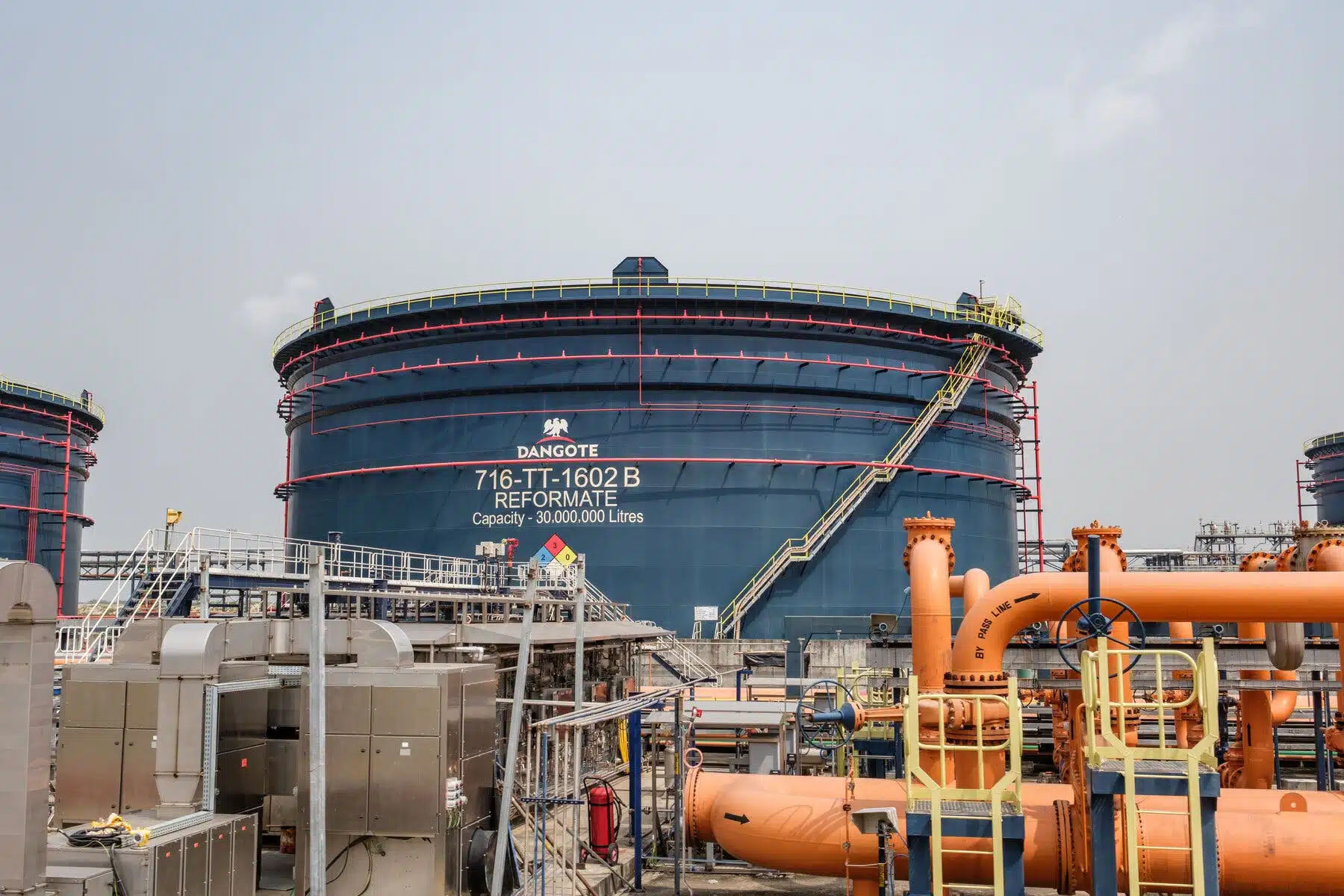
Before that, President Abiy Ahmed had in August signed a partnership agreement with Africa’s richest man Aliko Dangote for a massive fertiliser facility project in the country.
Valued at around $2.5 billion, the urea project will be co-owned by the government of Ethiopia (40%) and Dangote (60%) and will be fed with 3 million tons of natural gas annually from the Calub gas fields, transported via a 108-kilometre pipeline.