


For most African nations, the rise in crude oil prices, currently trading above $100 per barrel, has triggered an unprecedented surge in energy costs, leaving households and businesses with a heavier burden of expenses.
In oil-rich nations like Libya and Angola, government-backed subsidies have helped cushion petrol prices; but consumers still pay heavily for other products such as jet fuel, diesel and kerosene.
Some countries, however, do not have such systemic buffers—making their economies more vulnerable and exposed to global oil shocks.
Nigeria’s local refinery guarantees supply
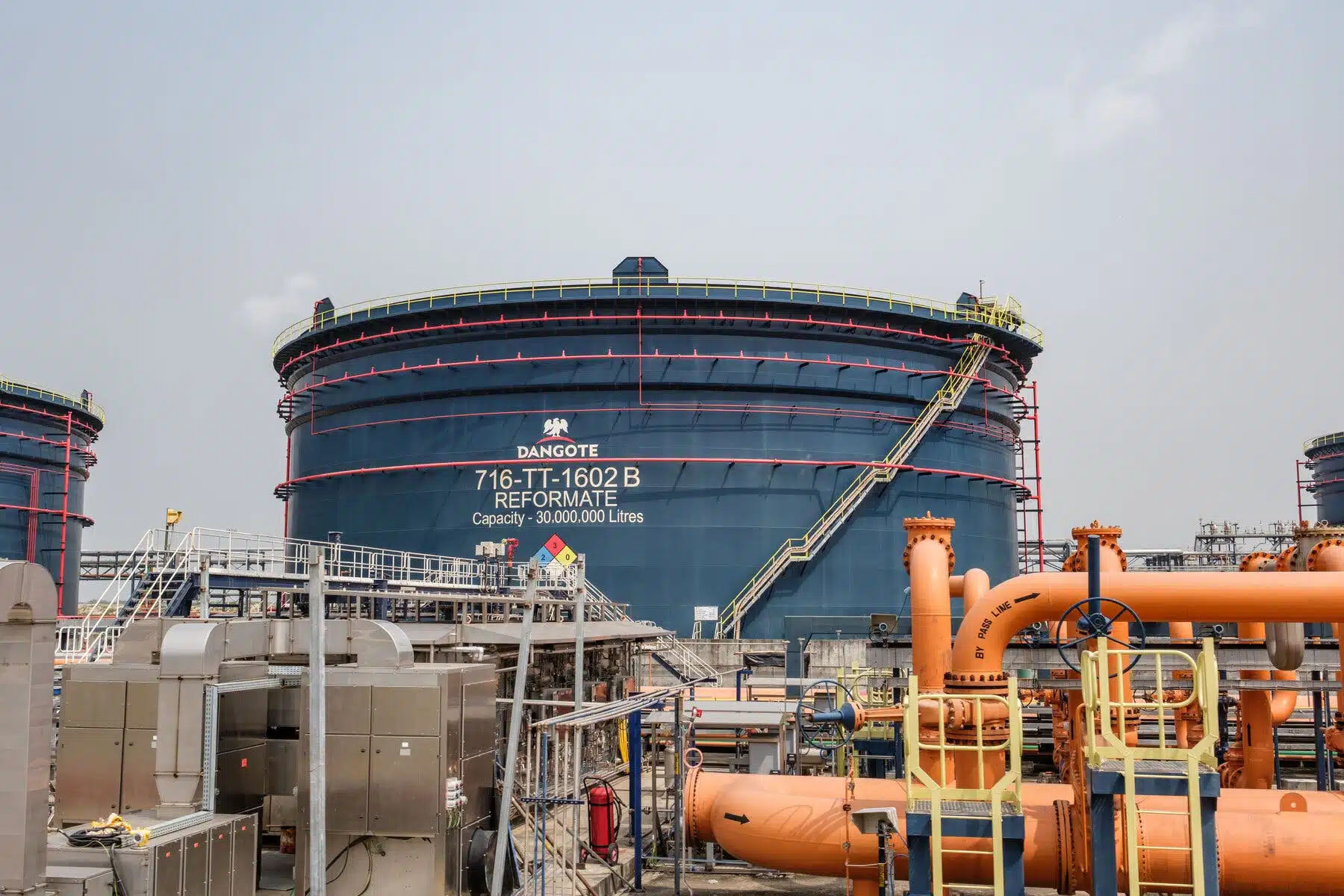
Up until 2024, Africa imported about 90% of its petroleum products, particularly premium motor spirit (PMS). The arrival of the mega Dangote refinery, located in Nigeria’s commercial city Lagos, has helped change that trend slightly.
But the 650,000-barrel petrochemical plant has yet to make a significant impact on other African markets beyond Nigeria, Ghana and a handful of Sub-Saharan nations. Even in Nigeria, where the refinery is located, prices of petrol and diesel have risen significantly.
The CEO of the processing plant, David Bird, said that while the country may not be immune to the global energy disruption triggered by the war in the Middle East, the refinery has helped ensure that supply is not cut short amid the crisis.
“With government support and steady access to domestic crude, Dangote Refinery will continue to meet all of Nigeria’s refined fuel requirements. What would be worse than $120 oil is no oil,” Bird said in a statement.
So far, the Dangote refinery, which now supplies around 60% of the total demand of Africa’s most populous nation, has raised its ex-gantry price three consecutive times to reflect the surging cost of crude oil.
Bird’s statement may well hold true as many other African nations, without local refineries, struggle to meet their energy demand through imports from war-torn regions.
Kenya’s strategic reserve as buffer
Kenya, for instance, has a long-term agreement with Middle Eastern producers such as Qatar, Saudi Arabia and United Arab Emirates.
As the war escalates across the region, the East African nation has had to rely on its strategic reserves to meet petroleum needs. Kenya also plays a critical role in the Eastern corridor, as imported fuels are transported through key facilities such as the Kipevu Oil Terminal and Shimanzi Oil Terminal in Mombasa.
The products are then transported through its pipeline network to the rest of the country. Kenya also has agreements with neighbouring nations like Uganda, Tanzania and Rwanda to supply their fuel needs.
Given its regional significance, maintaining consistent supply is therefore a key priority for the Kenyan government.
So far, the nation’s petroleum agency, the Energy and Petroleum Regulatory Authority (EPRA), is yet to raise prices for petrol and diesel, noting that the government continues to monitor developments as the crisis grind on.
“The effect of the situation in the Middle East has not had an impact on prices yet,” said EPRA Director General, Daniel Kiptoo Bargoria, on Monday.
Kenya’s strategic reserves have made it possible for the country to remain flexible with pricing while ensuring sufficient supply of petroleum products for its citizens as well as neighbouring countries.
African nations without a safety net
But not every African nation has the luxury of strategic reserves, and the effect of the war has been instantaneous and direct for households and businesses.
For instance, Egypt raised its petrol prices by 17% last week during the peak of crude oil prices at around $120 per barrel. There are no reports yet that the North African nation has reduced prices.
Notably, Egypt is also in the process of scaling back fuel subsidies in line with the conditions tied to its $12 billion IMF loan arrangement.
In West Africa, petrol prices have risen in Togo, Benin and Cameroon—many of which source products from Nigeria and other African countries.
Ghana, on the other hand, imports most of its petroleum products from Europe and the Middle East. As a result, the rise in global prices has directly impacted pump rates in the country.
On Tuesday March 16, Ghana raised its petrol prices by 10.6% and diesel by 25.7%, according to checks by Energy in Africa.
The country’s oil marketers have also attributed the price increases to the ongoing conflict in the Middle East.
South Africa’s thin silver lining subsidy
For South Africa, the continent’s largest economy, prices have remained relatively stable since the beginning of the war, partly because the country adjusts its energy prices in the first week of every month.
Prior to the global crisis that pushed oil above $100 per barrel, petroleum prices in South Africa had dropped to a four-year low in February, when crude traded between $62 and $64 per barrel.
However, recent data from the Department of Energy’s Central Energy Fund (CEF), which tracks international petroleum prices and exchange rate movements, suggests that prices are expected to rise in April when a new rate is announced.
Meanwhile, Bloomberg reports that South Africa’s National Treasury may introduce a temporary subsidy measure to keep prices from rising in the coming weeks.
The intervention could cost the government tens of millions of rands to offset the knock-on effects on petrol and diesel prices, according to Duncan Pieterse, the Treasury’s director-general.
However, there are concerns that such intervention may offer limited relief as the country braces for higher petrol and diesel prices in April.
“Unless you have those kind of resources, which currently we do not have available as part of our fiscal buffers, you are either looking at no relief, or a very small amount of relief,” he said at a conference hosted by Stanlib Asset Management in Johannesburg on Wednesday, as per Bloomberg.
No African country is fully immune
In all, no African country has been fully immune to the movement in petroleum prices since the US-Israel versus Iran war began three weeks ago.
While US President Donald Trump has said the war would not extend beyond four weeks, many analysts believe this estimate may be overly optimistic, with expectations of a prolonged conflict in the months ahead.
Beyond the immediate impact, some analysts argue that the aftermath of the crisis could pose even greater challenges for global energy recovery.
African nations, with limited infrastructure buffers, are likely to bear the brunt, with projections suggesting it could take up to a decade for their economies to fully adjust.
For now, each country has adopted strategic and varied coping measures to manage the crisis. The question remains whether these measures will hold as the escalation continues and normalcy gradually returns.