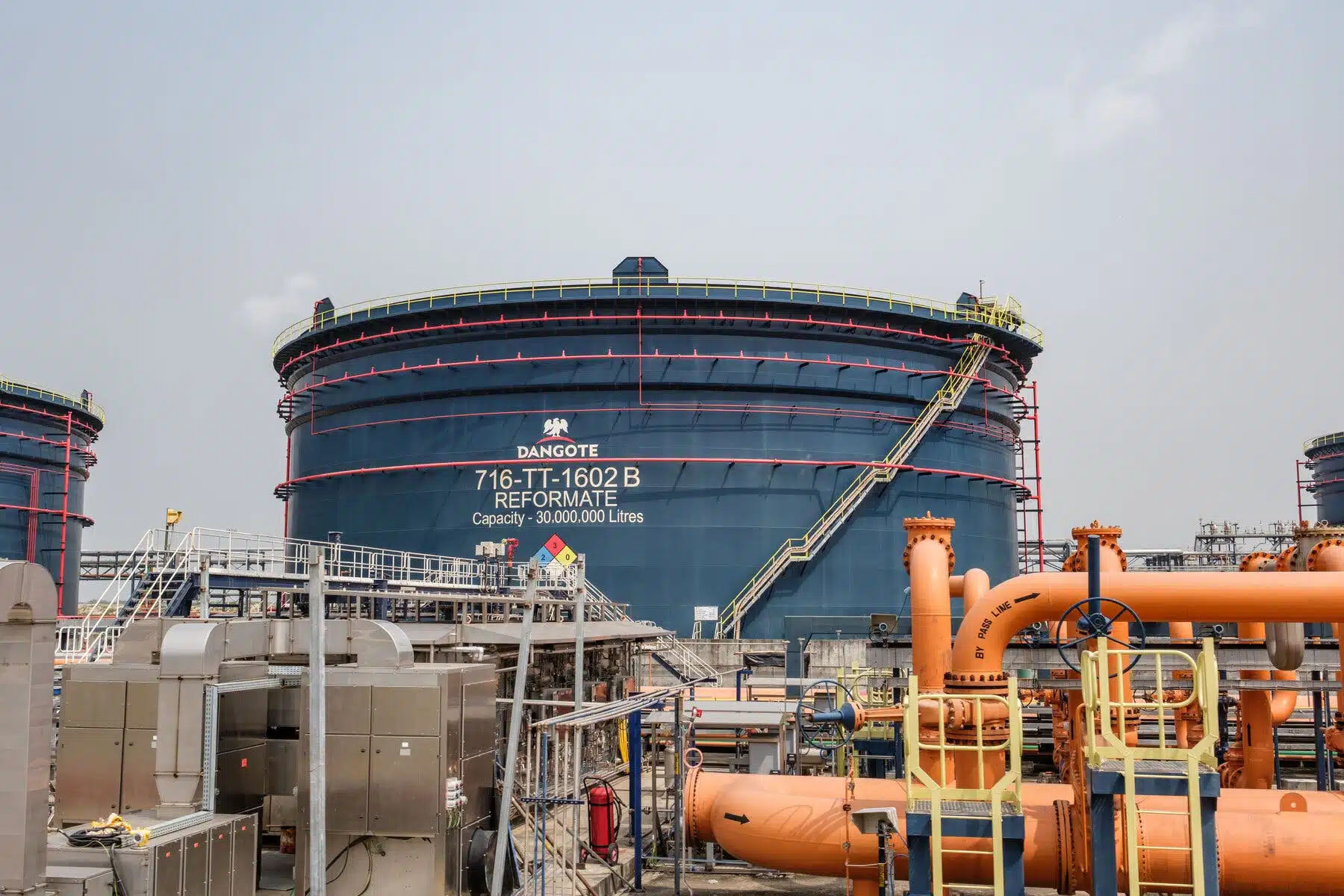



Despite its impact on reducing petrol imports in Nigeria, the mega Dangote refinery is “barely making a dent” in Africa’s refined products industry, a new report has shown.
The 2026 Outlook report by the Africa Energy Chamber, an energy think tank, said the refinery is hugely significant for oil trade in the Atlantic Basin.
The Dangote refinery, a $20 billion project owned by Nigerian billionaire Aliko Dangote, began operations in 2023. Since then, it has supplied products to several markets, including Europe, the United States and Sub-Saharan Africa.
The refinery, with a nameplate of 650,000 barrels per day, is yet to operate at full capacity. However, output improved significantly in 2025.
Still, the petrochemical plant is struggling to break into the wider African market, even as imports of refined products from Europe and the United States continue to surge.
The Africa Energy Chamber said demand for refined products on the continent is expected to rise sharply over the coming decades, adding more than 2 million barrels over 25 years.
“Africa’s refined product demand is projected to rise from 4 million barrels per day (bbl/d) in 2024 to over 6 million bbl/d by 2050, a 50% increase” the report said.
Dangote to produce at full capacity in 2026
Moreover, the report noted that the refinery is expected to “hit full gear” in petrol production in the first quarter of 2026.
The expected surge in output is linked to the full recovery of its residue fluid catalytic cracking unit (RFCC), which is currently undergoing maintenance.
Dangote refinery’s management confirmed that maintenance work is ongoing on the RFCC unit. It said the process does not affect production.
“The refinery is not shutting down,” the statement said. “Production remains stable and uninterrupted.”
It added that output reached 50 million litres on January 4, with 48 million litres loaded and evacuated through its gantry on the same day.
At full capacity, the Dangote refinery is expected to produce no less than 90 million litres of gasoline per day. This excludes other products such as jet fuel, diesel and kerosene.
Finding crude feedstock for the refinery
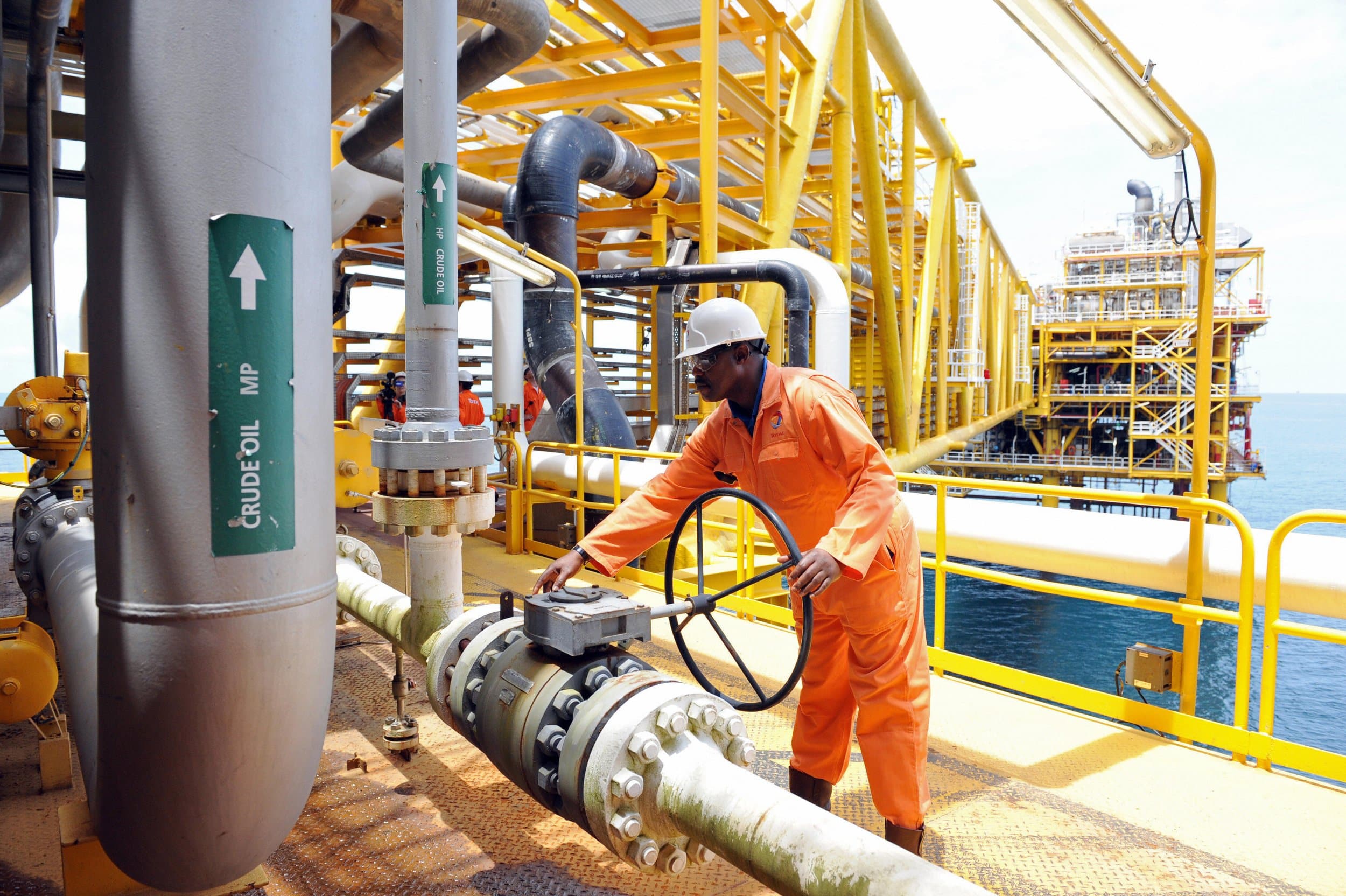
Beyond routine maintenance of the RFCC unit, another challenge facing the refinery is sourcing crude oil feedstock.
The Africa Energy Chamber reported that more than 20% of the refinery’s total feedstock in 2024 was imported from the United States.
“As the refinery ramps up production in 2025, it will require an increasing volume of crude oil feedstock,” the document said.
Earlier, Dangote said Nigeria’s national oil company, NNPC Limited, had been unable to meet its crude supply obligations to the refinery.
NNPC Limited, on its part, has commitments to foreign lenders. These obligations are tied to crude swap agreements used to secure loans.
As a result, Dangote has had to rely on imported crude to sustain operations and meet production targets.
In November 2025, the refinery reportedly secured a second batch of crude oil from Ghana.
However, a large share of its crude supply has continued to come from the United States. At one point, US crude accounted for about one third of its total feedstock.
Future outlook for Dangote Refinery
Overall, the report projects a positive outlook for the refinery, with production expected to rise sharply in the first half of 2026.
The Dangote refinery is also planning to double its capacity to 1.4 million barrels per day within the next three years.
At that level, the refinery would not only meet Nigeria’s domestic demand but also supply petrol to other Sub-Saharan African countries.
The expansion would make Dangote the largest refinery in the world, overtaking India’s Jamnagar refinery, which has a capacity of 1.1 million barrels per day.
“We expect gasoline production at the refinery to hit full gear in the first quarter of 2026, when we anticipate the RFCC unit to reach its full capacity,” the Africa Energy Chamber stated.