


When Uganda handed over its electricity industry to be managed by private operators in 2005, about twenty years ago, many people considered it a breakthrough to the incessantly ailing condition of the East African nation’s energy crisis.
The operator, Umeme, would manage generation, distribution across the state, and even the East African region.
Uganda is quite a fascinating nation when it comes to power supply. The country’s challenge is not a shortage of available power, but systemic and infrastructure rot that have made it impossible for it to utilize its electricity to its fullest measure. Uganda is one of the few African countries with more electricity than it can use. The Museveni-led nation even exports some of its power supply to Rwanda and Kenya.
But this does not exempt it from one of the major challenges facing electricity adoption in Africa, which is debt.
After twenty years of management by Umeme, the government demanded that the private distributor return its licence to the state. At that time, commercial and technical losses had surged significantly. The handover was messy. Contrary to most people’s assumptions, Umeme did not solve Uganda’s power problems. The country still lingers, alongside other counterparts, in periodic blackouts and power outages.
Aging power lines, dilapidated infrastructure, and largely disconnected rural communities from the centralized grid became the story of Umeme’s twenty year rule as electricity operator. The private utility also took the Ugandan government to court in UK for a $300 million unpaid dues within the same period. As of today, nearly 50% of the nation’s population is without power.
A debt trap acrosss Africa’s utilities
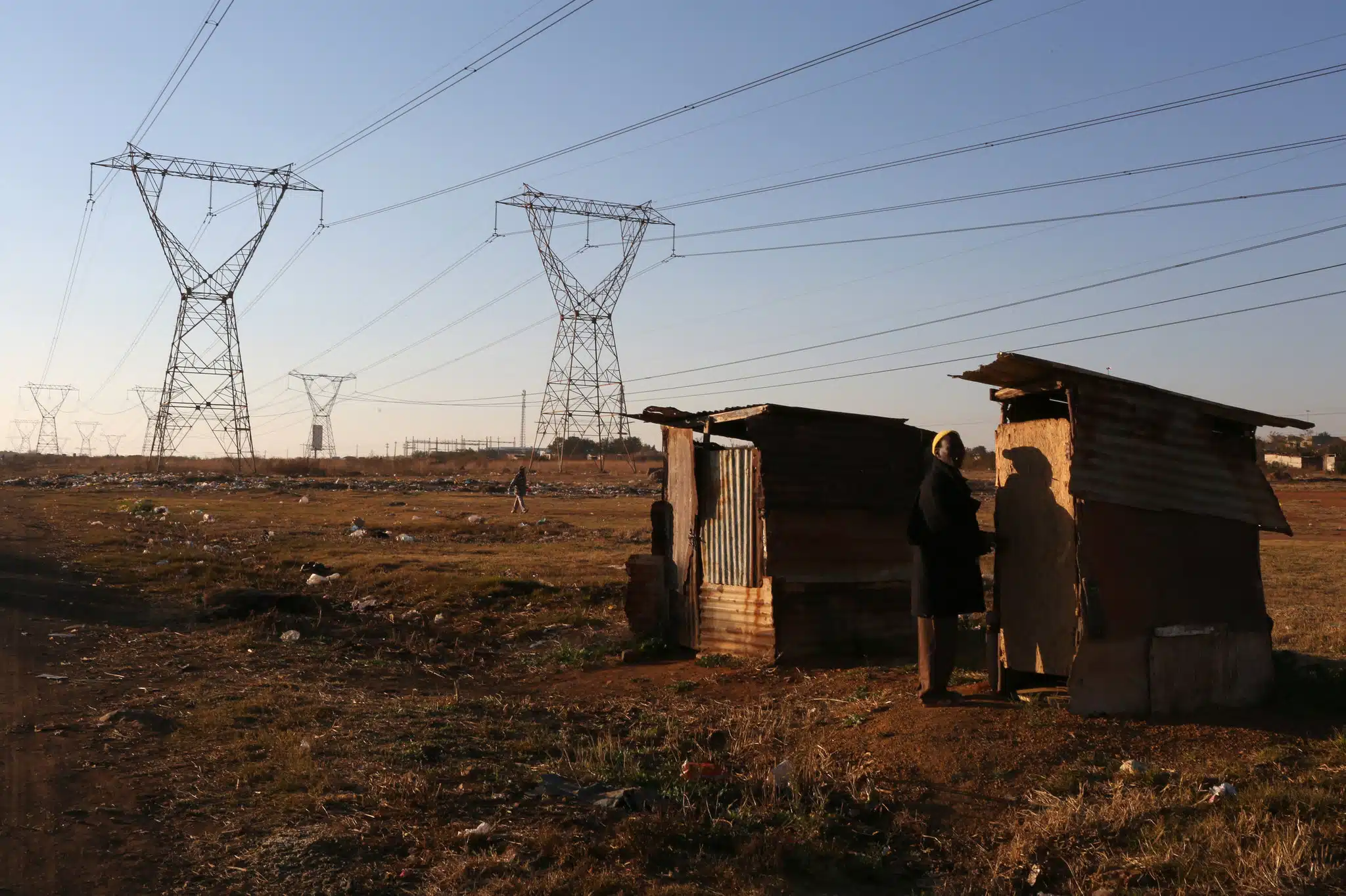
Uganda is not isolated in Africa when it comes to energy poverty. In fact, one in every three persons in the world without electricity comes from Africa. The continent has not less than 600 million people without power.
Electricity challenge in Africa is a blend of underinvestment, market failure, and low rural access, making infrastructure development and industrialization difficult.
At the centre of the problems is a debt trap. For Uganda, 80% of its electricity comes from hydropower. The country has three major dams—Karuma, Isimba, and Bujagali—all of which were constructed through bilateral loans particularly from China. Hydropower is renewable, but it is not inexpensive. As a result, Ugandans pay high tariffs for electricity, even though it is not usually stable.
In South Africa, where the primary source of electricity is not renewables but coal, the story is almost similar. Over $5 billion municipal debts have left Eskom unable to balance its books. Not until 2023, when government bailout through its Debt Relief Act gave the utility some wiggle room, Eskom ran losses for almost a decade.
Unpaid tariffs, billions of dollars in loans, and debts from technical losses made Eskom not investable for years. No doubt, the state-backed electricity firm is recovering from this crisis, but it also means higher tariffs for consumers and securing more international loans from financiers and local banks.
The CEO of the utility, Dan Marokane, said the country may require about $22 billion for super grid expansion. So far, it has not been able to attract investors to secure the needed funds.
Low-income electricity buyers add to debt
Low purchasing power among the consumers contributes significantly to all of these. In its 2025 report on financing electricity access in Africa, the IEA describes these challenges quite succinctly.
The report shows that only about 40% of electricity consumers in Africa can pay the global standard for every kilowatt generated. As a result, the region requires nothing less than $10 billion in electricity subsidies to grant this access.
Accordingly, debts continue to pile up for both governments and utilities. The IEA also notes that only the top tier utility firms on the continent have access to global financing, especially those that are well established and have strong government backing.
“This has proved particularly challenging for mini grid developers, who face the greatest struggles raising debt.
“Only a few have successfully secured commercial loans or funding from development finance institutions,” the report says.
Africa needs nothing less than $50 billion annually in capital infusion to get its electricity sector going.
Debt and grid failure in Nigeria
In Nigeria, Africa’s country with the highest number of people without power, legacy debt has piled up to over $3 billion.
Despite multiple privatisation efforts and changes in distribution operators from one player to another, the West African country has not been able to supply more than 5,000 MW of electricity to consumers. Commercial and technical losses also add to the crisis. Revenue collection has risen in recent times, but it is not enough to manage costs, let alone make utilities profitable for operators or prospective investors.
The Nigerian government is planning to raise over $2.6 billion in bonds to settle legacy debt owed to power producers.
However, some analysts believe this may not move the needle when it comes to the systemic fiscal rot the sector faces.
“While gas producers, the generation firms, are important to the electricity value chain, most debts are accrued by the distribution companies, and the government does not seem to care about that key part of the chain,” an analyst told Energy in Africa.
In January 2026 alone, Nigeria’s electricity grid collapsed twice, plunging over 200 million people into darkness. The problem will not go away until the debts are fully paid and revenue collection surges.
“Our overall objective is to restore confidence across the power value chain and create the conditions for reliable electricity supply,” Olu Verheijen, the government official in charge of energy reforms, told reporters recently.
Creating the right conditions for investors in Nigeria, and by extension in Africa, would mean reducing debt traps, ensuring inflow of more liquidity, and working to create an efficient system for revenue collection without overburdening consumers.
Africa’s industrialisation hangs heavily on how much electricity it generates and distributes. The continent’s darkness may not be caused by lack of will for sustainable change, but by the absence of financial power to carry it through the finish line. Perhaps Africa’s energy poverty crisis is simply an energy debt problem.