


Kenya’s long-delayed Taifa Gas terminal project in Mombasa has been given the green light after more than two years of legal battles, raising hopes of easing tensions in trade relations with neighbouring Tanzania.
The $130.5 million (KSh 17 billion) liquefied petroleum gas (LPG) facility, backed by Tanzanian billionaire Rostam Aziz, is being developed by Taifa Gas Investments SEZ Ltd at the Dongo Kundu Special Economic Zone near the port of Mombasa. The Kenyan government has allocated 30 acres within the 3,000-acre zone for the project.
The terminal, designed to handle 30,000 tonnes of LPG annually, is intended to serve both Kenya and Tanzania as the two countries push to expand access to clean cooking fuel. Supporters say it could help lower household energy costs and reduce reliance on kerosene and charcoal.
Construction began in February 2023 with a high-profile flag-off attended by President William Ruto, but progress stalled amid legal petitions and environmental concerns. Recently, the Mombasa Environment and Land Court struck out challenges to the project, ruling that its environmental approvals were lawfully obtained.
The project comes against a backdrop of strained trade relations between Kenya and Tanzania. Nairobi has criticised new Tanzanian trade restrictions, including excise duties and licensing rules, arguing they undermine the East African Community (EAC) integration framework.
Observers say the shared gas infrastructure could help mend ties by deepening energy cooperation between the two economies.
The Likoni disputes
Kenya’s Taifa Gas terminal project in Mombasa faced years of delay due to legal challenges, environmental concerns and regulatory hurdles.
Residents of Likoni, supported by environmental groups, argued that the planned 30,000-tonne liquefied petroleum gas (LPG) facility posed risks to the fragile coastal ecosystem. They challenged the project’s Environmental Impact Assessment (EIA) licence, claiming it was inadequate.
“The petitioners also contend that the construction of a pipeline will ruin the fishing grounds, which are a source of livelihood for the local population,” the Likoni group told the court, naming the National Environment Management Authority (Nema) as an interested party.
In July, the courts suspended construction pending review. The project only advanced in late November when the Environment and Land Court struck out the petition, ruling that the EIA licence had been lawfully obtained.
Justice Stephen Kibunja noted: “The flipside is that the damage to the environment may be as great if the works were to continue as the applications are heard and determined.”
Taifa Gas chief executive Rostam Aziz welcomed the ruling, describing it as “a vindication of commitment to due process and environmental responsibility, and a milestone for Kenya’s energy transition.”
Despite the court’s decision, the project still requires fresh clearance from Nema and other regulators before construction can resume.
Scale and promise of the Taifa terminal
Kenya’s ambitious Taifa Gas terminal project in Mombasa is expected to play a central role in the country’s clean-cooking strategy, which aims to raise LPG adoption from 24% to 70% by 2028, according to the Ministry of Energy.
The facility, billed as Africa’s largest LPG project, has faced years of legal challenges and environmental concerns before finally receiving government approval in late 2025.
Kenya currently imports all of its LPG, with the bulk of supplies coming from the United States, alongside shipments from the Middle East. In 2021, the country imported 371,000 metric tonnes of LPG, valued at $111 million for butane and $25 million for propane, most of it sourced from US suppliers.
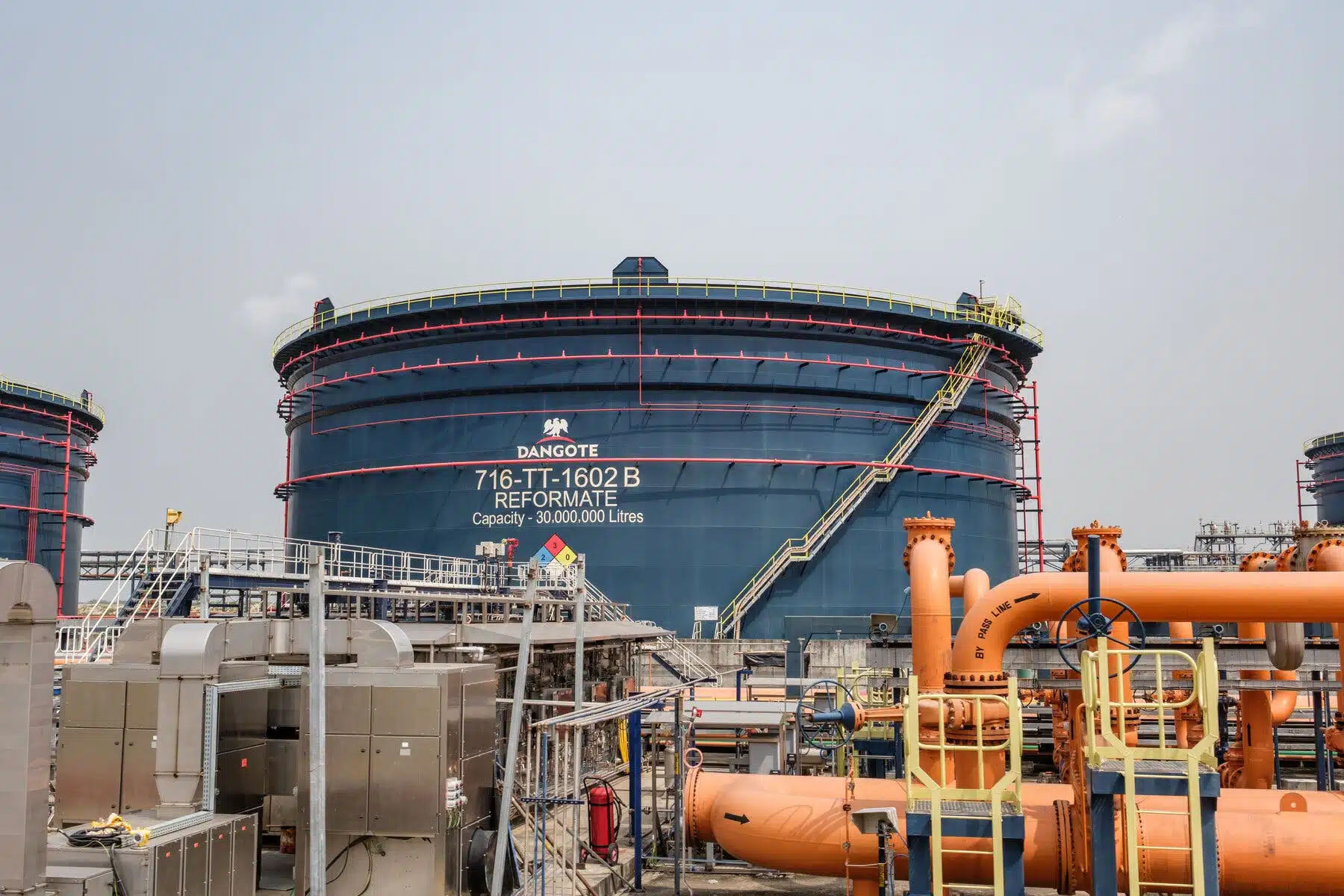
The new 30,000-tonne plant is designed to store propane, butane and LPG for domestic, commercial and industrial use. Supporters say the entry of a new player could help lower prices in a market long dominated by Africa Gas and Oil Limited.
The project is being developed by Taifa Gas Investments SEZ Ltd, part of Tanzania-based Taifa Gas, one of East Africa’s largest energy firms with interests spanning LPG, solar, logistics, agriculture, aviation and telecommunications. The company first attempted to enter the Kenyan market in 2017 but only secured approval after a bilateral deal between former President Uhuru Kenyatta and Tanzania’s Samia Suluhu Hassan in 2021.
In Tanzania, Taifa Gas operates a major storage plant and more than 20 depots across all major towns, making it the country’s largest LPG distributor. As of late 2025, no official records identify additional shareholders in the Mombasa project beyond billionaire Rostam Aziz, the company’s founder.
The Mombasa terminal is expected to take 12 months to complete, with projections of up to 90,000 jobs created directly and indirectly once operational.
What’s in Taifa for Kenya’s energy market
Kenya’s planned Taifa Gas terminal in Mombasa, billed as Africa’s largest LPG facility, is expected to meet up to 70% of the country’s liquefied petroleum gas demand. Consumption rose by 13.38% in 2024/25, driven by government efforts to promote cleaner cooking fuels.
President William Ruto, speaking at the project’s launch in February 2023, said: “The adoption of clean, modern cooking minimises our appetite for wood fuel, which has traditionally led to the decimation of our national tree cover as well as illegal felling of trees on a massive scale. Liquid petroleum gas is an important transition alternative, representing a major step towards clean domestic energy consumption.”
Kenya has already invested more than $200 million in LPG storage and management facilities since the start of the decade, alongside $400 million in tax relief and incentives aimed at achieving universal access to clean cooking by 2030.
The Energy and Petroleum Regulatory Authority (EPRA) has also issued licences to private investors to build bulk LPG facilities across the country, part of a wider push to expand infrastructure and stabilise supply.
Cabinet Secretary for Energy and Petroleum Davis Chirchir said: “We are investing in infrastructure as an incentive to promote the use of cooking gas.”
Pending political and business concerns
Beyond boosting Kenya’s LPG adoption and stabilising prices, the Taifa Gas terminal project was conceived as a symbol of deeper energy integration between Kenya and Tanzania, aligned with frameworks such as the African Continental Free Trade Area (AfCFTA) and the EAC.
That ambition now faces hurdles. Tanzania has tightened licensing rules in border towns such as Namanga and Arusha, imposing new excise duties and restrictions on non-citizens engaging in business. The measures have affected Kenyan traders and transporters, despite a September 2025 agreement between Nairobi and Dodoma to remove all trade barriers. Analysts warn the restrictions risk undermining regional cooperation within the EAC bloc.
Kenya itself has faced scrutiny over its investment climate. In October, the government began seeking a $38 million out-of-court settlement with India’s Adani Group, whose $740 million electricity infrastructure project was halted for allegedly violating procurement and governance principles.
Observers say such decisions risk portraying Kenya as a high-risk destination for large-scale foreign investment.
Instead, Nairobi is pressing ahead with plans to privatise key state-owned energy firms, including the National Oil Company (NOC) and the Kenya Pipeline Company (KPC). It is also preparing to establish an oil-backed sovereign wealth fund aimed at safeguarding resources for future generations.
“As responsible citizens of the present, we must think about the generations of tomorrow and we must keep for them something, so that tomorrow, they have a place to start,” President William Ruto said in October.
The fund’s launch date remains unclear, though Kenya is targeting late 2026 for the resumption of commercial oil production. The collapse of a pilot scheme led by Tullow Oil has shifted focus to the Turkana oil project, now being managed by Gulf Energy, which officials believe could yield greater returns.