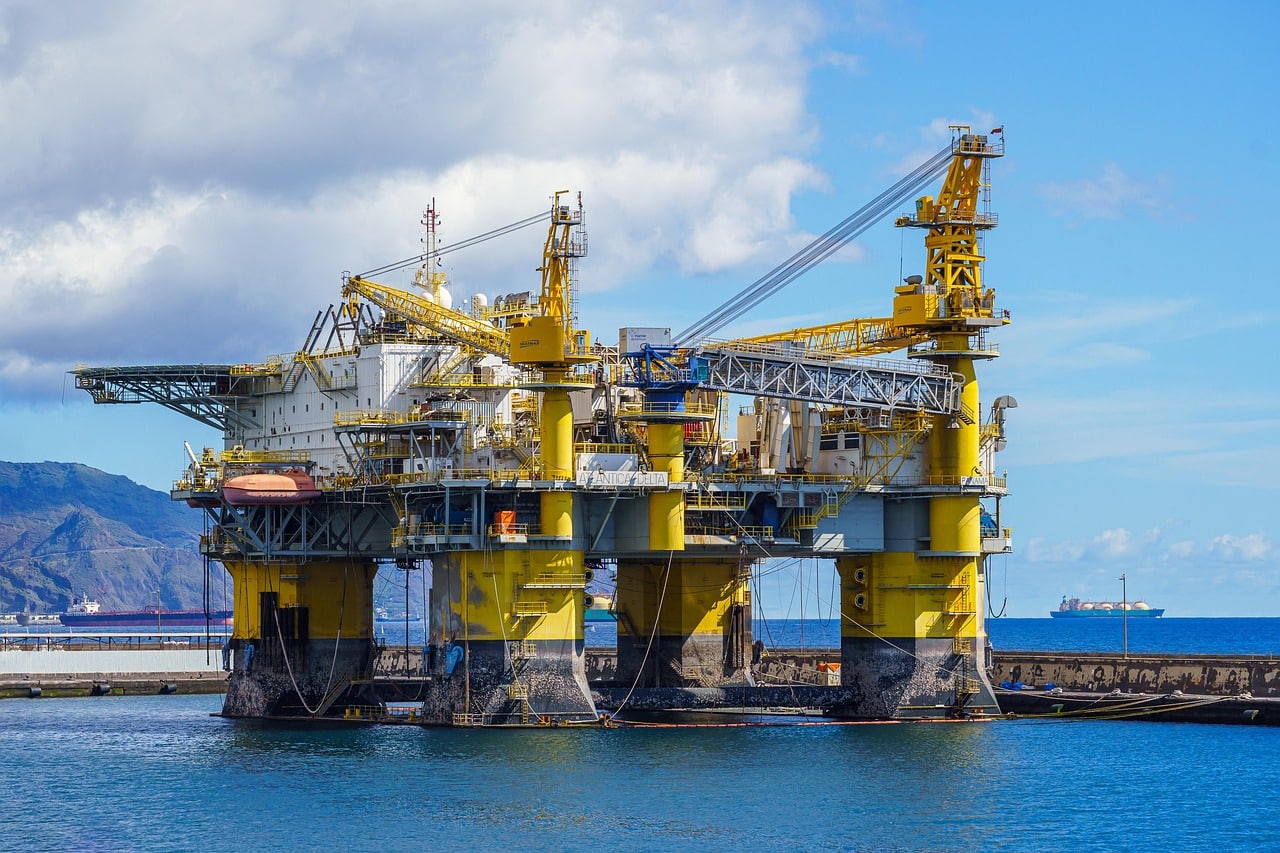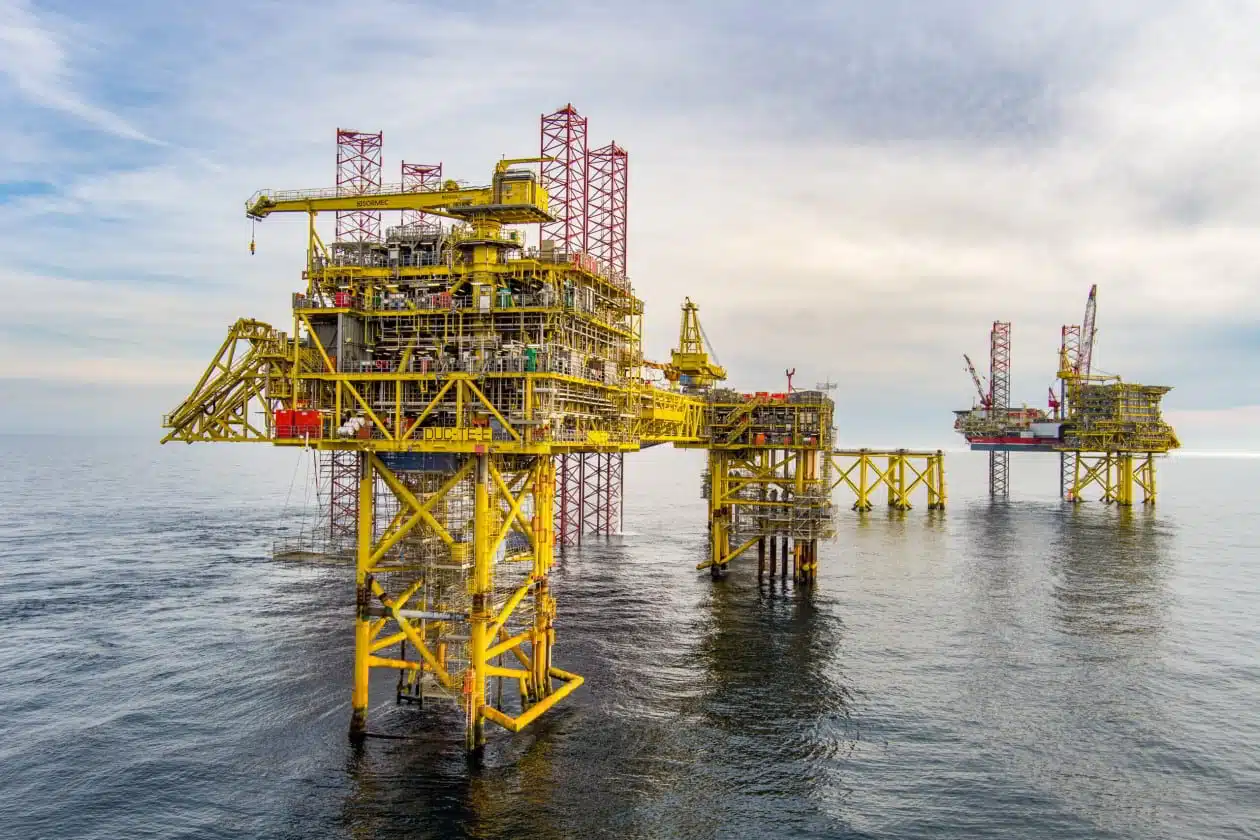



Africa’s energy sector is entering a pivotal year in 2026, with a slate of oil and gas projects poised to reshape the continent’s role in global supply.
After a wave of landmark deals and final investment decisions in 2025, attention now turns to execution — from frontier drilling in Namibia’s Orange Basin to refinery ambitions in Uganda and LNG expansions in Egypt and Nigeria.
These projects, when looked at more closely, represent Africa’s balancing between harnessing hydrocarbons for growth and navigating the global energy transition.
With capital expenditure projected by the African Energy Chamber (a Pan-African energy tink tank) to rise from $43 billion in 2025 to $54 billion by 2030, 2026 will be a year where a fair share of these commitments translates into tangible progress.
Interestingly, next year looks promising as companies begin to look away from the use of cash as the primary currency for most deals, and growingly explore the use of stock-for-stock swaps.
“The African oil and gas sector is set for significant consolidation in 2026, particularly among midsize and African independent companies,” said NJ Ayuk, Executive Chairman of the African Energy Chamber.
“This trend is driven by a desire for a more efficient and competitive environment, which is ultimately beneficial for both the continent and the industry in the long term”.
We look at the major promising oil and gas projects as Africa coasts closer to one of its most consequential years as far as the oil and gas industry is concerned.
TotalEnergies expects to make FID in Namibia
TotalEnergies has confirmed that it expects to take final investment decisions (FID) on a major upstream project in Namibia in 2026, marking a pivotal year for the French energy giant’s African portfolio.
The Venus oilfield in Namibia’s Orange Basin, discovered in 2022, is considered one of Africa’s most significant offshore finds in recent decades.
Initially targeted for late 2025, the FID has now been postponed to late 2026 due to cost challenges and technical complexities.
Revised projections suggest output of around 150,000 barrels per day, slightly lower than earlier estimates of 160,000 bpd.
High gas content in the reservoir complicates development and raises costs. TotalEnergies requires breakeven economics below $20 per barrel before sanctioning the project
Mozambique LNG construction to start
TotalEnergies has indicated that 2026 will also be the year for a renewed FID on Mozambique LNG, following stabilisation efforts in the region and ongoing discussions with partners and the government.
Mozambique’s Rovuma Basin hosts some of the world’s largest offshore gas reserves. TotalEnergies leads the Mozambique LNG project, which has faced repeated delays due to security concerns in Cabo Delgado province.
Mozambique LNG is expected to supply global markets with up to 13 million tonnes per annum (mtpa) of liquefied natural gas.
The project is central to TotalEnergies’ strategy of expanding its LNG portfolio to meet rising global demand. Improved security conditions and renewed financing commitments from international lenders are critical to moving the project forward.
TotalEnergies has said it would raise additional equity to cover the $2.2 billion funding gap left by the governments of both the UK and the Netherlands which have both recently withdrawn from the project.
However, construction of the project is expected to resume on the $20 billion LNG project in 2026, with first gas exports targeted for 2029.
Completion of $5.1 billion East Africa pipeline (EACOP) in Uganda
Another mega project that is likely to come online in 2026 is the $5 billion EACOP pipeline project that is designed to run from Uganda’s Hoima District to Tanzania’s Tanga Port.
The world’s longest heated crude oil pipeline will help transport over 200,000 bpd of Uganda’s crude oil to Tanzania for exports when completed.
As of July, the EACOP had reached 64% overall completion. The final shipment of pipes for the project from China was delivered in September, marking a major step toward its first oil production next year.
“This milestone means that the first oil remains on track for next year,” Uganda’s Minister of Energy, Ruth Nankabirwa, said.
The Petroleum Authority of Uganda said the project will reach mechanical completion by the end of Q2 2026.
The EACOP project is a joint venture between TotalEnergies (62%), CNOOC (8%), and the national oil companies of Uganda (15%) and Tanzania (15%).
It is financed by a consortium of both regional and global institutions like Afreximbank, the Islamic Corporation for the Development of the Private Sector in Saudi Arabia, Standard Bank of South Africa, Kenya Commercial Bank Uganda and Stanbic Bank Uganda.
It is noteworthy that Uganda also targets its first oil in 2026.
Dangote’s dual listing in Nigeria and London
Nigeria’s Dangote Refinery plans to dual list on both the Nigerian Exchange (NGX) and the London Stock Exchange (LSE) before the end of 2026, marking one of the most anticipated corporate moves in Africa’s energy sector.
The mega refiner’s initial plans were to list in early 2025, but the timeline was pushed back to late 2026 to allow for operational ramp-up and market readiness.
The 650,000 bpd refinery, which began stabilising operations in 2025, is expected to reach full output capacity before the listing.
Executives at Dangote Group noted that the Nigerian Exchange alone may not have the depth to handle such a massive refinery listing, hence the decision to also list in London.
“The NSE will not have adequate depth to handle the petroleum refinery exclusively. We would have to take it to LSE but also list it on the NSE,” Devakumar Edwin, Dangote Refinery’s executive director, told Reuters in May.
Listing on the LSE will open the refinery to international investors, enhancing liquidity and valuation. Similarly, the NGX (formerly NSE) listing ensures Nigerian investors, including pension funds and retail shareholders, can participate in the refinery’s growth story.
Overall, the dual listing will be one of the largest in Africa’s history, comparable to major global IPOs in the energy sector. It is expected to attract significant institutional investors, given the refinery’s scale and strategic role in West Africa’s fuel supply chain, which has historically been dominated by European refiners.
Outcome of Libya’s 2025 oil licensing round
The outcome of Libya’s 2025 oil licensing round is set to be one of the most closely watched developments in 2026, with implications for global energy markets, regional geopolitics and the country’s fragile economy.
Libya’s 2025 licensing round was the first major bid round since the civil conflict disrupted the oil sector.
It signals a renewed push to attract foreign investment and rebuild production capacity.
“Virtually all international oil and gas firms are competing in the licensing round,” said Masoud Suleiman, chairman of NOC, indicating the scale of global interest.
Libya holds Africa’s largest proven oil reserves—over 48 billion barrels—but much of it remains underdeveloped due to years of instability.
The 2025 round covers 22 areas for oil exploration and development, including 11 offshore and 11 onshore blocks.
Global majors and regional players submitted bids, but the results will reveal who is willing to commit capital amid ongoing political uncertainty.
Libya’s National Oil Corporation (NOC) says the country’s 2025 public exploration bidding round has entered its final stage and that the bids are expected to be opened in February 2026.
Successful awards could pave the way for new exploration and development projects, potentially lifting Libya’s output beyond the current 1.2 million barrels per day.
Of course, OPEC+ will be closely monitoring Libya’s ability to ramp up production and its supply could influence oil prices and balance within the cartel.
Nigeria LNG’s $10 billion Train 7 expansion project
One of the projects to look out for in 2026 is Nigeria LNG’s $10 billion Train 7 expansion project designed to boost Nigeria’s LNG production capacity by 35% from 22 million tonnes per annum (mtpa) to 30 mtpa.
Nigeria LNG Limited (NLNG) began operations in 1999 with a two‑train plant and has since expanded to six trains, delivering over 6,000 LNG cargoes to international buyers.
The Final Investment Decision (FID) for Train 7 was taken on 27 December 2019, and the Engineering, Procurement, and Construction (EPC) contract was awarded in 2020 to the SCD JV Consortium (Saipem, Chiyoda, and Daewoo).
Train 7 is part of Nigeria’s “Decade of Gas” initiative, which aims to harness the country’s vast reserves — estimated at over 210 Tcf — to drive industrialisation and energy security.
As of mid‑2025, construction is about 80% complete, with commissioning expected in 2026.
In August NLNG signed a series of Gas Supply Agreements (GSAs) with multiple third-party suppliers that will deliver up to 1.29 billion cubic feet of natural gas daily to feed the coming liquefaction train.
The contracts will last for an initial period of over 20 years, with the volumes likely to be scaled up
TotalEnergies plans to make FID next year on its shallow water Ima shallow-water gas project as part of its contribution to the pool, complementing supplies from the Ubeta project.