


Crude oil prices are climbing back up, reopening a key financing window for Africa’s oil-producing economies after a period of tighter global credit conditions.
Across the continent, governments are returning to foreign debt markets as stronger export earnings improve investor sentiment around oil-linked sovereigns. This trend has been particularly noticeable in large-scale producers like Nigeria, Angola, and Senegal.
Rising crude prices are now playing a dual role. Not only do they increase revenue collections, but they also enhance access to external financing by strengthening credit outlooks.
For investors, the relationship is direct. Rising oil prices tend to support foreign exchange earnings and improve perceptions of repayment capacity in exporting countries.
That link is beginning to shape borrowing conditions. Several African issuers are seeing stronger demand from global investors, alongside improved pricing in selected cases.
What is beginning to emerge is a shift in how oil wealth is being interpreted in global markets. Beyond fiscal revenue, crude is playing an increasingly prominent role in shaping how African states access international capital.
Higher crude prices strengthen borrowing capacity
Oil revenues continue to be one of the key sources of financial stability for oil-exporting countries in Africa. When crude prices rise, governments earn more foreign exchange, which enhances the country’s capacity to repay its foreign debt.
This is important because most foreign loans are denominated in US dollar. Therefore, investors pay close attention to export earnings, particularly from oil, when assessing sovereign repayment risk.
At around the $100 per barrel level, oil-exporting countries typically see stronger fiscal buffers. External balances improve as foreign currency inflows rise, easing pressure on public finances and supporting reserve accumulation.
The recent price per barrel for Brent crude oil is about $100. That has supported expectations of improved earnings for oil-dependent economies.
In Nigeria, this shift has already been reflected in debt markets. Eurobond yields have eased to around 6.95 per cent, their lowest level in about four years, according to market reports.
Lower yields matter because they reduce borrowing costs for governments. They also signal improved investor confidence in a country’s ability to repay its debts.
According to Ibrahim Adeyemi, a Lagos-based financial analyst, higher crude prices are currently playing a central role in improving both the external stability and credit perception of oil-producing African economies.
“Higher oil prices are currently strengthening foreign exchange inflows and improving fiscal buffers across oil-exporting countries. That combination directly feeds into how investors assess sovereign risk and price debt,” Adeyemi told Energy in Africa.
He said the change can be seen in how the market has reacted to the African issuance in regard to both demand and pricing.
For now, the increase in oil prices, coupled with improved investor sentiment allows oil-producing nations to take advantage of borrowing at better rates.
Angola’s Eurobond return signals investor demand
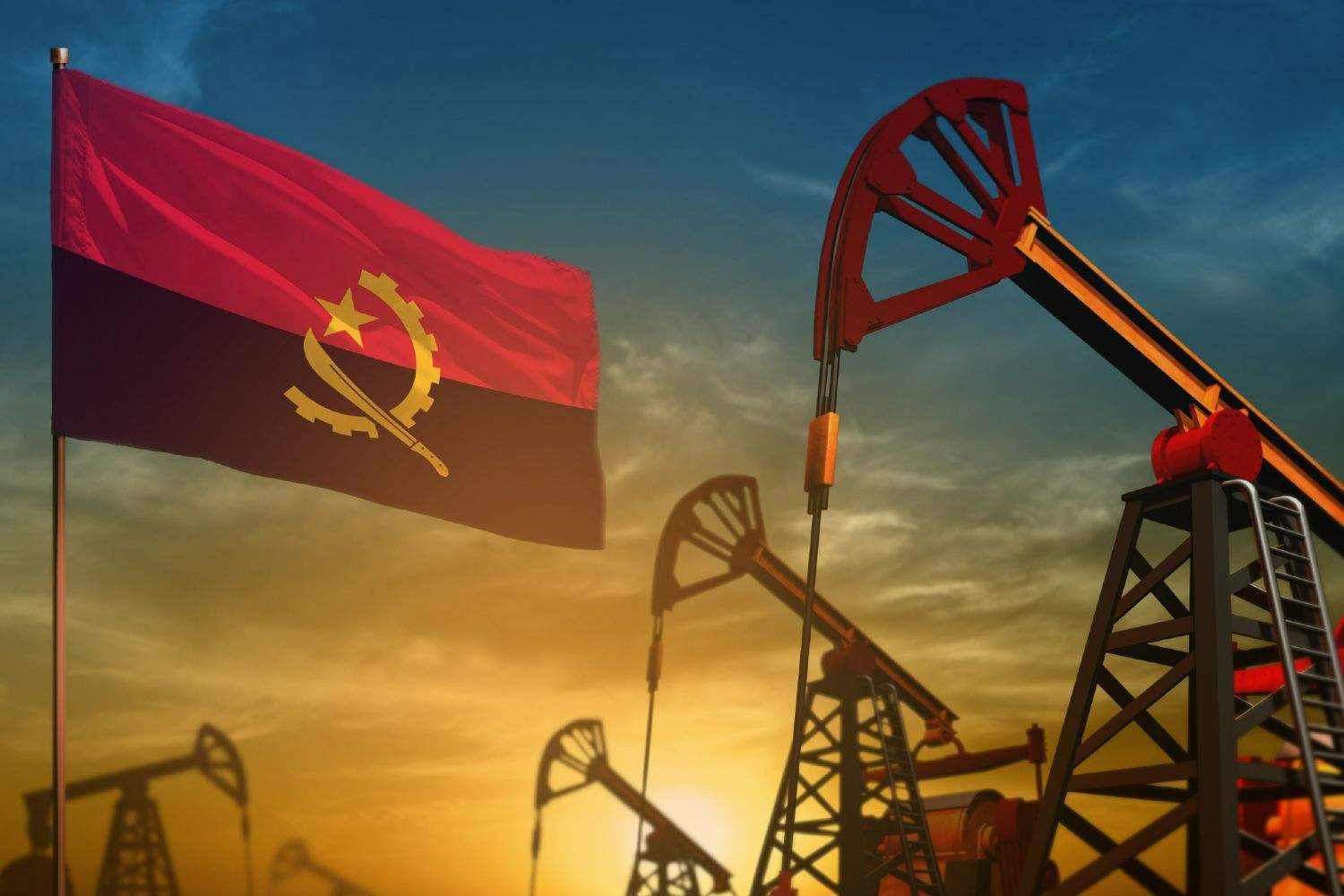
Angola can be considered a prime case study of how rising oil prices have changed the borrowing conditions for governments in Africa. The country has returned to international capital markets with a fresh Eurobond issuance, taking advantage of improved investor sentiment.
In its recent Eurobond issue, the government raised about $2.25 billion. The demand from investors was more than $5 billion, indicating good appetite amid the global tough funding environment.
The country has re-entered the Eurobond markets again barely half a year after raising $1.75 billion for financing its 2025 budget. The move follows a broader turnaround in crude oil prices which have managed to reach near $100 a barrel.
Apart from bond issuances, Angola has also been involved with structured finance activities. It increased an existing $1 billion total return swap with JPMorgan to $1.5 billion, backed by $2 billion in international bonds and $300 million in US Treasury bills.
Further, the nation has raised another $1 billion through the Africa Finance Corporation, using a mix of local and international loans as collateral.
Such activities are part of the overall efforts aimed at liquidity management and debt repayment. However, these efforts also highlight the growing use of complex instruments to access funding outside traditional bond markets.
Oil revenues have been crucial in making this transition possible. Higher prices have strengthened foreign exchange inflows and eased fiscal pressures, helping Angola earn more favor among investors.
The differences with previous circumstances are clear. At a time when the price of oil was at $60 per barrel, Angola faced liquidity problems and needed to place $200 million worth of assets as collateral under a swap arrangement.
However, everything seems different today. The recovery period has done the country good. It has provided fiscal room and restored investor confidence, allowing Angola to re-engage global markets from a stronger position.
Nigeria turns to structured financing for the first time
In order to explore new avenues of finance, Nigeria is set to raise around $5 billion via structured finance, as it seeks new funding options amid persistently high global borrowing costs.
This represents a departure from the conventional method of Eurobond issuance. Instead, the government is exploring derivative-based arrangements that allow it to raise liquidity using sovereign bonds as collateral.
At the centre of the transaction is the use of Total Return Swaps (TRS). These are financial instruments where lenders provide cash in exchange for exposure to the performance of underlying government bonds. If the value of those bonds falls, additional collateral or margin payments may be required.
Nigeria’s transaction is being arranged with First Abu Dhabi Bank, with naira-denominated government bonds expected to be used as collateral.
The transaction places Nigeria alongside Angola and Senegal, which have already used similar structures over the past year as an alternative to issuing bonds in expensive international markets.
According to Adeyemi, the shift reflects a broader adjustment in how the country is approaching external funding.
“Nigeria is diversifying its methods of financing not only by going past the use of Eurobonds but also by engaging in structured finance, which enables it to tap into liquidity during a tougher global environment,” Adeyemi noted.
The adoption of structured finance demonstrates how sovereign borrowers are adapting to higher global interest rates and constrained market access. It also reflects a broader shift toward more complex funding arrangements in emerging markets.
Senegal’s oil debut boosts its financing outlook
Meanwhile, not only major oil-rich nations are exploring this route. Even smaller countries are taking advantage of the windfall from the surge in oil as backer for their position in the global debt market.
For instance, Senegal joined the list of oil producers in 2024 following the start of production from its oil reserves offshore. The development adds a new export stream at a time when global crude prices remain elevated.
The timing has strengthened the country’s financing outlook. Higher oil prices improve expected foreign exchange earnings, which supports external stability and investor confidence.
Beyond production, Senegal has already been active in alternative financing structures. The country disclosed that it tapped about $1.3 billion through seven swap transactions last year, after details of two deals worth $650 million involving the Africa Finance Corporation (AFC) and First Abu Dhabi Bank (FAB) were revealed.
These transactions were backed by sovereign bonds issued in CFA francs, which were used as collateral to access foreign liquidity.
According to Senegal’s finance minister, Cheikh Diba, the country paid about 7 percent on the swap arrangements last year. This compared with double-digit borrowing costs in international bond markets, resulting in estimated savings of around $64 million.
The combination of new oil production and structured financing activity is improving Senegal’s positioning in international capital markets. It also signals that even newer producers can strengthen their financing profile relatively quickly when supported by favourable market conditions.
Stronger oil revenues support currencies and stability
Higher oil revenues are strengthening macroeconomic stability across major African producers. Rising export earnings are improving access to foreign exchange and reinforcing external buffers.
One of the most immediate effects is on foreign reserves. Dollar inflows from crude exports are helping central banks build buffers that can be used to manage external shocks and currency volatility.
This is also feeding into currency performance across key oil-producing economies, including the naira, the kwanza and the CFA franc zone. Stronger foreign exchange inflows help ease pressure on local currencies by improving dollar supply in domestic markets.
A more stable exchange rate environment also helps contain imported inflation. With stable currencies, there is consistency in the prices of imported goods, making it easy for individuals to predict future expenditures.
Nigeria’s external reserves have been steady at about $50 billion in recent years. This provides a buffer that supports currency management and external stability.
According to Dada Seun, an energy analyst, stronger oil inflows remain a key stabilising force for African economies that depend heavily on crude exports.
“Increased oil revenues result in more stable macroeconomic fundamentals among African oil exporters through higher foreign exchange, better currency support, and greater confidence in sovereign bonds,” said Seun to Energy in Africa.
Overall, stronger oil revenues are not only supporting fiscal positions but also reinforcing the broader macroeconomic environment needed for investor confidence in sovereign bond markets.
Investor appetite returns selectively to African debt markets
Investor participation in African sovereign debt is recovering, but the pattern of inflows is becoming increasingly selective rather than broad-based. Capital is concentrating in issuers with stronger external earnings, particularly oil-producing economies.
This has led to the emergence of a fragmented market. Countries which have better export performance continue to attract attention from the foreign investment community, whereas other countries face high-risk premiums and limited appetite.
Market dynamics in recent times have confirmed this trend. Demand for African Eurobonds has improved in select cases, particularly for issuers linked to commodities. This has helped support better pricing conditions in parts of the market.
However, overall investor behaviour remains uneven. Global rate uncertainty and shifting risk sentiment continue to impact investor flows, limiting the strength of the rebound across the broader region.
Seun pointed out that investor positioning is now largely influenced by the visibility of earnings rather than sentiment towards emerging markets.
“Investor appetite is returning, but it is highly selective and concentrated in sovereigns where oil revenues provide clearer support for repayment capacity,” Seun said.
The result is a market that is reopening, but on more selective terms. Access to funding is increasingly shaped by export strength and perceived resilience rather than general regional sentiment.
Oil boom offers opportunity, but risks remain
Oil prices are still unpredictable, and this continues to pose a structural risk to African economies producing crude oil. Although the recent rise in prices has improved their financial performance, improvements remain tied to global market conditions that can shift quickly.
Most of these economies also rely heavily on dollar-denominated debt. This exposes them to refinancing pressure when global liquidity tightens or when investor confidence declines. It also increases vulnerability to external shocks.
There is a further risk in dependence. With oil still dominating export earnings, public finances remain vulnerable to any sustained downturn in crude prices. A sharp fall would quickly weaken foreign exchange inflows and tighten access to international capital markets.
Higher oil prices have, however, helped reopen financing opportunities for several African sovereigns in recent months. The window is visible in improved market access and stronger investor interest, but it remains sensitive to shifts in global conditions.
For now, crude is doing more than powering economies. It is no longer just funding budgets, it is shaping Africa’s return to global finance and access to capital.