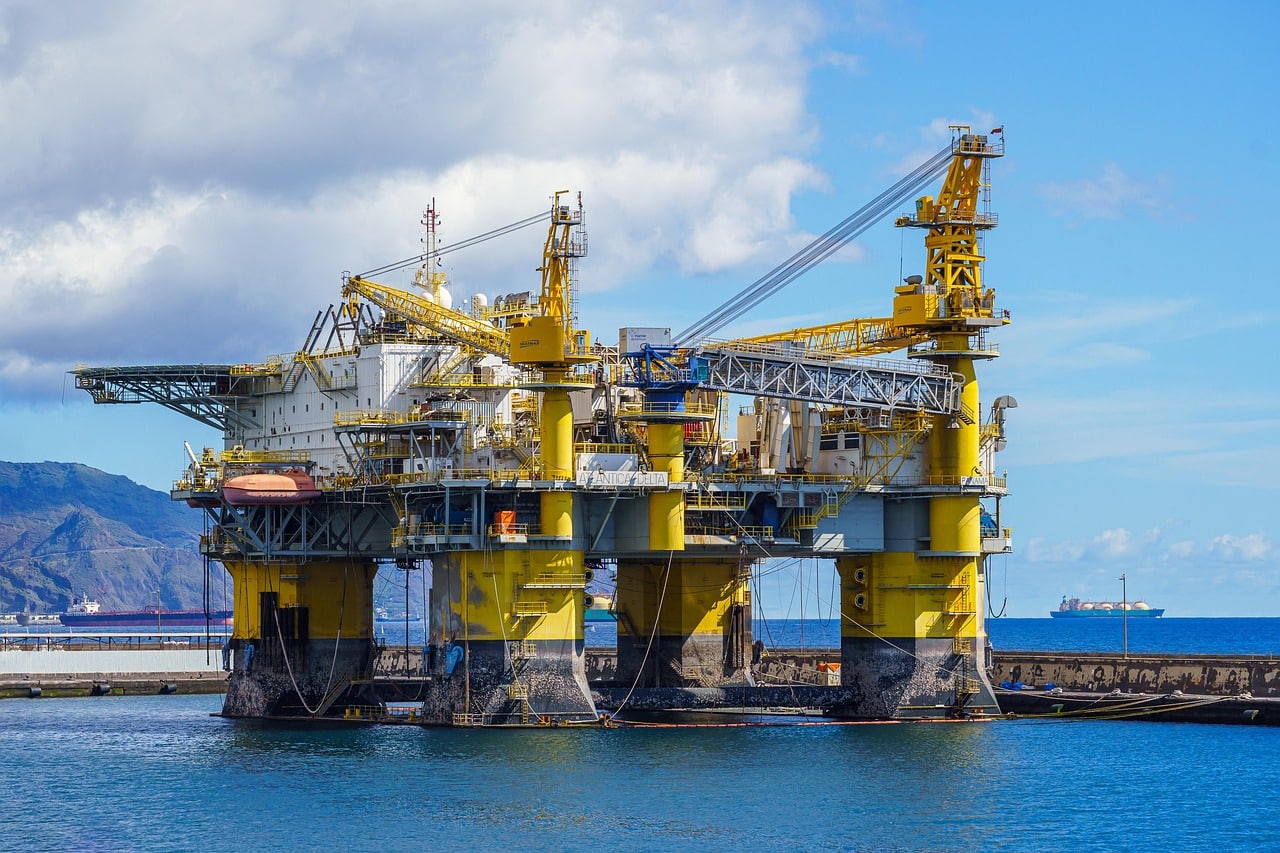



Africa’s oil and gas industry witnessed a wave of landmark deals in 2025, as international majors and local players reshaped the continent’s energy landscape. This surge was driven largely by final investment decisions (FIDs) and acquisitions in Nigeria, Angola, Uganda, and Namibia.
From Nigeria’s upstream acquisitions to Uganda’s pipeline and refinery ambitions, these transactions signal renewed confidence in Africa’s hydrocarbon potential despite global energy transition pressures. They also highlight the continent’s growing role in global energy supply.
The African Energy Chamber (AEC), in its 2025 outlook report, noted: “Africa’s energy sector continues to show resilience and dynamism, with capital expenditure on oil and gas projects remaining a key driver of growth.”
The AEC projected capital expenditure on oil and gas projects across the continent to reach $43 billion in 2025, with a target of $54 billion by 2030.
Here are the top five oil and gas deals that defined Africa’s energy sector in 2025 — and where they happened.
5. Vitol’s $1.65 billion stake acquisition in Baleine and Congo LNG (Côte d’Ivoire/Congo)
In September, Vitol and Eni finalized a $1.65 billion transaction, regarded as one of the most consequential deals in West Africa in recent years.
Vitol, a global trading giant, acquired 30% of Eni’s upstream stakes in projects in Côte d’Ivoire and the Republic of Congo, underscoring the growing trend of trading houses investing directly in African oil and gas assets.
The deal gives the Swiss company an interest in the massive Baleine oil and gas development offshore Côte d’Ivoire and the Congo LNG project. Specifically, Vitol will acquire a 30% stake in Baleine, reducing Eni’s interest to 47.25%, and a 25% stake in Congo LNG, leaving Eni with 40%.
The Eni-operated Baleine field achieved first oil in 2023 and, by March 2025, was producing over 60,000 barrels of oil equivalent per day (boe/d). Efforts are ongoing to ramp up production to 150,000 b/d of oil and 200 mmcf/d of associated gas. The third stakeholder in the field is state-owned Petroci, with 22.75%.
Meanwhile, phase one of Congo LNG began exports in February 2024 and currently produces 0.6 million tons per year of LNG. The next phase of the project has already commenced.
Eni stated that the deal aligns with its so-called dual exploration model, aimed at optimizing upstream activities by rebalancing its portfolio. This approach allows for the early monetization of exploration discoveries through reduced participation.
The transaction also strengthens the partnership between Vitol and Eni, who are already collaborating on the OCTP and Block 4 projects in Ghana.
4. Renaissance Group’s $2.4 billion acquisition of SPDC assets (Nigeria)
Renaissance Africa Energy Holdings completed a landmark $2.4 billion acquisition of Shell Petroleum Development Company of Nigeria (SPDC) in March 2025, marking one of the biggest energy transactions in Africa this year.
Months after being rejected over its failure to meet regulatory requirements, the Federal Government of Nigeria in March 2025, approved Shell’s sale of SPDC to Renaissance Africa Energy Holdings.
The transaction transferred Shell’s entire onshore subsidiary to Renaissance, which has rebranded the company as Renaissance Africa Energy Company (REAC) Limited.
REAC is a consortium comprising ND Western Limited, Aradel Holdings Plc, the Petrolin Group, FIRST E&P Limited and Waltersmith Group.
The deal involved the outright transfer of several onshore and shallow water assets and ended Shell’s decades of oil operations in Nigeria’s onshore territories.
It also automatically grants Renaissance Group 30% stake in the SPDC joint venture alongside NNPC Limited (55%), TotalEnergies (10%), and Agip Energy and Natural Resources (5%)
This transaction ranks among several others that are helping to expand indigenous ownership in Nigeria’s upstream sector, as Western majors divest onshore assets for more technically advanced terrains like deep waters.
Shell’s exit follows similar moves by ExxonMobil, Eni, and Equinor, all of which have scaled back onshore operations in Nigeria.
3. Alpha MBM’s $4.5 billion crude oil refinery project (Uganda)
In March 2025, Alpha MBM Investments, a UAE-based company, signed an implementation agreement with Uganda to build a $4.5 billion oil refinery in the Lake Albert region, marking one of the country’s most ambitious energy projects to date.
The refinery will be sited in Kikuube District, Midwestern Uganda. It is designed to have a capacity of 60,000 barrels per day (bpd) and is expected to process Uganda’s crude oil domestically, reducing reliance on imported refined products.
The agreement was signed at State House Entebbe in the presence of President Yoweri Museveni, signalling strong political backing for the project.
Given that previous negotiations with a consortium including Baker Hughes collapsed in 2024 due to financing challenges, the Alpha MBM partnership revives Uganda’s long-delayed refinery ambitions.
The refinery will be deliberately configured towards producing more petrol and diesel, the two most used fuels in the country. It will also include a 212-km multi-product pipeline to produce.
It will be co-owned by Alpha MBM (60%) and the Uganda National Oil Company (UNOC) (40%) on behalf of the government of Uganda.
Uganda discovered commercial oil reserves in the Lake Albert Basin in 2006, estimated at 6.5 billion barrels, with about 1.64 billion recoverable. Its “First Oil”is expected by mid 2026.
The refinery, which is expected to come onstream in 2029, complements Uganda’s East African Crude Oil Pipeline (EACOP) project, which will transport crude to Tanzania for export.
Together, these TotalEnergies-led projects aim to balance domestic refining capacity with international market access, maximising Uganda’s oil value chain.
An official statement from the government revealed the country’s oil and gas sector has attracted over $11 billion in investments as of June 2025, with most of that going into developing oil fields and financing the East African Crude Oil Pipeline (EACOP) project.
2. US Eximbank’s $4.7 billion loan approval for TotalEnergies (Mozambique)
In a significant move that gives a long-delayed project a big chance, the US Export-Import Bank in March reauthorized the critical $4.7 billion loan facility for the then $15.4 billion Mozambique LNG project, signaling Washington’s renewed commitment to the development.
The U.S. EXIM initially approved the loan in 2020 during President Donald Trump’s first term, but insecurity in Mozambique delayed its disbursement under the Biden administration.
The reapproval followed a rigorous assessment process aligned with President Trump’s “America First” policy.
Based on the bank’s estimation, the LNG project will support approximately 16,400 high-paying American jobs across more than 60 U.S. companies.
These companies, it said, will be directly involved in the engineering, procurement, and construction (EPC) of the onshore LNG plant and associated infrastructure.
For Africa, the Mozambique LNG project is not just a national priority but a continental game-changer.
The gas project covers the country’s Rovuma Basin Area 1 concession, approximately 10,000 square kilometres and unlocks up to 64 trillion cubic feet of natural gas.
When completed, it will be Africa’s largest LNG development, capable of producing over 13 million tonnes of LNG annually.
Months after the loan was reapproved, TotalEnergies and its partners announced the lifting of the hiatus on the project.
The project’s updated development plan reveals a cost increase of $4.5 billion, which the French energy giant will raise additional equity to address, alongside the funding gap left by the governments of the UK and the Netherlands.
If everything goes as planned, construction could resume on the $20 billion LNG project in early 2026, with first gas exports targeted for 2029.
1. $35 billion Leviathan natural gas supply deal (Egypt)
The $35 billion Leviathan natural gas supply deal between Israel and Egypt is one of the largest energy agreements in Africa and the Middle East in 2025.
It involves the export of 130 billion cubic meters (BCM) of natural gas from the Leviathan field to Egypt.
The deal spans 15 years and involves partners Chevron, NewMed Energy, and Ratio Petroleum.
Egypt’s Prime Minister Mostafa Madbouly confirmed that the supply agreement has been extended until 2040, ensuring long-term energy cooperation.
As part of the phased mega deal, state-owned Israel Natural Gas Lines (INGL) and partners of the Leviathan gas field in September signed a $610 million contract for the construction of the Nitzana natural gas pipeline to supply gas to Egypt.
State-owned Israel Natural Gas Lines (INGL) and partners of the Leviathan gas field including Chevron and NewMed have signed a $610 million contract for the construction of the Nitzana natural gas pipeline to supply gas to Egypt.
The 65-kilometre pipeline will run from Ramat Hovav in southern Israel to the Nitzana crossing on the Israeli-Egyptian border.
The construction has an engineering, procurement, and construction (EPC) contract that will last for a period of 15 years.
When completed by 2028, the pipeline project will deliver at least 600 million cubic feet of natural gas per day.
The Nitzana project will not only boost Israel’s total daily gas exports to over 2.2 billion cubic feet, but forms part of a broader measure to boost Egypt’s gas supplies and solve lingering energy challenges.
Egypt imports up to 20% of its gas from Israel, and this deal—described as the largest in Israel’s history, nearly triples those volumes.
The project was approved by the Israeli government in early August.