
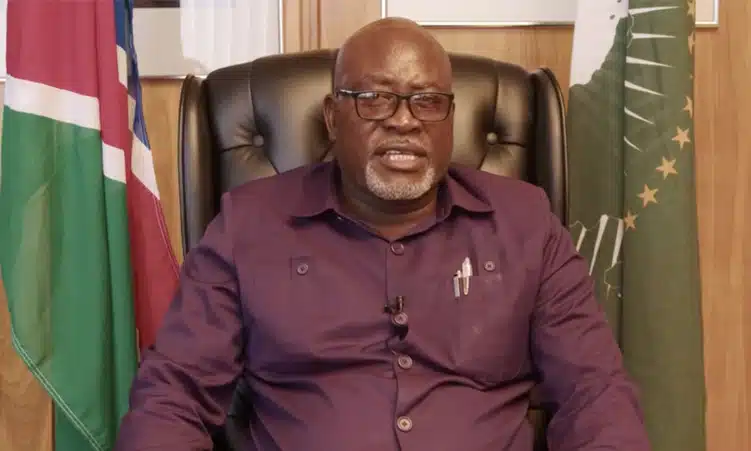


Modestus Amutse has been appointed Namibia’s new Minister of Industries, Mines and Energy, a critical role as the country edges closer to commercial oil production amid growing debate over presidential control of resources.
The appointment was announced on Tuesday, December 2, 2025 and effective the same day, according to a statement emanating from the president’s office.
Namibia’s President Netumbo Nandi-Ndaitwah had sacked the previous incumbent Natangwe Ithete in late October just six months into the role.
Ithete was temporarily replaced with Defence and Veterans Affairs Minister Frans Kapofi without the president publicly stating reasons for the sack.
Who is Modestus Amutse?
Amutse, 58, previously served as Deputy Minister of Information and Communication Technology, and before that as a Member of Parliament and Chairperson of a National Assembly Standing Committee.
His career spans public service and regional leadership, giving him a reputation for administrative competence and political loyalty.
According to a statement, President Nandi-Ndaitwah has wished Amutse “success as he assumes his new responsibilities and leads the ministry at a time when Namibia is advancing industrialisation, strengthening the mining sector, and accelerating progress in the energy space to support sustainable development and shared prosperity across all 14 regions”.
He officially assumed office on 2 December 2025, following the dismissal of Natangwe Ithete in October and months of interim leadership by Defence Minister Frans Kapofi.
Why the appointment matters
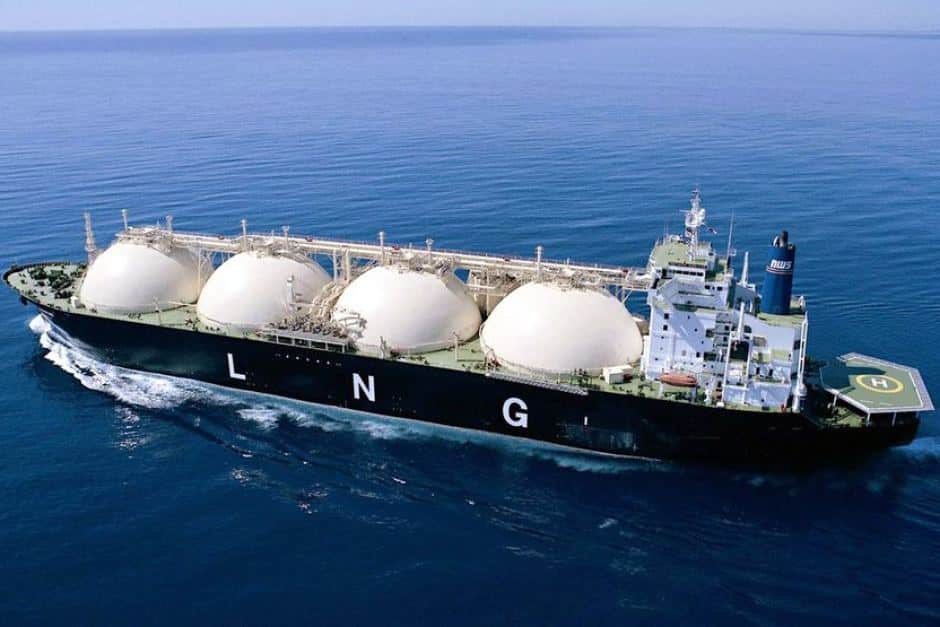
Namibia, one of Africa’s most promising frontiers, is on the edge of commercial oil production, following major offshore discoveries by TotalEnergies and Shell. This makes the energy portfolio one of the most strategic in government.
President Netumbo Nandi-Ndaitwah’s decision to personally oversee the ministry through Kapofi raised concerns about centralised control of resources.
Critics argued that prolonged interim management risked undermining transparency and investor confidence.
Amutse’s appointment restores a permanent ministerial head, signalling continuity and institutional stability at a time when Namibia must negotiate production-sharing agreements and regulatory frameworks.
His ministry has traditionally been responsible for regulating upstream activities but the President created an Upstream Petroleum Unit (UPU) earlier this year that was led by two advisors within the presidency
This gave the president direct control over decision-making in the nascent but important industry and is currently unclear how much say Amutse will have on upstream affairs.
The broader picture
Namibia’s offshore finds could transform the economy, with billions of barrels of oil equivalent estimated in reserves.
International oil companies require clear governance structures. A permanent minister provides a focal point for negotiations and policy direction.
The appointment comes after regional elections reaffirmed support for the ruling SWAPO party, but also amid scrutiny of how the president balances party loyalty with national resource management.
Meanwhile, a Rhino-led consortium in August commenced drilling activities at the Volans-1X exploration well under exploration license (PEL) 85.
The $40 million drilling contract was awarded to Northern Ocean (NOL) in mid-July for a period of 112 days.
This is the third well in the license following Sagittarius 1-X and Capricornus 1-X, with both showing hydrocarbon-bearing reservoirs.
While Rhino continues to evaluate its drilling for a potential near-term development, TotalEnergies is urging for a concrete agreement with the Namibian government before moving forward with their
“You’re dealing with a country that is new to the oil industry, so alignment and mutual understanding are crucial,” said TotalEnergies CEO Patrick Pouyanné.