
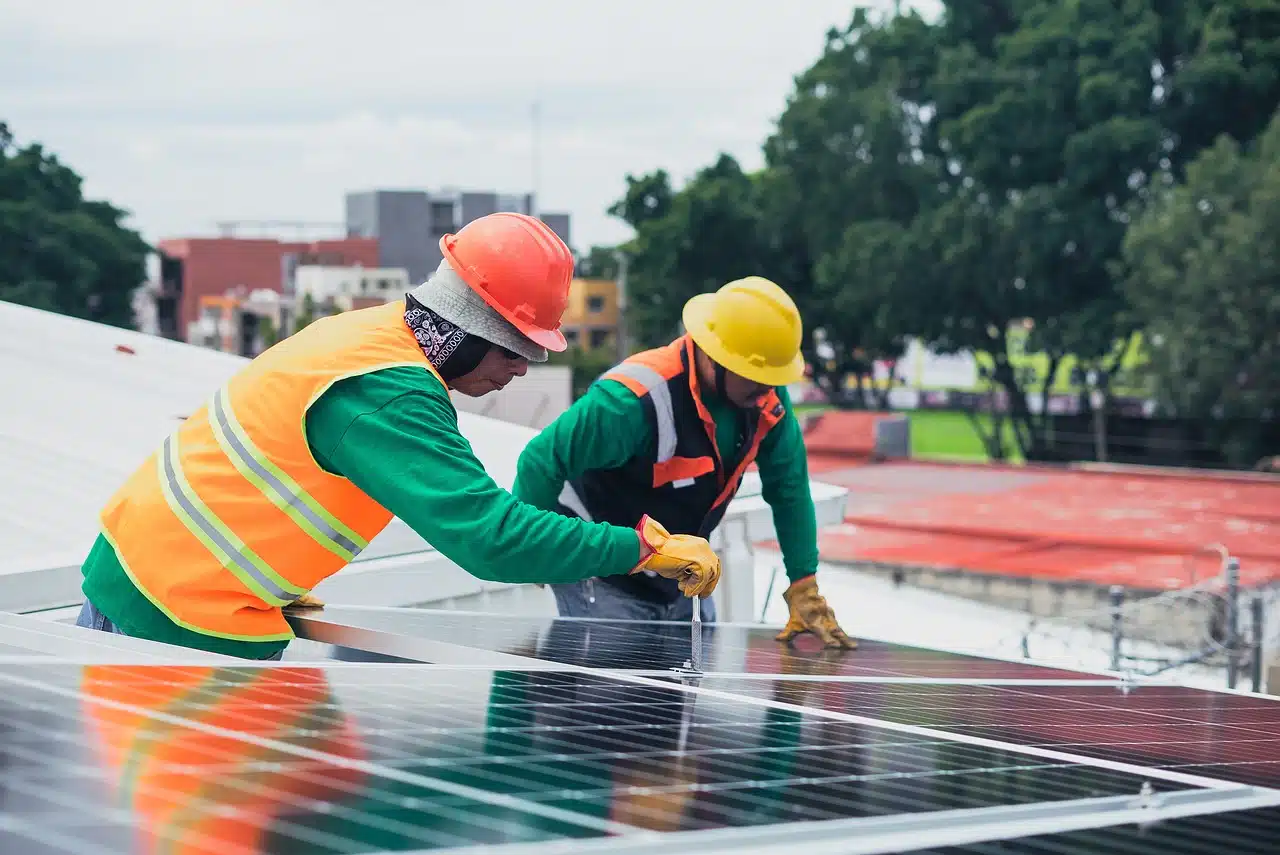


China Civil Engineering Construction Corporation (CCECC) has secured the contract to build a 7-megawatt floating solar power plant at the University of Lagos (UNILAG) in Nigeria, according to project details released by the company.
The disclosure was made known on the company’s official X (formerly Twitter) account.
According to the company, the solar facility will be installed on the lagoon waters surrounding the university’s Akoka campus in Lagos State.
Once completed, the project is expected to supply electricity directly to UNILAG, providing an alternative source of power to grid supply and diesel-powered generators currently used on the school campus.
CCECC described the installation as Nigeria’s first operational floating solar power plant.
The project adds to ongoing efforts to deploy renewable energy infrastructure across public institutions, with federal universities and teaching hospitals forming a key focus of recent government programmes.
FG allocates N100 billion for institutional solarisation
The UNILAG floating solar project follows the Nigeria’s government’s allocation of N100 billion in the 2025 budget for solar power installations in selected public institutions.
Budget documents list federal universities and teaching hospitals among the beneficiaries of the programme.
According to the budget breakdown published by the Ministry of Finance, the initiative is designed to reduce electricity costs in public institutions and lower their reliance on diesel generators.
The solarisation programme covers multiple institutions nationwide, including UNILAG, and forms part of broader government measures aimed at stabilising power supply in critical public facilities amid rising electricity tariffs.
However, most of the projects implemented under the allocation have focused on rooftop and ground-mounted solar systems. In contrast, the UNILAG project adopts floating solar technology, which involves installing solar panels on water surfaces rather than on land.
Renewable energy rollout
In March 2025, the government announced a $200 million agreement to expand renewable mini-grid projects across rural and peri-urban communities.
According to the announcement, the programme targets improved electricity access in underserved areas while supporting small-scale economic activity.
Mini-grids are primarily designed to provide power in locations without grid connectivity.
By comparison, projects such as the UNILAG solar installation are targeted at large public institutions that already have grid access but continue to experience power reliability challenges.
At 7 megawatts, the UNILAG project remains institution-specific.
Construction timelines and commissioning dates have not yet been disclosed by CCECC or the Federal Government.
Related floating solar proposals
Beyond university campuses, floating solar technology has also been proposed for utility-scale deployment in Nigeria.
In 2024, developers announced plans for a 100-megawatt floating solar project at the Kainji Hydropower Plant. The proposed installation is intended to operate alongside existing hydropower infrastructure at the plant, using the reservoir surface for panel deployment.
The Kainji proposal was presented as part of efforts to add renewable generation capacity to the national grid using existing water bodies. Developers have not yet disclosed a construction timeline for the project.
The installation supplies electricity to the national grid and operates alongside land-based renewable energy assets in the country’s power mix.
What we know so far
For now, details on the UNILAG floating solar project remain limited to its announced capacity and location.
CCECC has not provided additional information on technical specifications or projected energy output beyond the 7-megawatt figure.
The award of the contract positions the UNILAG project as the first confirmed floating solar installation to reach the implementation stage in Nigeria. Further updates are expected as construction plans are finalised and execution begins.