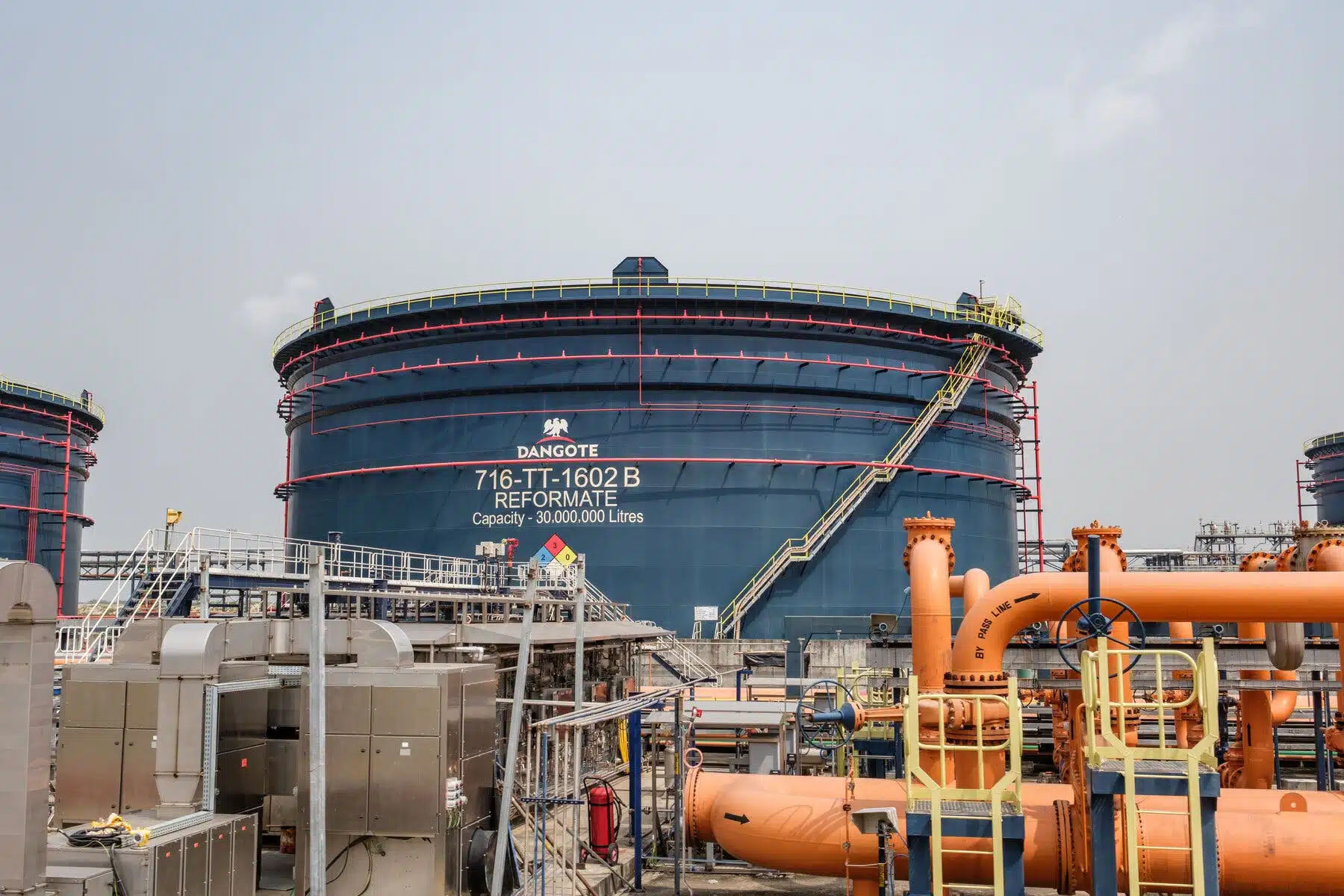



The Dangote Refinery has disclosed that the United States has become its largest foreign supplier of crude oil, delivering no less than 100 million barrels each year to help offset shortfalls from Nigeria’s domestic producers.
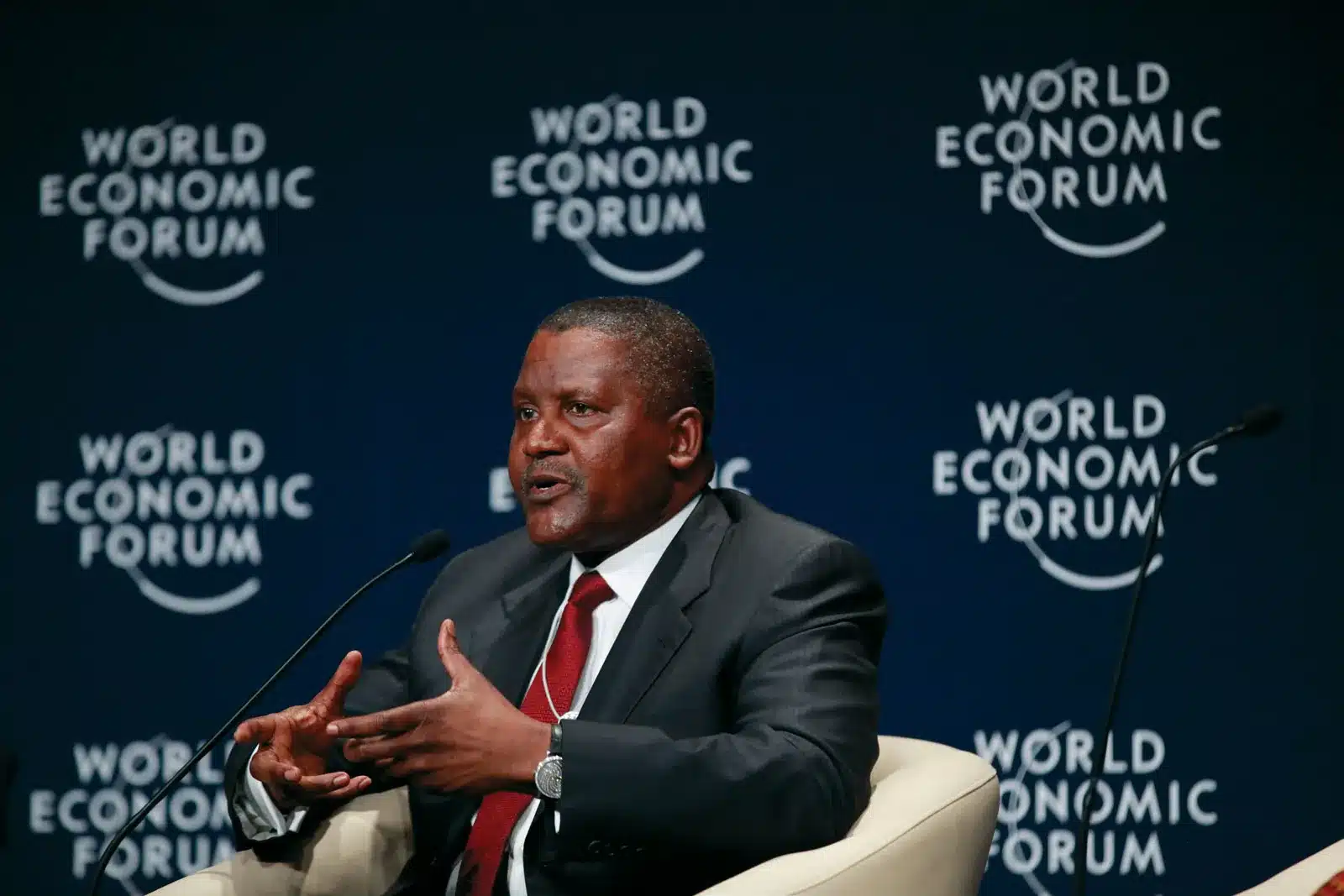
Speaking at a media briefing in Lagos on Sunday, Dangote Group chairman Aliko Dangote admitted that the refinery continues to face challenges in securing adequate crude locally, forcing reliance on imports.
“Still we are not getting enough crude, that’s why we are buying from several countries. But the US has been one of our major suppliers,” he said.
Nigeria’s domestic oil producers have struggled to consistently supply the refinery due to operational setbacks, regulatory bottlenecks, and entrenched market dynamics.
Despite being Africa’s largest crude producer, inefficiencies in the sector have made it difficult to meet the refinery’s massive demand.
“On average for a year, we do not buy less than 100 million barrels of crude from the US. And when we double, I’m sure they will not hesitate to supply us with 200 million barrels per annum,” Dangote explained the scale of US supply.
Scale of demand vs. local supply
The Dangote Refinery processes up to 650,000 barrels per day, making it the largest in Africa. Local producers have found it difficult to meet this scale, as much of Nigeria’s crude is already committed to export contracts or used to service debts.
Nigeria’s Domestic Crude Supply Obligation (DCSO), requires oil producers to reserve part of their output for local refineries to ensure energy security and reduce dependence on imported fuel.
Introduced by the Petroleum Industry Act (PIA) of 2021 and enforced by the Nigerian Upstream Petroleum Regulatory Commission (NUPRC), the policy has struggled to meet crude production targets due to theft, pipeline vandalism, and underinvestment.
Although recent reports in 2025 indicated that over half of the crude processed at Dangote’s facility in June was sourced locally, the refinery still relies heavily on imports, including U.S. crude.
A Bloomberg report in October 2025 showed that the refinery faced production slowdowns due to reduced crude intake, highlighting the fragility of local supply chains.
This is because Nigeria’s upstream oil sector is structured around exports, with infrastructure and contracts designed to move crude abroad rather than domestically.
Redirecting supply to Dangote requires renegotiating long-term agreements, with the plant’s management accusing the Nigerian Midstream and Downstream Petroleum Regulatory Authority (NMDPRA) of creating hurdles that discourage local supply, including pricing disputes and allocation delays.
Dangote himself has alleged that corruption and sabotage within the sector make it unattractive for investors and difficult for producers to reliably supply his refinery.
Bloomberg reported in October how the refinery faced production slowdowns due to reduced crude intake, highlighting the fragility of local supply chains.
US steps in to fill Nigeria’s crude supply gap
The Dangote Refinery, Africa’s largest, has increasingly turned to the United States to meet its crude oil needs. While the plant has historically sourced crude from countries such as Brazil, Angola, and Libya, imports from the US now dominate its supply chain.
By June 2025, nearly one‑third of the refinery’s crude intake came from the US — almost double the share recorded in 2024.
This growing reliance on foreign crude highlights Nigeria’s ongoing struggle to secure adequate domestic supply, undermining its ambition to become a regional refining hub. Analysts warn that dependence on imports could weaken the refinery’s role in stabilising Nigeria’s energy market.
To ease supply constraints and reduce pressure on foreign exchange, the government introduced the Naira‑for‑Crude initiative, allowing Dangote to lift crude from the state‑owned Nigerian National Petroleum Company Limited (NNPC) in local currency.
However, by late September, the refinery announced it would stop selling petrol in naira, citing insufficient allocations under the scheme.
In the same month, Dangote imported crude from Ghana for the first time, lifting supplies from the Sankofa offshore field to bolster its feedstock reserves.
The refinery also confirmed that, as of October, it was importing semi‑refined hydrocarbons as intermediate feedstock to boost petrol output in response to rising demand.
Looking ahead, Aliko Dangote has unveiled plans to expand the refinery’s capacity from 650,000 barrels per day to 1.4 million bpd by 2028, positioning the plant as a global refining powerhouse.