
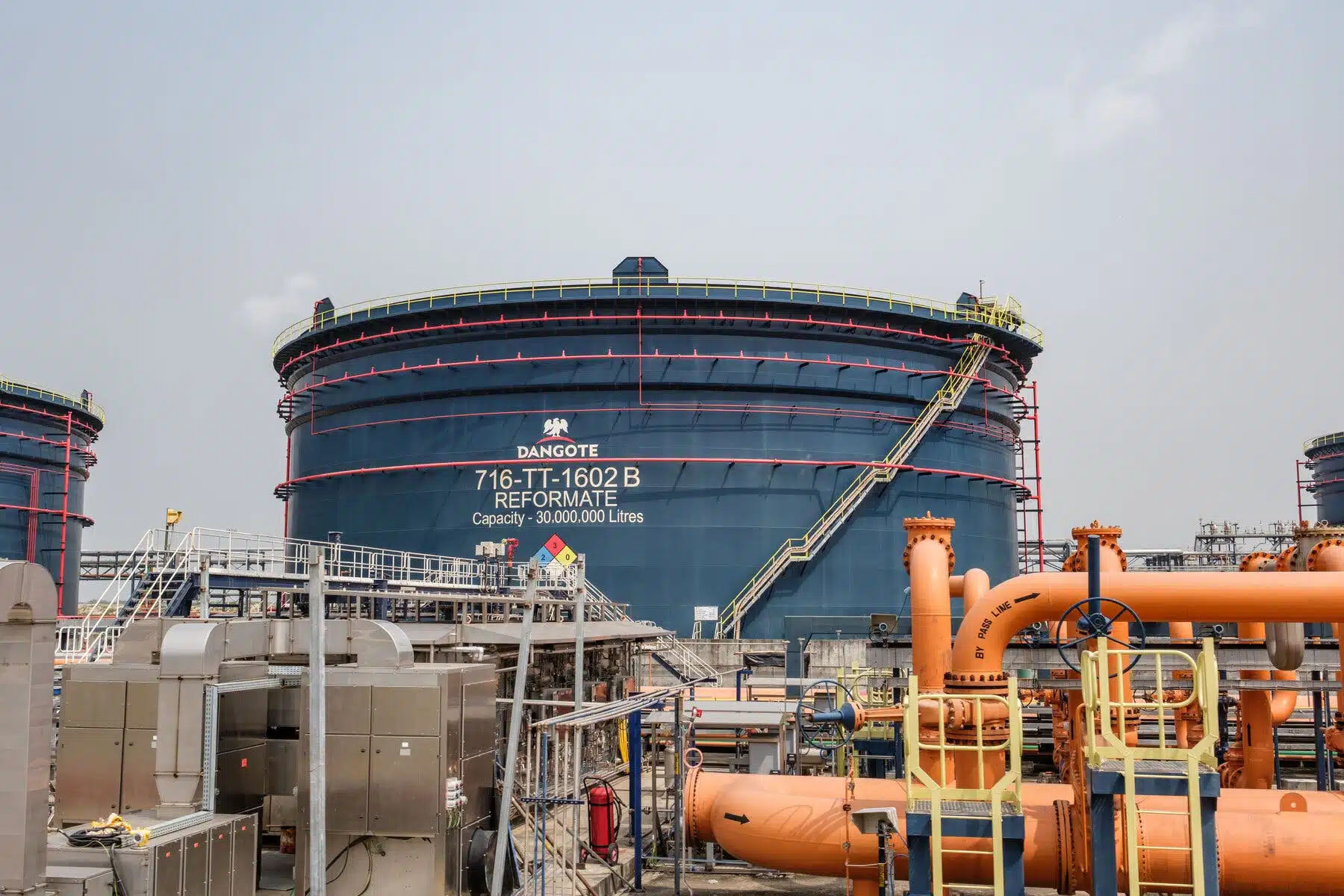


Nigeria’s Dangote refinery is preparing to sell Premium Motor Spirit, commonly known as petrol, throughout the month of March as its processing units return close to full capacity after maintenance work.
The plant’s residual fluid catalytic cracker (RFCC), which produces most of the refinery’s fuel, is now operating at about 90% capacity, according to a source familiar with the facility.
The RFCC, with a capacity of roughly 218,000 bdp, had been offline for several weeks before restarting following maintenance and testing. The unit plays a central role in converting heavy petroleum fractions into lighter fuels.
Dangote refinery is the largest single-train refinery in the world. Its return to higher operating levels is expected to influence fuel supply across Nigeria and the wider West African market.
The refinery is offering up to 44 million litres of jet fuel for loading between 20 and 22 March, as well as at least 40 million litres of petrol with a maximum sulphur content of 50 parts per million (ppm) for loading from 15 to 30 March, a source said.
Fuel unit restart to boost supply
The RFCC unit resumed operations after completing test runs carried out earlier in the year. The unit had remained offline since December, Dangote refinery chief executive David Bird said last month.
“The RFCC had been offline since December,” Bird said.
The RFCC converts heavy refinery streams into fuel blending components, making it the refinery’s main petrol production unit. When fully operational, the unit enables the refinery to significantly increase fuel output for domestic distribution.
Other processing units within the refinery had also been gradually returning to service following maintenance. These include the naphtha hydrotreater, isomerisation unit and catalytic reformer, which together form the facility’s motor spirit processing block.
An industry source previously explained that these units were operating but had not yet reached full capacity after maintenance work earlier in the year. Their gradual increase supported the refinery’s plan to restore full fuel production capability.
The return of these units allows the refinery to produce several fuel blending components internally rather than relying heavily on imported feedstock. This process improves refining efficiency and supports petrol supply within Nigeria.
Dangote’s impact in West Africa’s fuel trade
Dangote’s fuel trading activity into West Africa has increaased significantly in recent times.
Freight fixtures tracked by Kpler showed that a 37,000 tonne cargo initially listed as fuel from the French port of Lavera was actually carrying naphtha and catalytic gasoline, known as catgas, destined for Dangote refinery.
Catgas, also referred to as FCC gasoline or cracked naphtha, is produced by the RFCC and often requires further blending to meet final fuel specifications. These blending components help refiners produce finished petrol suitable for retail markets.
Meanwhile, local fuel brokers reported that Dangote refinery raised fuel asking prices following the restart of the RFCC unit.
Meanwhile, fuel shipments from Europe to West Africa have continued despite the refinery’s rising output. Trading firm Vitol booked a 37,000-tonne gasoline cargo loading free on board at Lavera for delivery to West Africa, according to a fixtures report.
Shipping costs on Medium Range tankers travelling from the UK Continent to West Africa also climbed. Freight rates increased to $52.86 per tonne from about $39.40 per tonne previously, reflecting tightening tanker availability and changing fuel trade flows.
Rising freight costs have been linked partly to concerns over disruptions to global shipping routes in the Middle East. Buyers seeking reliable supply have increasingly looked toward alternative fuel sources, including shipments from the United States Gulf.
Nigeria has historically relied on imported petrol due to limited domestic refining capacity. The increase of Dangote refinery operations is therefore closely watched across the region as it could gradually reduce the country’s dependence on imported fuel.
The refinery, located in Lagos, was built to process large volumes of crude oil and produce petrol, diesel, jet fuel and other refined products for both domestic use and export markets.