


In the News:
- Egypt has commissioned the first phase of Africa’s largest solar project
- The project is worth about $600 million in value
- The first phase will add about 500 MW of solar power to the grid
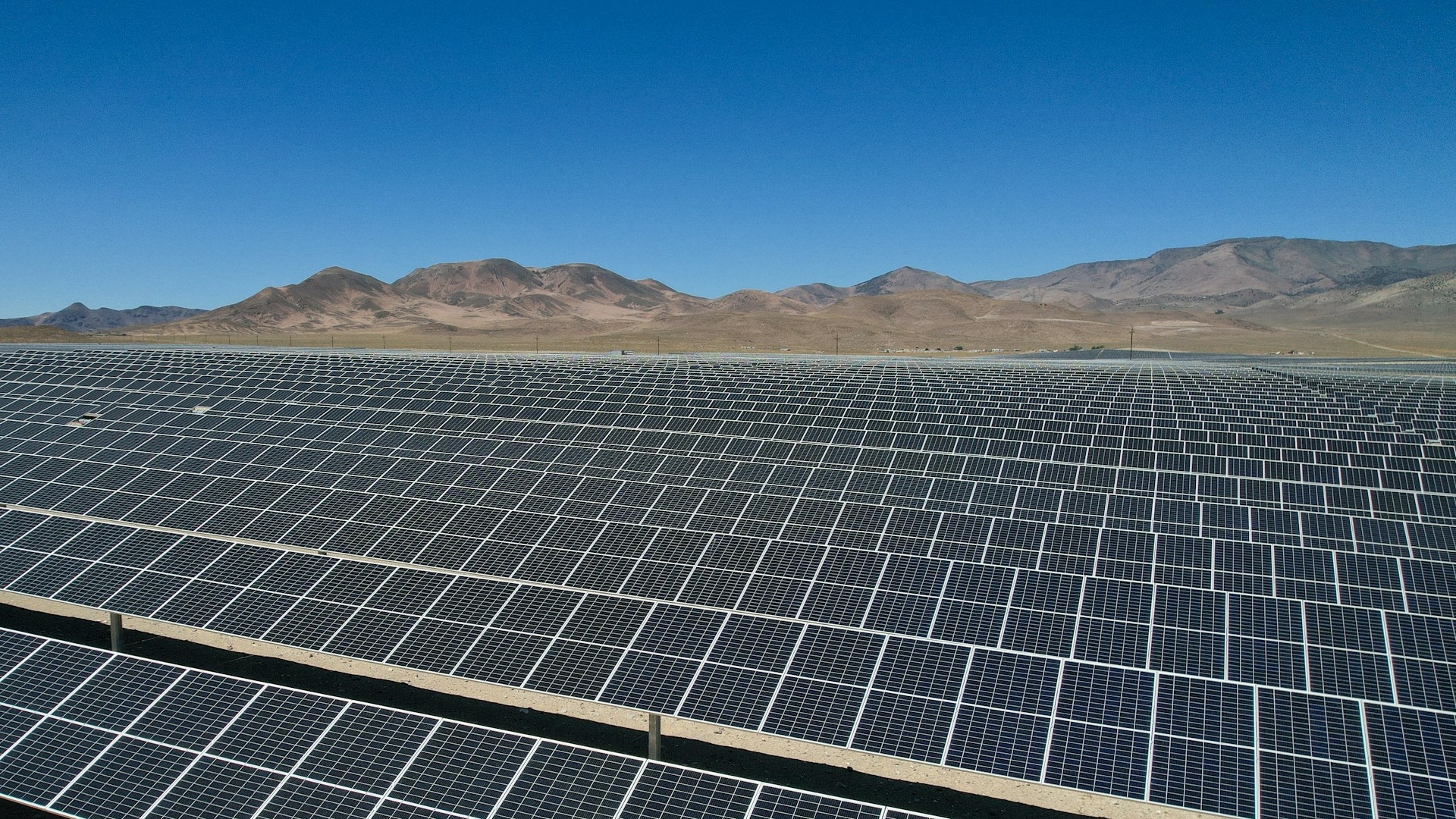
Egypt has commissioned the first phase of the Obelisk solar project in Nagaa Hamadi, Qena Governorate, representing the start of operations at what authorities have described as Africa’s largest renewable energy project.
The project spans more than 20 square kilometres and represents a total investment estimated at about $600 million.
The country’s Prime Minister Mostafa Madbouly commissioned the facility during a visit to Upper Egypt, according to an official statement released on Tuesday.
The Obelisk project is designed to deliver a combined solar capacity of 1 gigawatt (GW), alongside battery energy storage.
The first phase includes 500 megawatts (MW) of installed solar capacity and 200 megawatt-hours (MWh) of battery energy storage. A second phase, also rated at 500 MW, is scheduled to begin operations in May, bringing total planned capacity to 1 gigawatt (GW).
Details of the Obelisk project
The Obelisk project is being developed and constructed by Norway-based renewable energy company Scatec and is co-financed by several multilateral development institutions.
The project is co-financed by the European Investment Bank ($150 million), the African Development Bank ($160 million), and the European Bank for Reconstruction and Development ($100 million), along with other financial institutions.
Financing approvals were secured ahead of construction, with the African Development Bank announcing its support for the project in mid-2025.
Shortly afterwards, Egypt reached financial close with Scatec, enabling construction to proceed under a long-term power purchase agreement with the national grid.
According to the government, the first phase was completed within 13 months of signing the power purchase agreement.
Role within Egypt’s energy push
The Obelisk solar project is being implemented under Egypt’s Nexus of Water, Food, and Energy (NWFE) programme. The platform was launched to mobilise blended finance for large-scale projects that support climate-related objectives across key economic sectors.
Under the NWFE framework, Egypt has prioritised renewable energy investments as part of its plan to increase the contribution of clean energy to 42% of the national electricity mix by 2030.
It combines public support, private sector participation, and multilateral financing to reduce investment risks associated with large infrastructure projects.
Obelisk forms part of this pipeline by adding utility-scale solar generation capacity to the grid while supporting efforts to reduce reliance on gas-fired power generation.
Over a projected 25-year operating period, the project is expected to result in cumulative natural gas savings estimated at about 513 million thermal units, with an associated economic value of approximately $5.1 billion.
How the project will support Egypt’s economy
The inclusion of battery energy storage is intended to support grid operations by enabling electricity delivery during periods of lower solar output, according to project documentation.
The Egyptian governmemnt said the construction activities generated around 5,000 jobs for residents of Nagaa Hamadi and Qena Governorate.
Meanwhile, the inauguration of the Obelisk project’s first phase coincides with progress on other large-scale renewable energy initiatives in the country.
Authorities have recently announced preliminary financing agreements for the proposed Energy Valley project in Minya Governorate, which is planned to host about 1.7 GW of solar capacity.
Together, these projects form part of Egypt’s broader renewable energy expansion, supported by international lenders and private sector developers as the country continues to scale up clean power generation.