


Nigeria’s long-delayed $2.8 billion Ajaokuta, Kaduna, Kano (AKK) pipeline is set to deliver its first gas to Abuja, the nation’s capital, in July, according to officials familiar with the project timeline.
A spokesperson for the Nigerian Upstream Petroleum Regulatory Commission (NUPRC) disclosed the development in an interview with the commission’s in-house magazine, as reported by Reuters on April 13, 2026.
“We’re hoping that by July, gas will be delivered to Abuja through the AKK gas pipeline,” the spokesperson said.
The anticipated rollout marks a major step in Nigeria’s push to expand gas utilisation and strengthen energy supply to industries and power plants, particularly in the northern region.
The 614-kilometre pipeline is designed to transport more than 2.2 billion cubic feet of gas per day. It forms a central component of Nigeria’s strategy to transition toward a gas-powered economy, improve electricity generation, and reduce reliance on diesel and fuel oil.
The project is expected to support industrialisation, boost economic growth, and enhance energy security across northern Nigeria, including Abuja, Kaduna, and Kano.
With over 210 trillion cubic feet of proven natural gas reserves, Nigeria holds the largest gas deposits in Africa. However, inadequate infrastructure has historically limited the country’s ability to fully harness its resources, making the AKK pipeline a critical test of its gas development ambitions.
Years of delays and engineering challenges
Estimated at $2.8 billion, the AKK project was first conceived in 2008 but has faced multiple delays. Earlier completion targets set for 2023 and the final quarter of 2025 were missed due to funding constraints and technical hurdles.
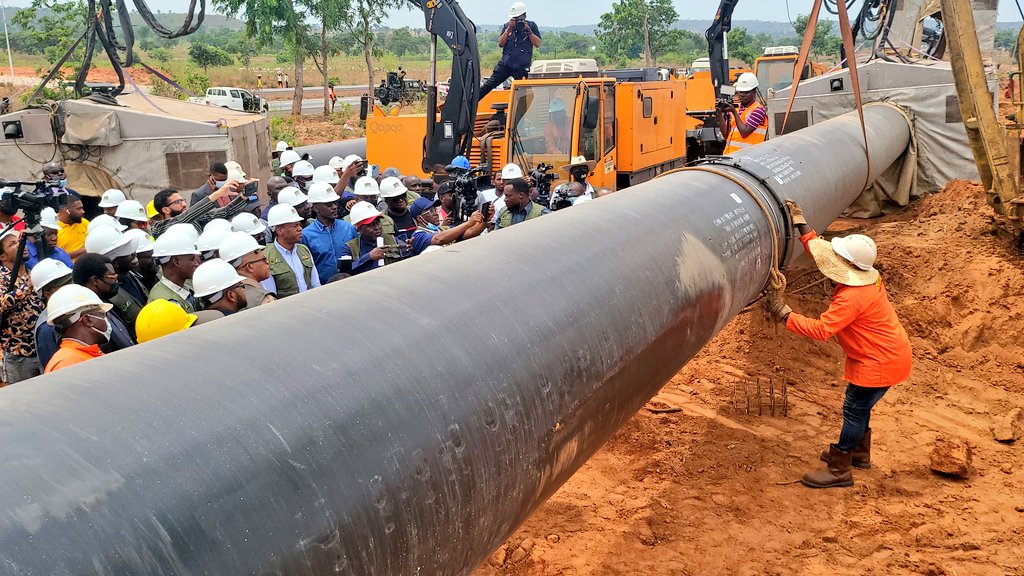
Construction began in 2020 but encountered major engineering challenges, particularly during the crossing of the River Niger.
The complex segment required horizontal directional drilling beneath the riverbed—an advanced technique often compared to a scaled-down version of the Eurotunnel.
Despite these setbacks, progress has accelerated in recent months.
An energy lawyer involved in the project told Reuters that the pipeline is now at an advanced stage, with construction more than 90 per cent complete.
Integration with Nigeria’s gas network
Gas transported through the AKK pipeline will originate from Nigeria’s southern producing regions. The supply will largely be facilitated through its interconnection with the Obiafu-Obrikom-Oben Gas Pipeline, commonly known as the OB3 pipeline.
This integration is expected to strengthen the national gas grid and ensure a steady supply to power plants and industrial clusters across the country.
The successful delivery of gas to Abuja is expected to lower energy costs, stimulate investment, and support Nigeria’s broader economic diversification agenda.
It also aligns with government initiatives promoting gas as a cleaner transition fuel under the “Decade of Gas” programme.
As Africa’s largest economy continues to invest in critical infrastructure, the AKK pipeline is widely viewed as a cornerstone project capable of transforming the country’s energy landscape and unlocking new opportunities for development.