
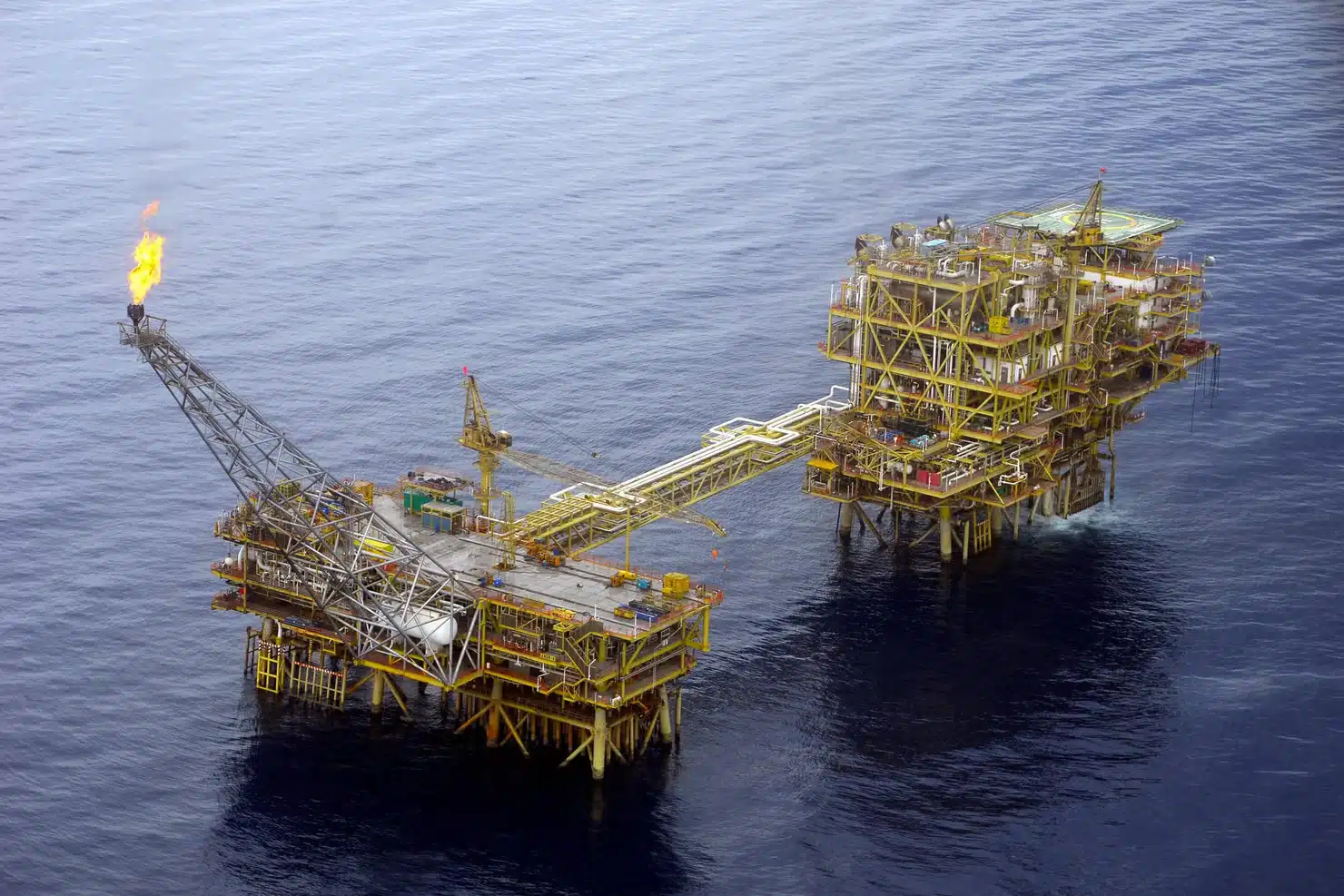


As far as Africa is concerned, Nigeria and Libya have been locked in a heated battle of the barrels lately. It’s basically a high-stakes race for that numbr one spot as Africa’s top oil producer, and honestly, both countries are pulling out all the stops.
With both nations launching massive new investment drives to lure back the big global players, it’s becoming a who-can-drill-faster marathon that could completely reshape the energy map on the continent.
For instance, Nigeria has been finding its second wind, and has recently pushed its production back up toward 1.8 million barrels per day (bpd) thanks to some serious security crackdowns and big new investment plays from companies like Shell, ExxonMobil and Oando.
Based on the latest data from the Organisation of the Petroleum Exporting Countries (OPEC), Nigeria currently remains Africa’s top oil producer.
But right on its heels is Libya—they’ve been hitting some of their highest output levels in years and aren’t showing any signs of slowing down.
The North African country is mounting a strong challenge and has outlined ambitious plans to take the lead.
We look at the current state of the “race” between the two nations.
A veteran champion (Nigeria) vs a hungry challenger (Libya)
The race for the top spot is tighter than ever in April 2026, with Nigeria barely clinging to its lead against a rapidly surging Libya.
Nigeria remains Africa’s largest producer, but the margin is razor-thin amid continued struggles with theft and pipeline vandalism.
While Nigerian production has recently climbed to 1.6 million bpd, Libya is the sleeper hit of the decade, reaching an average of 1.4 million bpd with an aggressive target of 1.6 million bpd by year’s end.
Despite years of internal conflict, Libya is now staging a comeback. With the continent’s largest proven reserves, it is courting global giants such as Chevron and ExxonMobil to modernise its ageing infrastructure.
It is important to note that while Nigeria has historically led, Libya has briefly overtaken it several times in recent years due to rapid output gains.
The most recent occasion was in March 2024, when OPEC data showed Libya at 1.24 million bpd of crude production, against Nigeria’s 1.23 million bpd.
That was the lowest output Nigeria had recorded since July 2023, largely attributed to theft and vandalism.
A look at both nations’ resource potential
Based on available data, Libya holds significantly more proven crude oil reserves than Nigeria—approximately 48.4 billion barrels as of April 2026. That is the largest reserve in Africa, accounting for about 41% of the continent’s total proven reserves.
This figure has remained largely stable over the past decade due to ongoing political instability and limited large-scale exploration, but it is supported by an equally robust base of 91 billion barrels of oil equivalent in undiscovered resources.
Most of these resources are concentrated offshore, with roughly 95% located in two primary basins: the Sirte Basin in the northeast and the Murzuq Basin in the southwest.
Libya also has enormous gas reserves, estimated at 53 trillion cubic feet (Tcf), ranking it fifth in Africa, behind Nigeria, Algeria, Mozambique, and Egypt.
As of 1 January 2026, Nigeria’s official proven oil and condensate reserves stand at 37.01 billion barrels. Its proven natural gas reserves stand at 215 Tcf, maintaining its rank as Africa’s largest gas holder.
While Nigeria is Africa’s top producer, its proven reserves are significantly lower than Libya’s 48.4 billion barrels, placing Nigeria second in Africa and roughly 11th globally.
A major challenge for Nigeria is underutilisation. Recent data from the Nigerian Upstream Petroleum Regulatory Commission (NUPRC) highlights that nearly 52% of deep-water fields remain untouched.
The agency said it has up to 220 unlicensed oil blocks across several frontier basins available for future award.
What the current production numbers say
Libya’s current output is a far cry from its peak of over 3 million barrels per day (bpd) in the 1970s, decades before the Arab Spring.
Its prominence began to fade during the political turmoil that engulfed the nation between 2011 and 2015. Crude oil production fell sharply to as low as 800,000 bpd by early 2012, dealing a severe blow to the economy.
However, reactivation work on idle wells following years of civil unrest has significantly boosted production.
Libya is now holding steady at roughly 1.38 million bpd—slightly lower than its 2025 average of 1.37 million bpd, which was the country’s highest in 12 years.
The Libyan government has set a target of 1.6 million bpd by the end of 2026, and 2 million bpd by 2027–2028.
Conversely, Nigeria has reclaimed the lead at approximately 1.64 million bpd (including condensates), though it has fallen short of its OPEC quota for several consecutive months.
The Nigerian government set a budget benchmark of 1.8 million bpd for 2026, but current figures show it remains significantly below this goal.
For context, Angola, Algeria, and Egypt round out the top five on the continent, but they are currently producing at lower levels than both Nigeria and Libya.
Luring Big Oil could decide the winner
Global energy giants—or major international oil companies (IOCs)—are the engine room of the race for Africa’s top oil producer spot. They provide the high-stakes capital and advanced technology that neither Nigeria nor Libya can fully fund or operate alone.
Nigeria’s upstream sector requires massive capital investment in deep-water offshore projects that local budgets cannot sustain. Similarly, much of Libya’s production growth relies on enhanced recovery technologies provided by foreign operators.
These companies specialise in rehabilitating damaged fields and extracting oil from mature or deep-water basins that are technically complex.
To lure back foreign investment, both nations are planning aggressive new licensing rounds over the coming years.
Libya, for instance, launched its first oil round in 17 years in 2025. Masoud Suleiman, CEO of the National Oil Corporation (NOC), said the exercise attracted “virtually all international oil and gas firms,” including Eni, Chevron, TotalEnergies and ExxonMobil.
A total of 22 new exploration blocks (spanning onshore and offshore areas) were offered. Five of these blocks have been put to international investors—including Nigeria’s Aiteo Energy—in the first phase of results announced.
Meanwhile, Nigeria launched its third oil and gas licensing round since the Petroleum Industry Act (PIA) in early December 2025, offering a massive 50 oil and gas blocks to international investors.
Former NUPRC CEO Gbenga Komolafe said: “We are presenting opportunities that can reposition Nigeria as the most attractive investment destination in Africa.”
Nigeria is targeting at least $10 billion in new investment from the round, as well as adding an extra two billion barrels to national reserves over the next decade.
Can Nigeria hold off Libya’s rapid recovery?
As of late April 2026, the race for Africa’s top oil producer is a tug-of-war: Nigeria leads on volume, but Libya has the momentum.
Libya is staging a major oil comeback, with a flurry of international oil companies (IOCs) returning after more than a decade of political turmoil. Heavyweights including BP, Eni, Repsol, and OMV have resumed drilling in the country.
To stay afloat, the Nigerian government has deployed several working strategies. The Bola Tinubu administration has introduced favourable fiscal terms to attract foreign investors back to its frontier and deep-water basins.
Notable changes over the past three years include:
- Lowering entry barriers, especially signature bonuses for the 2025 licensing round
- Offering deferred tax benefits for immediate investments
- Exempting deep offshore gas projects from hydrocarbons tax, while non-associated gas projects enjoy tax benefits
- Providing tax credits of up to 20% for companies that cut production costs below allowed benchmarks
The impact of these reforms is already visible, evidenced by a sharp rise in active oil rigs and renewed interest from Big Oil.
According to Moore Global, Nigeria retained its position as Sub-Saharan Africa’s top investment destination in 2025, attracting $5.3 billion in upstream capital. This is on top of over $16 billion committed by IOCs between 2023 and 2025 to boost production and modernise ageing infrastructure.
Despite foreign exchange challenges, the Central Bank of Nigeria recently allowed IOCs to repatriate 100% of their export proceeds to encourage continued investment.
Who does the “race” truly benefit?
Ultimately, the contest between Nigeria and Libya is about more than just who claims the crown this month or next; it is a high-stakes test of resilience.
While Nigeria remains the historical giant and is currently banking on deep-water reform and indigenous leadership to maintain its edge, Libya’s aggressive push to return to pre–Arab Spring production levels ensures the battle for the top spot remains fierce.
For global markets, this rivalry is a welcome sign of a maturing African energy sector—one where production is no longer a matter of luck, but the result of deliberate, multi-billion-dollar strategy.
Moore Global reports that Africa’s oil and gas investment is enjoying a robust rebound, with upstream capital expenditure projected to reach $40 billion in 2025 and rise to $41 billion in 2026. This surge is driven by world-class deep-water discoveries, competitive new licensing rounds, and significant legislative reforms in major producing nations.
As drilling campaigns kick off in 2026, the real winner may well be the continent itself, finally transforming its vast hydrocarbon wealth into a stable, leading force on the world stage.
This is especially important at a time when geopolitical factors—such as the ongoing Middle East conflict—help accelerate African oil drives.
So far, the blockade on the Strait of Hormuz, described by the International Energy Agency as the “largest supply disruption in the history of the global oil market”, is helping to position African producers as a reliable source of crude oil for Europe and Asia, as Middle Eastern supplies falter.