
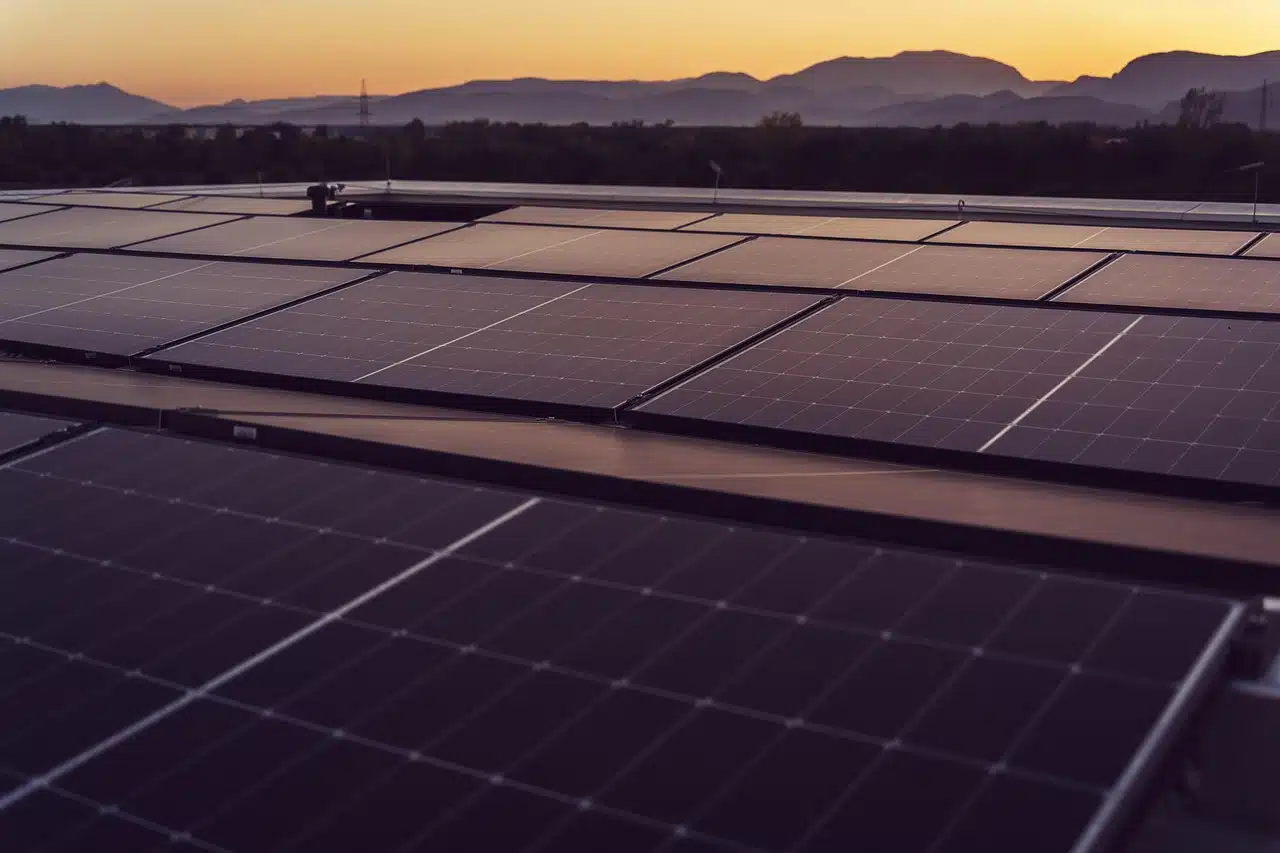


Tunisia has awarded French renewable energy company Voltalia a contract to develop a 132-megawatt solar power project to boost electricity supply in the country.
The contract represents Voltalia’s third solar project in Tunisia since May 2024, bringing its total capacity under development in the country to nearly 400 MW.
It noted that the Tunisian government selected it to develop the Wadi solar project in the Gabès region of south-eastern Tunisia.
The company previously secured the Sagdoud solar plant in May 2024 and the Menzel Habib project in December 2024.
The Wadi solar plant will be located near the Menzel Habib site. Voltalia said the proximity would enable shared infrastructure and logistics across both sites.
Construction is scheduled to begin in 2027. Commissioning is expected in 2028.
Voltalia said the plant would generate enough electricity to supply approximately 200,000 inhabitants.
The company estimates the project will reduce carbon dioxide emissions by about 120,000 tonnes per year. Voltalia did not disclose the project’s total cost or financing structure.
“We are very pleased to have been selected for this new project in Tunisia. This step not only strengthens our presence in a region with strong solar potential, but it also allows us to support the country’s energy ambitions more closely.” Voltalia CEO Robert Klein said.
Multiple bidders for the solar project
Tunisia has been awarding solar projects to private developers through competitive tenders. The government has used this mechanism in recent years to attract independent power producers.
AMEA Power developed a 100 MW solar facility in Kairouan with backing from the International Finance Corporation (IFC) and the African Development Bank (AfDB).
According to the AfDB, the Kairouan solar plant was commissioned by the end of 2025 and connected to the national grid.
Enerdata reported that the government approved four solar photovoltaic projects totalling around 500 MW in early 2025.
Several international developers were involved in these projects, including Voltalia.
Tunisia’s energy dependence
Tunisia imported 48% of its energy needs in 2022, according to a World Bank. Natural gas accounted for the bulk of electricity generation. Peak electricity demand grew by about 5% per year between 2010 and 2022.
The financial institution estimates Tunisia’s technical potential for solar and wind power at around 320 gigawatts. For now, the nationa’s national peak demand is roughly 5 gigawatts.
Last Novemeber, the World Bank approved $430 million in financing for the country’s Energy Reliability, Efficiency, and Governance Improvement Program, commonly known as TEREG.
The program aimed to modernise the electricity sector and improve the operational and financial performance of the state-owned electricity firm.
The TEREG program targets $2.8 billion in private investment to add 2.8 gigawatts of solar and wind capacity by 2028.
In addirtion the European Investment Bank has announced grant support for renewable energy and grid infrastructure projects in Tunisia under the European Union’s Global Gateway framework.