
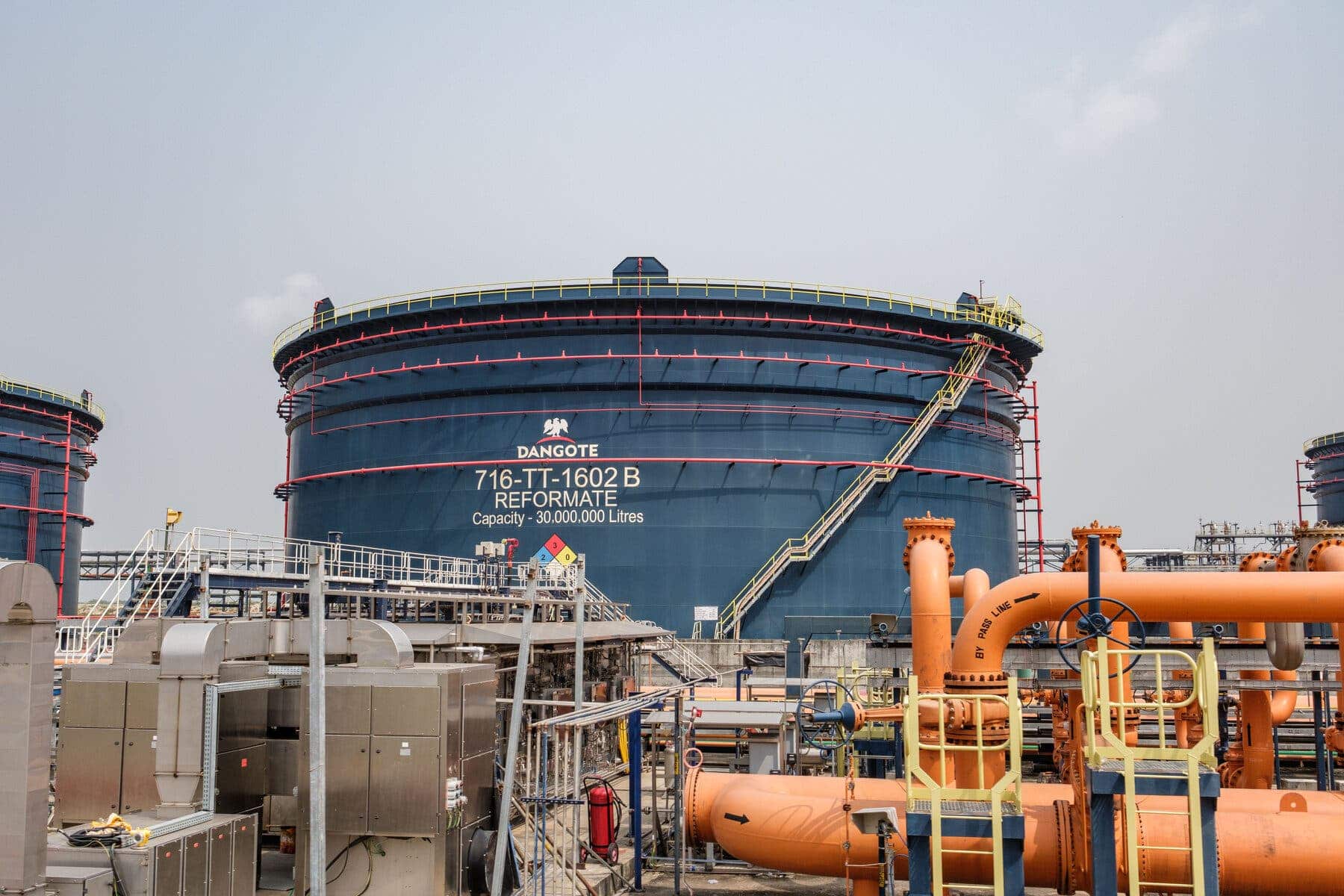


Nigeria’s energy industry is on the cusp of a transformative phase, defined by an unprecedented level of investment in refinery infrastructure. The Dangote Refinery is a key part of this revolution, being world largest single train refinery and situated in Lagos State.
The refinery is gearing up to make a historic listing on the Nigerian Exchange Limited (NGX) in the next four to five months. According to billionaire industrialist Aliko Dangote, Nigerians will be able to acquire shares in the refinery through an initial public offering (IPO) expected in the next five months.
“Individually, Nigerians too will have an opportunity in the next maybe maximum four to five months. There will actually be an opportunity to buy the shares,” Dangote said.
Dangote said the IPO involves the sale of 10% of the shares of the refinery to the public. The company recently picked Stanbic IBTC Capital Limited, First Capital Limited, and Vetiva Capital Management Limited to work closely with the NGX and the SEC to establish the structure of the IPO process.
With an estimated value of $20 billion to $25 billion, the refinery could be dual-listed on the London Stock Exchange, which would increase its value and open it up to international investors. According to Dangote, the dividends will be paid in both naira and dollar.
Apart from the financial aspect, the refinery is also expanding in terms of operations. Plans are underway to increase the refining capacity of the refinery to 1.4 million barrels a day in the next three years, thus making it the largest refinery in the world.
From the investor’s perspective, this is a big opportunity. However, there are certain issues which need to be taken into account. These include the security of supplies, margin sustainability, capital structure, operational efficiency, and governance. Understanding these factors will be critical in evaluating the potential returns and risks of investing in one of Africa’s most ambitious industrial ventures.
This report, therefore, frames the discussion around five essential questions investors should ask ahead the refinery’s listing.
5. What is the refinery’s long-term competitive advantage?
The long-term competitive advantage of the Dangote Refinery would be its size, operational discipline, diversification of products, and good governance. While size would give the refinery cost advantages, the real advantage would come from operational discipline, feedstock quality, distribution efficiency, and good governance.
The refinery was completed in 2023 and currently refines 650,000 barrels of crude oil daily to meet Nigeria’s domestic requirement of Premium Motor Spirit (PMS), diesel, jet fuel, kerosene, and fuel oil, while 40% of the output is exported.
Ownership and governance further strengthen its positioning. With Dangote Group maintaining majority control and minority shareholders introduced via the 10% IPO, strategic alignment is maintained, while investors gain exposure to a large-scale industrial asset.
Jide Pratt, country manager at TradeGrid and COO of AIONA, highlighted the importance of governance and ownership concentration.
“The listing is a major step and with valuation to be studied, what percentage is to be put out and at what price per share, what would earnings per share look like, what would corporate governance and earnings look like, audited accounts,” Pratt told Energy in Africa.
“Finally I would also say the amount of shares held by an individual being over 90% is telling towards control, structure and governance.”
The refinery’s location in Lagos improves distribution efficiency. Quick delivery to domestic and regional markets helps maintain stable operations and revenue. Investors should factor this into their assessment of the refinery’s value on the NGX. This directly impacts the predictability of dividends for shareholders post-listing.
The scale and product offerings of the Dangote Refinery, as well as its location, provide a competitive advantage that contributes significantly to long-term shareholder returns. These benefits, for those participating in the IPO, help evaluate the returns and risks that they might achieve from their investment.
4. What are the operational risks that could affect performance after the listing?
Investors considering the Dangote Refinery listing need to know that good financials alone does not equate to returns, and how the refinery performs on a day-to-day basis will impact the cash flows, dividends, and value creation after a public listing.
Another important area to consider is maintenance and equipment reliability. The refinery is a sophisticated plant, and any breakdowns or delays in scheduled maintenance can impact output significantly. Also, supply chain and logistics matter, as the refinery needs a reliable and competitively priced supply of crude oil to maintain efficiency.
“For a refinery of this scale, a consistent feedstock supply is crucial. Any disruption upstream or inefficiency in logistics can directly impact throughput, margins, and overall operational performance,” Adewale Raji, upstream energy specialist at Naphtali Energy Nigeria Limited, told Energy in Africa.
Workforce skills are another factor. Operators and engineers must be trained and experienced to operate the refinery properly and efficiently. The absence of such skill sets could impede production, increase costs, and lower returns to investors.
External risks, like electricity, water, or transportation disruptions, might also be a problem. Any disruptions might mean a reduction in production, hence a reduction in earnings and dividends.
The above risks help one understand that the capital structure, corporate governance, and operational planning will be key for the refinery after its listing. Investors need to understand that the efficiency of the refinery will be key in making the returns a reality.
3. How stable is the refinery’s capital structure for investors?
The capital structure of the Dangote Refinery is key to understanding the stability of the upcoming listing. Even if operations run smoothly, high debt or an unbalanced mix of equity could affect the company’s ability to sustain dividends and fund growth.
This is an important aspect for investors who need to consider the current and future state following the listing, which will see the company have 10% of its equity listed on the Nigerian Exchange Limited. The balance between debt and equity is going to be vital in supporting expansion plans.
The earnings in foreign currencies from exports help stabilise the operations of the refinery, making it easier to service debt and make capital expenditures without relying too much on local currencies. The strong operations are vital as they ensure the earnings are adequate to service debt and meet the expectations of investors.
This concentration of ownership and control would provide stability. Dangote would retain majority control, while minority investors would receive a small stake. By examining the governance structure, the rights of the shareholders, and the dividend policy, investors can gain valuable insights into the risk profile of the refinery and its financial stability post-listing.
2. How sustainable are the refinery’s cash flows amid market disruptions?
Knowledge of the stability of cash flows is essential in understanding the Dangote Refinery listing. Investors must not only focus on the potential earnings of the company but also on the sustainability of those earnings within a dynamic global market.
Domestic fuel prices are a major consideration. The downstream sector is still developing in Nigeria, with various challenges that may affect profitability, especially for PMS and diesel fuels. Although operational efficiency is essential for profitability, any challenges that may arise from throughput efficiency may impact profitability.
Foreign exchange is another aspect to consider. Export earnings in U.S. dollars, especially from petrochemicals, contrast with naira-based domestic sales, exposing the refinery to currency swings.
“While the Dangote Refinery significantly improves domestic refining capacity, investors should closely examine efficiency,” Thara Aisha Atta, CEO of Trashformas Nigeria Limited, told Energy in Africa. “Stock performance is more likely to depend on operational efficiency, export competitiveness, and margin sustainability. Investors should consider policy stability, currency risk, and infrastructure reliability.”
Global refining trends also matter. Operational throughput and distribution efficiency are critical. Logistics, storage, and export facilities makes it possible for the refinery to turn its potential production capacity into real revenue.
All these considerations lead one to the valuation model, which will define the relationship between projected earnings, operations, and conditions and the ultimate share price of the refinery when it is listed on the NGX.
1. What valuation methodology will be employed for the listing?
The Dangote Refinery listing is expected to be one of the biggest capital market events in Africa in 2026. For any investor, it is very important to understand how the refinery is being valued before deciding to invest in the listing. While the capacity of the refinery and its revenue are important, the actual value of the refinery is what makes the investment worthwhile or not.
Several factors will shape this valuation. The refinery offers dividend returns to investors in naira or U.S. dollars. This foreign-currency income helps protect investors against exchange rate swings.
“The refinery’s valuation must account for both operational efficiency and supply stability. While capacity figures are impressive, the resilience of cash flows under fluctuating crude prices and foreign exchange movements is what will ultimately drive investor returns,” Adewale Raji said.
Market perception and investor interest will also influence valuation. NNPC’s involvement would be a form of endorsement, while the advisory firms, Stanbic IBTC Capital, First Capital, and Vetiva Capital Management, would assist in the determination of the pricing strategy for the IPO.
Investors need to consider diversification of revenue and dividend potential. Foreign exchange exposure, operational efficiency, market sentiment, and strategic positioning also needs to be looked at. This is to understand the refinery’s intrinsic value and potential returns from the listing.
What you should know
The effect of the Dangote Refinery on Nigeria’s market is already being felt.
As of February 2026, petrol prices dropped from ₦799 to ₦774 per litre.
In January 2026, the refinery supplied 62% of the country’s petrol, overtaking imports for the first time.
Investors can buy shares on the Nigerian Exchange Group (NGX) from June to July 2026. The date and price of shares will be announced by the Dangote Group in collaboration with the Securities Exchange Commission (SEC) and NGX. Details regarding the minimum amount of shares to be purchased by investors will also be provided.
Diaspora Nigerians can also invest through a stockbroker, as long as they are able to verify their accounts and make the necessary funding.
Editorial disclaimer: This article is for informational purposes only and should not be considered investment advice. Readers interested in participating in any potential listing are advised to consult their stockbrokers, financial advisers, or licensed investment firms before making any investment decisions.