


The Middle East crisis has impacted the oil market globally, with uncertainty surrounding the supply of petroleum products. Conflicts in key producing regions have also disrupted the supply of petroleum products.
These disruptions have led to the fluctuation of crude oil prices. Currently, the price of Brent crude is about $108. This has affected economies worldwide, including Nigeria.
Nigeria imports petrol, and oil marketers spent about ₦8.96 trillion on the importation of petrol into the country last year. This dependence exposes the country to price swings and supply disruptions. When global prices rise, Nigerians often see immediate increases at the pump.
In the past, consumers have been protected from these fluctuations by government subsidy policies. These policies have kept the prices of petroleum products stable, thereby reducing the effects of global market volatility.
With the gradual removal of these subsidies, the local market is now subject to global changes. Supply costs, crude oil prices, and exchange rates are all factors that influence petrol prices. This is a huge change in the Nigerian energy sector.
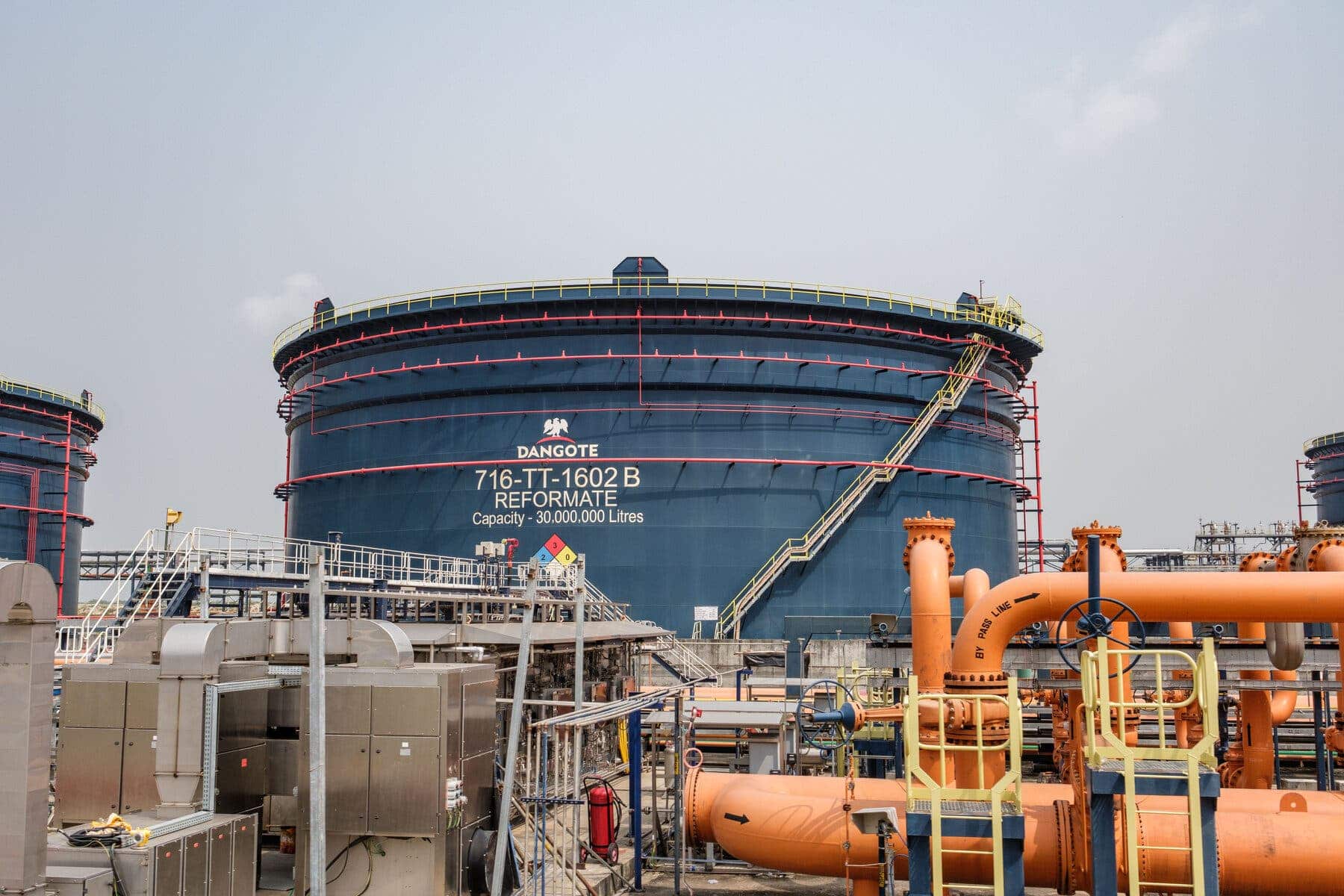
This new market dynamic has seen the Dangote refinery play a crucial role given its capacity to produce on a large scale. This guarantees a stable market compared to relying on imports.
As a result, the market for petrol in Nigeria is being redefined in terms of availability and cost. The market is transitioning from an import-dependent market to one shaped by local refining.
Understanding Nigeria’s pre-subsidy petrol pricing
Before subsidies were removed, the Nigerian government controlled petrol prices through a system of fixed price pegs. During periods of global oil volatility or crises, the government set pump prices to protect consumers from international shocks. This meant that the price Nigerians paid rarely reflected the true cost of supply.
The system offered short-term stability. Households could plan their budgets, and marketers knew the exact price to sell. However, there was also a distortion. The companies did not have the incentive to improve efficiency and invest in local refining. The government absorbed most import costs, reducing the need for market-driven solutions.
Subsidies came at a high fiscal cost. The government spent billions maintaining low pump prices. While consumers benefited, the market became dependent on imports and vulnerable to global price swings.
Price pegs also limited competition. Importers and distributors had to follow government-set rates, regardless of their actual supply costs. When demand surged, this often caused shortages or misallocation of fuel. The system lacked signals to adjust supply efficiently.
Despite its limitations, subsidies were politically popular. Fuel queues were minimal, and the cost of fuel was predictable. But the system left Nigeria structurally exposed. It delayed the growth of local refining and made the economy sensitive to global crude price changes.
Subsidy removal changes Nigeria’s fuel pricing structure
Meanwhile, the removal of petrol subsidies marked a major shift in the fuel sector of Nigeria. For decades, subsidies kept pump prices low, hiding the true cost of supply. With their removal, petrol prices now reflect global crude prices, foreign exchange rates, and distribution costs.
The change affects both consumers and marketers. Petrol prices have risen sharply. Households that once budgeted around ₦165 ($0.12) per litre now pay as high as ₦1,275 ($0.93). This became the fifth increase this month.
Marketers also feel the impact. Without fixed prices, they must account for rising supply costs and adjust operations. Smaller importers struggle to stay profitable, giving large refiners like Dangote more control over the market. Experts say market-based pricing is necessary.
“Removing subsidies aligns domestic prices with global realities,” Ifeoma Chukwudi, an energy policy expert, told Energy in Africa. “It encourages investment in local refining and improves transparency, though it does expose consumers to volatility in the short term.”
In spite of all this, there is a new opportunity. The issue of local refining and supply chains is more important now. The market is slowly moving from government control to one shaped by production capacity and strategy.
Rising import costs weaken marketers’ control over pricing
Importing petrol into Nigeria has always been costly. The Middle East crisis has made global crude prices volatile. The shipping and insurance costs are also uncertain and this has made it difficult for small importers to keep their supplies intact.
Nigeria’s total spending on imported petrol fell by 41.9 percent in the 2025 fiscal year, dropping to ₦8.96 trillion from ₦15.42 trillion in 2024. The decline reflects a growing reliance on domestic refining.
As imports become less central, marketers are turning to domestic suppliers, primarily the Dangote refinery. The refinery’s large-scale output offers supply at prices that smaller importers cannot consistently achieve. This has shifted market influence toward local refining.
Smaller marketers are losing control over pricing. Many now follow the rates set by domestic refiners. To stay competitive, they have little choice but to adjust their prices according to Dangote’s benchmarks rather than setting their own.
For consumers, the change has mixed effects. Fuel is more readily available and shortages are less common. At the same time, petrol prices are increasingly set by the largest domestic producers, reducing the role of independent importers.
Dangote refinery becomes main source of supply and price direction
So far, the Dangote refinery has emerged as Nigeria’s main supplier of petrol. The refinery supplied about 61.78 percent of the petrol required in the country in January 2026, surpassing the imported fuel entering the country, which contributed only 38.22 percent.
The refinery also produced 40.1 million litres of petrol daily, compared with 24.8 million litres from imports. This level of output allows marketers and distributors to rely on the refinery for a stable supply.
The refinery’s dominance has naturally influenced pricing. Many marketers now align their retail prices with Dangote’s rates to stay competitive. Smaller importers have little room to set their own prices. This gives the refinery a strong market leverage.
Reliable supply is another advantage. By controlling most domestic output, Dangote has helped stabilise fuel availability across the country. Long queues at petrol stations are now less common, even during periods of international disruption.
“Dangote’s local refining position is becoming the primary determinant of both supply and price,” Ayotunde Suleiman, a refinery analyst, told Energy in Africa. “Importers increasingly adjust to domestic benchmarks rather than setting their own rates.”
The market is now increasingly defined by domestic production. While prices may rise in line with global trends, supply consistency has improved. This marks a change from the previous model, where imports and government policies set availability and prices.
Local refining gives Dangote an edge
Local refining gives Dangote a strong advantage over imported petrol. Producing fuel domestically reduces reliance on international shipping. This means supply is more reliable and less affected by delays or high freight costs.
Large-scale production also helps reduce cost per litre. By operating at its full nameplate capacity of about 650,000 barrels per day, the refinery benefits from economies of scale. This helps Dangote ensure a consistent supply and makes the cost more predictable for marketers.
Domestic refining also limits exposure to currency fluctuations. Imported petrol becomes more expensive when the naira weakens. Dangote’s local output shields the market from some of these risks.
“Local refining not only stabilises supply but also strengthens pricing predictability,” says Suleiman. “It gives domestic producers a clear edge over importers in both cost and reliability.”
The combination of steady supply, lower costs, and reduced external risk has made Dangote the dominant player in Nigeria’s petrol market. Importers now follow domestic benchmarks more closely, leaving local refining as the main driver of availability and pricing.
Regulators stay quiet as petrol prices rise
On their part, regulators in Nigeria have kept quiet despite the repeated petrol price hikes. The Nigerian Midstream and Downstream Petroleum Regulatory Authority (NMDPRA) has made few public interventions, allowing the market to adjust without significant oversight.
This is a departure from earlier periods when the government closely managed pricing through subsidies or price pegs.
Analysts say limited oversight can have consequences. Dominant players like Dangote refinery may consolidate influence over the market. With an increasing share of supply, larger refiners have more control over supply and pricing than smaller importers.
The effects of the situation are being felt by consumers. Petrol remains available and queues are shorter than in previous crises. However, prices have risen multiple times since the Middle East crisis began.
“When market concentration grows unchecked, there is a potential for higher prices over time,” says Chukwudi. “Regulators must monitor the situation closely to ensure competition and protect consumers.”
Chukwudi notes current approach reflects a deliberate policy choice. Authorities appear willing to tolerate short-term price increases in exchange for stable supply.
However, the long-term effect is yet to be seen as local refineries continue to reshape the petroleum market.
Dangote brings steady supply but repeated price increases
The Dangote refinery has ensured the consistent supply of petrol in Nigeria. Fuel stations are well supplied, and queues are shorter compared to previous years.
However, this comes at a cost. Petrol prices keep going up. The refinery’s pricing reflects both global crude trends and the costs of running a large-scale domestic operation. The consistent supply of petrol is beneficial to consumers, but the cost of petrol is higher than it was previously.
The dominance of the refinery ensures steady availability, but it also gives the refinery the upper hand in the market. Smaller importers do not have the same level of influence in the market, meaning retail prices often follow Dangote’s lead.
Dangote’s role shows how local refining is changing Nigeria’s petrol market. The country now relies more on domestic production than imports. Supply is steadier, but higher costs are now part of the picture.
The market is becoming more efficient. At the same time, it highlights how large domestic players influence pricing.