



During past global economic shocks, resource‑rich African nations often faced the paradox of scrambling for essential fuel and commodities from Europe, Asia or the Americas, with delays and soaring prices leaving the continent squeezed.
This time, however, the dynamics are different. More than a month after the US and Israel launched “Operation Epic Fury” against Iran, global supply chains have been shaken.
The fallout—marked by the killing of senior IRGC officials—has escalated tensions and led to the closure of the Strait of Hormuz, one of the world’s most critical waterways for trade in crude petroleum and petrochemicals.
The war has triggered what the International Energy Agency (IEA) calls the “largest supply disruption in the history of the global oil market”.
With insurance costs for ships and risks of seizure or attack now at historic highs, global traders now find themselves in an inevitable supply crunch that has persisted for weeks.
Yet for the first time, African nations are looking closer to home.
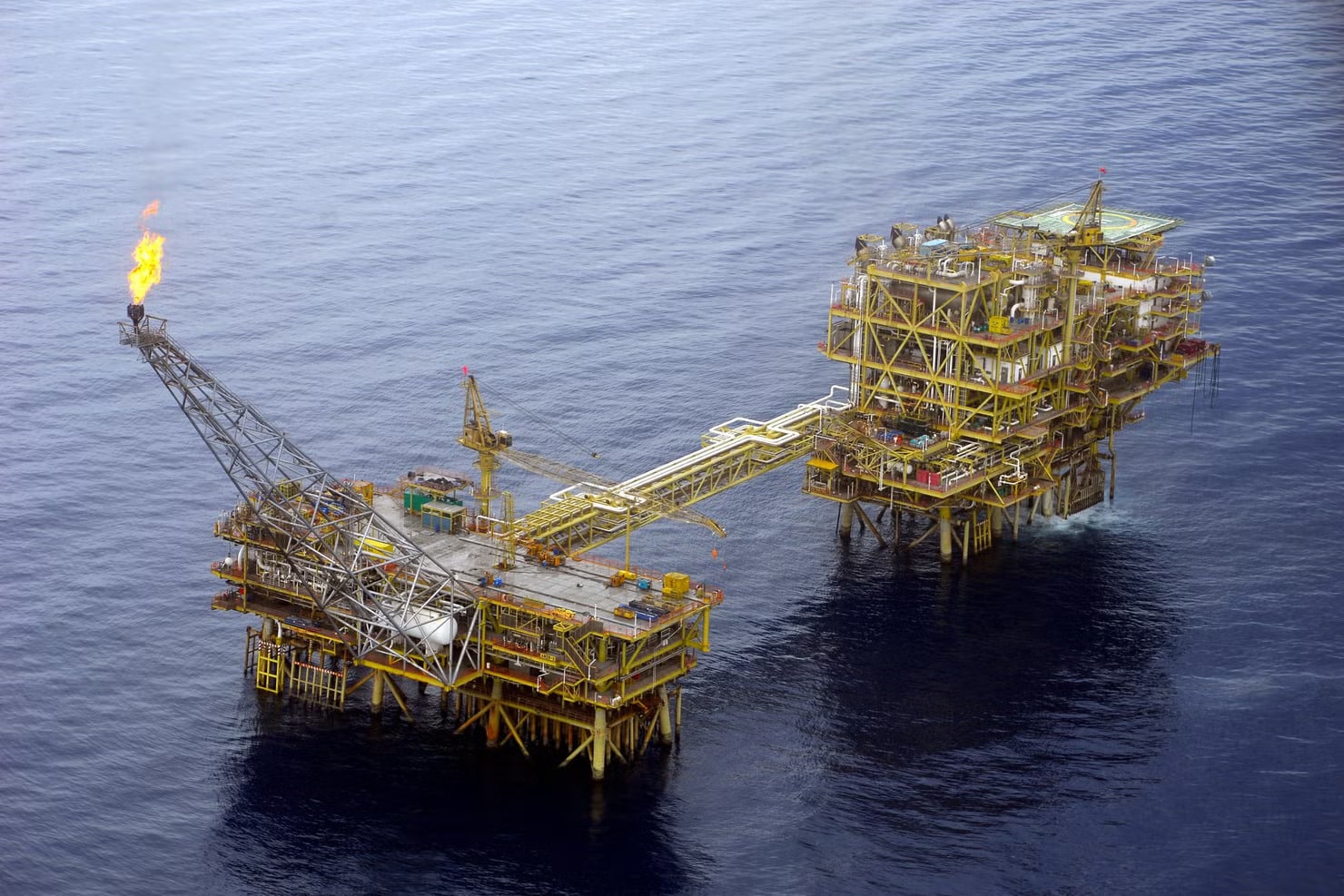
Having attained its full nameplate capacity of 650,000 barrels per day (bpd) in February, the Dangote Petroleum Refinery and its associated petrochemicals plants are stepping in to meet demand for key commodities as Middle Eastern supplies falter.
This article examines five products where Dangote is bridging the gap.
1. Urea fertiliser
The Gulf region supplies up to 45% of the world’s traded urea and sulphur, but the conflict has turned it into what experts call a “slow‑motion famine machine.” The Iran‑imposed blockade of the Strait of Hormuz—through which a third of global seaborne fertiliser trade passes—has stalled millions of tonnes of supply.
Within three weeks, global urea prices surged nearly 50%, from about $480/tonne to $720/tonne, with 3–4 million tonnes of trade disrupted.
Africa, heavily reliant on Gulf imports during the March–May planting season, has been hit hardest.
Frida Youssef of UNCTAD warned: “It is now the spring planting season, when countries and farmers typically purchase fertilisers for the next harvest. If they are unable to secure enough supply—or if prices are too high—crop yields could decline.”
She added that the world’s least developed economies “have the least capacity to absorb shocks (and) are the ones that will feel the effects most strongly.”
The UN estimates that over half of fertiliser imports for East African countries such as Sudan and Somalia could be affected, with experts warning of yield reductions of up to 30% in parts of the Sahel.
In response, demand has shifted towards African producers. Dangote’s 3 million tonne per annum (MTPA) fertiliser complex is emerging as a critical non‑Gulf hub. Vice President Devakumar Edwin confirmed in March 2026 that demand has “gone up substantially.”
The plant, Africa’s largest granulated urea facility, is targeting a daily output of 16,000 tonnes within two years, aiming to earn around $7 million per day from exports.
Shipments to South Africa, Kenya and Ghana have already increased, with long‑term contracts under discussion. Previously, 37% of Dangote’s output was exported to the United States.
2. Jet fuel
Global jet fuel prices have surged 95% since the war began on 28 February 2026.
The International Air Transport Association (IATA) reported in late March that prices averaged $195 a barrel—more than double the 2025 average.
“The closure of Hormuz has cut off roughly 20% of the world’s seaborne jet fuel supply,” George Shaw, senior analyst at Kpler, told Euronews.
For instance, Ryanair CEO Michael O’Leary warned: “Of all the European countries at the moment, the one that is most vulnerable is the UK because of the market share that the Kuwaitis have here… There could be a surplus of jet A‑1 fuel in the Middle East, but you have still got to ship it to Europe, and we don’t know when or how that happens.”
At home, Nigerian airlines, having exhausted imported stocks, now rely almost entirely on Dangote to keep domestic flights running during the Easter travel surge.
Other African nations, once dependent on Middle Eastern supplies, are also turning to Lagos.
South Africa, Kenya and Ghana have approached Dangote for year‑long contracts to avoid grounded fleets. In March alone, the refinery exported at least six cargoes of jet fuel and kerosene to West African neighbours.
Beyond Africa, Dangote is emerging as a vital alternative for Europe. The first cargo arrived at Milford Haven in the UK in early April.
Dangote’s shorter supply chain offers more reliable availability than traditional Middle Eastern routes, cementing its role as a “top‑tier” global supplier.
3. Diesel
Africa consumes about 1.8 million barrels of diesel per day, driven mainly by transport, off‑grid power and industrial operations. Demand is concentrated in Egypt, South Africa, Algeria and Nigeria.
Supply has come under severe pressure as the Iranian conflict blocks Middle Eastern exports through the Strait of Hormuz. East and Southern Africa face losses of up to 260,000 bpd in May 2026. In South Africa, diesel prices rose by R7.51 per litre in April due to soaring global costs and shipping delays.
To counter shortages, the Dangote Refinery has ramped up intra‑African shipments to 90,000 bpd, positioning itself as a regional hub.
At full capacity (650,000 bpd), the plant can produce 210,000–250,000 bpd of diesel—enough to meet Nigeria’s needs twice over and supply nearly 14% of Africa’s total demand. Its “highly complex” configuration allows output to be shifted toward diesel when required.
Exports surged in March 2026, averaging 50,000 bpd.
That month, Dangote shipped 12 cargoes totalling 456,000 tonnes of Euro‑V diesel and gasoline to Côte d’Ivoire, Cameroon, Tanzania, Ghana and Togo.
Since the war began, the refinery has produced over 1 billion litres of diesel, with intra‑African shipments up 136% compared to pre‑conflict levels.
4. Petrol
More importantly, African nations have turned to the Dangote Refinery as a critical “Plan B” to replace costly and scarce Middle Eastern petrol imports.
The facility now supplies over 60% of Nigeria’s fuel and has become a regional anchor, meeting urgent demand across West, Central and East Africa.
So far this April 2026, the Lekki refinery has exported 17 cargoes of gasoline to neighbouring markets. Shipments surged from 38,000 bpd in February to 90,000 bpd in March.
A refinery source confirmed that by 23 March, 12 cargoes totalling 456,000 tonnes had been sold on a free‑on‑board basis to Ghana, Togo, Côte d’Ivoire, Cameroon and Tanzania. Governments are now moving beyond one‑off purchases to secure long‑term partnerships.
The pivot to Dangote has provided a rare stabiliser in a volatile market where crude prices topped $110 per barrel before easing on news of a temporary ceasefire. Aliko Dangote noted: “For most African nations right now, it’s not about pricing, it’s about availability.”
Sourcing directly from Lagos reduces shipping premiums and insurance costs, while the refinery’s Euro‑V petrol helps countries move away from lower‑quality fuels that once dominated the region.
5. Polypropylene
Lastly, the Iran conflict has disrupted the flow of polypropylene from the Gulf, where Africa once sourced of 90% of its supplies from. This positions Dangote as a critical alternative.
Dangote is Africa’s largest polypropylene producer, with a facility capable of 900,000 metric tonnes per annum. It operates two main units and can deliver 77 high‑performance grades, including homo polymers, random co‑polymers and impact co‑polymers, serving packaging, automotive, textiles and healthcare.
The plant was built to end Nigeria’s 90% reliance on imported plastic raw materials, but Global prices have risen more than 20%, and in March 2026, Dangote announced plans to export 600,000–700,000 tonnes annually to fill the gap.
Since production began in March 2025, the refinery has secured local and international distribution agreements.
Nigerian manufacturers in textiles, packaging and furniture now lift 25kg bags directly, while Dangote’s packaging arm has boosted output to 52 million polypropylene bags per month to support fertiliser and cement distribution.
Already this month, April, manufacturers in Ghana, Togo and Côte d’Ivoire have begun direct lifting to bypass the global crunch.
Dangote also signed a strategic deal in 2025 with Premier Product Marketing LLC, part of the Vinmar Group, to market its polypropylene globally.