



The African Development Bank has approved €7.33 million ($8.61 million) in additional financing for Uganda’s Rural Electricity Access Project (UREAP Phase I) to address unresolved compensation payments and incomplete works.
The approval, granted on April 7, is aimed at closing financial gaps that emerged over the course of the project and ensuring that all affected communities receive due compensation.
The funding will also cover remaining environmental and social commitments tied to the project.
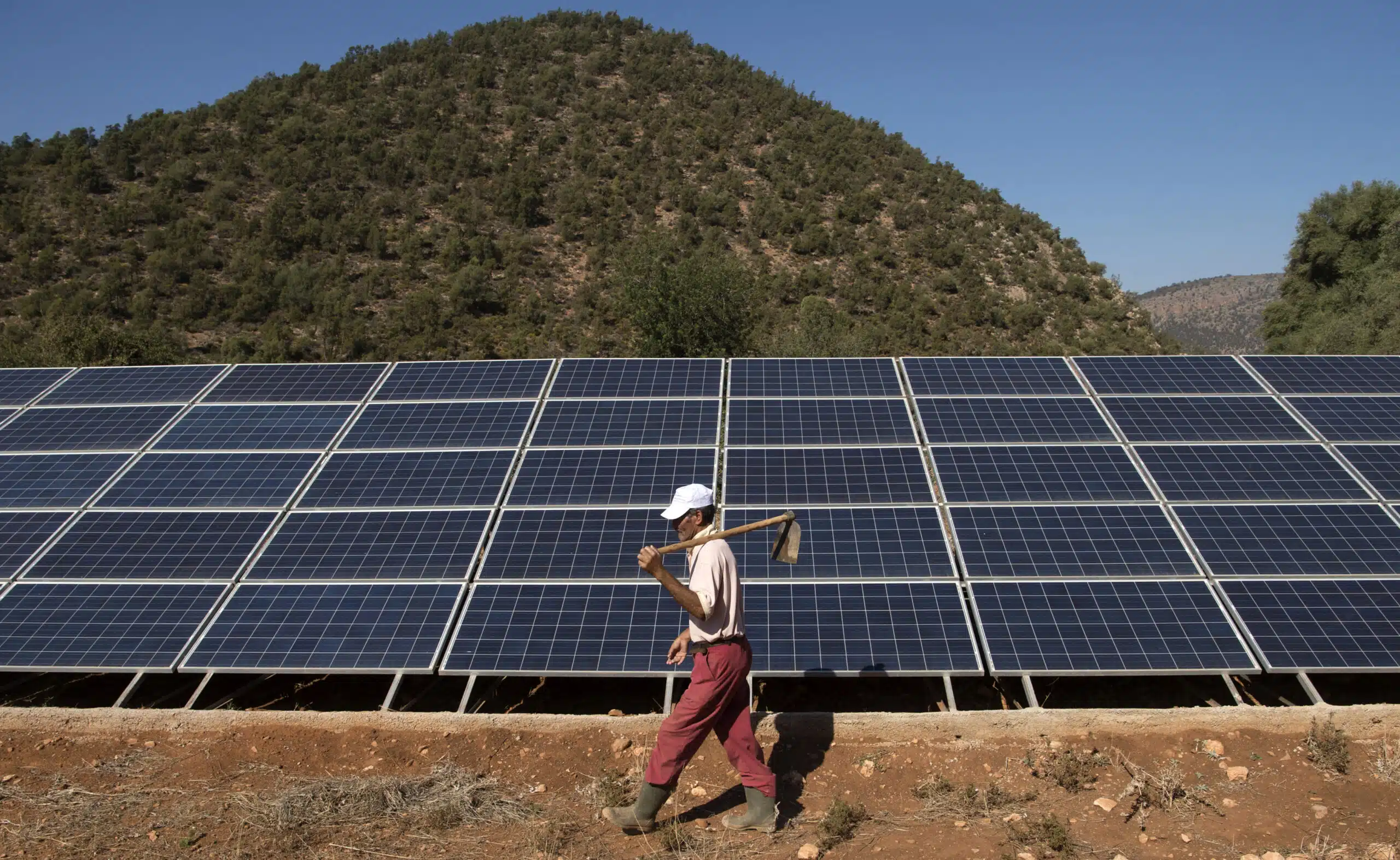
UREAP Phase I, initially approved in 2015, focuses on expanding electricity access to rural and peri-urban communities across Uganda.
Closing rural electrification gap
According to the Bank, additional financing is required to complete obligations that arose during the rollout of last-mile electricity connections.
The project has so far delivered electricity to about 137,770 households, reaching roughly 670,000 people, alongside businesses and public institutions.
However, implementation challenges, particularly around compensation and final construction works, created funding shortfalls.
Aleymahu Wubeshet-Zegeye, East Africa Regional Manager for Energy at the African Development Bank, said the new funding is intended to ensure full delivery of the project’s commitments.
“The additional financing ensures that no community is left behind. It enables the completion of remaining activities, fulfills commitments made to affected families, and helps secure long-term development benefits for communities that were part of the project,” he said.
Meanwhile, earlier phases of the project had already extended medium- and low-voltage distribution networks across several regions, forming the backbone for household connections.
New phase targets wider access
In addition to the top-up financing for Phase I, the Bank also approved a second phase of the project, Uganda Rural Electricity Access Project II, aimed at expanding access further.
The second phase is valued at €104.39 million ($122.55 million), financed through multiple sources.
These include an AfDB loan of €86.58 million ($101.65 million), €14.65 million ($17.20 million) in Climate Investment Funds loans and grants, and €3.16 million from the Government of Uganda.
Over a six-year period, the project will deliver about 259,723 new electricity connections through grid and mini-grid systems.
This includes connections to more than 250,000 households, around 3,000 businesses, and public institutions such as schools and healthcare centres.
The expansion will involve the construction of approximately 624 kilometres of medium-voltage lines and 2,154 kilometres of low-voltage distribution networks.
When combined with Phase I, total connections under the programme are expected to reach nearly 1.18 million people receiving electricity for the first time.
More insights
Uganda has, in recent years, increased its electricity generation capacity through large-scale infrastructure projects. However, access to electricity, particularly in rural areas, has remained uneven.
Projects like UREAP are designed to bridge that gap by focusing on distribution networks and household connections rather than generation.
In 2021, Uganda launched last-mile connectivity under the programme to extend electricity from existing grid infrastructure to nearby communities.
That phase exposed challenges including rising connection costs and compensation issues, which contributed to the funding gaps now being addressed.
The African Development Bank noted that completing these obligations is necessary to ensure the project meets its development targets.
The project also aligns with wider efforts by the World Bank Group and the African Development Bank to expand electricity access across Sub-Saharan Africa under the Mission 300 initiative.
The programme targets electricity access for 300 million people by 2030, with rural electrification identified as a priority area.
Uganda’s electrification efforts also connect to regional power initiatives, including cross-border electricity projects aimed at improving supply reliability and efficiency.
The bottom line
The additional €7.33 million ( ($8.61 million) financing will primarily address compensation for project-affected persons and finalize outstanding works under Phase I.
UREAP II is expected to significantly scale up access, targeting hundreds of thousands of new connections across Uganda.
The project forms part of the African Development Bank’s Country Strategy Paper for Uganda (2022–2026), which prioritizes infrastructure development and energy access.
Electricity access remains a key focus for development institutions, particularly in rural areas where connection rates lag behind urban centres.